Bangladesh RMG sector collapse: Awami League blames post-July administrations
Synopsis
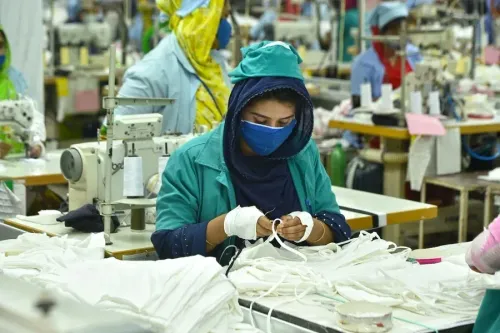
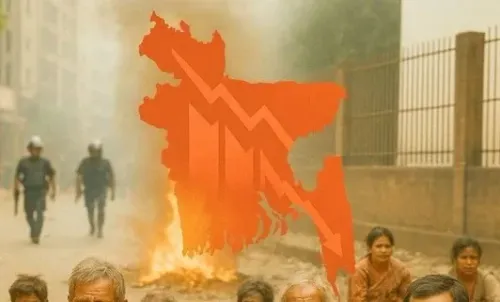
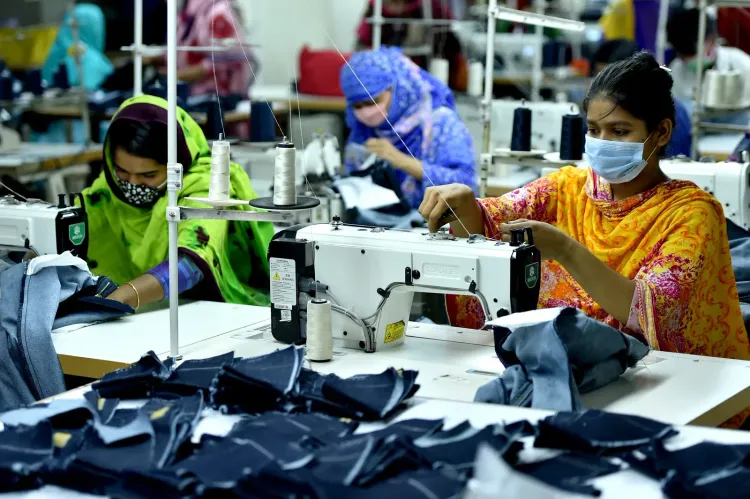
Bangladesh's garment sector — the backbone of its economy — has lost its global No. 2 ranking to Vietnam, with just 0.89% export growth against a 4.46% market expansion. The Awami League's broadside against both the Yunus-led interim government and the current BNP administration over $2 billion in diverted orders signals how deep the post-July political crisis has cut into Bangladesh's most critical industry.
Key Takeaways
Awami League alleged on 30 July that successive post- July 2024 administrations caused the RMG sector's collapse through mismanagement and governance failure.
Bangladesh has lost its second-place global apparel export ranking to Vietnam , per WTO data cited by the party.
Bangladesh recorded only 0.89 per cent apparel export growth — the lowest among major Asian competitors — while the global market grew 4.46 per cent .
Industry estimates suggest over $2 billion in international apparel orders shifted away from Bangladesh during post-July turmoil.
The party accused the BNP government of 'political inertia' and failing to implement emergency measures such as energy relief, credit guarantees, and trade diplomacy.
The Awami League warned of 'terminal decay' in the RMG sector unless immediate policy corrections are made.
Bangladesh's Awami League has alleged that the accelerating collapse of the country's Ready-Made Garment (RMG) sector is the direct result of 'grotesque administrative mismanagement, economic paralysis, and total governance failure' under successive authorities since the July 2024 political upheaval. The party's statement, issued on 30 July, squarely targets both the former interim administration and the current Bangladesh Nationalist Party (BNP) government for the sector's deterioration.
Key Allegations Against Post-July Administrations
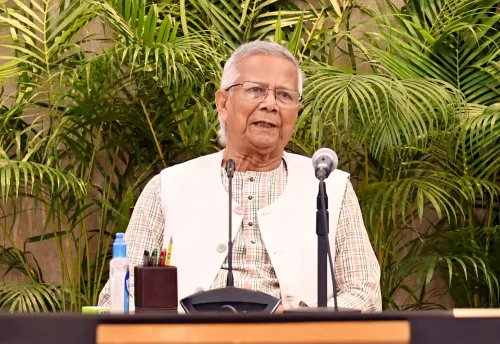
The Awami League charged that the interim administration led by Muhammad Yunus failed to maintain law and order in industrial zones, allowing what it described as 'lawlessness' to take hold in the country's manufacturing belts. It alleged the administration was 'passive in the face of extortion rings' and unable to secure stable LNG import channels critical to factory operations.
The party was equally sharp in its assessment of the newly elected BNP government, accusing it of continuing the same trajectory through 'political inertia, economic score-settling, and an utter inability to secure primary energy inputs or stabilise a suffocating financial environment.' It argued that instead of enacting emergency economic stabilisation measures — including targeted energy relief, credit guarantees, and urgent trade diplomacy — the administration has remained focused on 'patronage redistribution.'
WTO Data and the Vietnam Overtake
Citing World Trade Organisation (WTO) data, the Awami League said Bangladesh has officially lost its long-held second-place global ranking in apparel exports to Vietnam. The country recorded a mere 0.89 per cent growth in apparel exports — the lowest among major Asian competitors — while the broader global apparel market expanded by 4.46 per cent during the same period.
According to the party, industry estimates indicate that over $2 billion in international apparel orders shifted away from Bangladesh during the post-July turmoil, as Western retail buyers redirected sourcing to regional competitors who capitalised on supply chain disruptions in Dhaka.
Impact on Foreign Exchange and Economic Stability
With the RMG sector accounting for the bulk of Bangladesh's export earnings, the Awami League warned that its decline is weakening foreign exchange reserves, economic growth, and fiscal stability. Factory closures, it said, have deepened economic hardship for workers while draining the foreign exchange inflows on which the broader economy depends.
Notably, this is not the first time political transitions in Bangladesh have rattled the garment industry — but the scale of order diversion and the loss of the second-place global ranking represent a qualitatively sharper setback than previous episodes of labour unrest or political uncertainty.
Warning of 'Terminal Decay'
The Awami League issued a stark warning, stating: 'If Bangladesh's political leadership continues to offer empty reassurances while industrial output collapses, the country not merely loses its second-place ranking; it will permanently lose its position in global trade. Global supply chains do not wait for political recovery; without immediate, drastic policy corrections, Bangladesh's RMG sector faces terminal decay.'
As both political blocs trade blame, the more pressing question is whether any administration will move quickly enough to reverse the order diversion before supply chain realignments become permanent.
Point of View
In part, self-serving — the party's own tenure set the political conditions that triggered the July 2024 demonstrations. But the WTO data it cites is real, and the loss of the No. 2 apparel ranking to Vietnam is a structural blow that transcends partisan framing. What is missing from the public discourse is a credible recovery plan from any quarter: the BNP government has yet to detail emergency stabilisation measures, and the international buyers rerouting orders to Vietnam and Cambodia are not waiting for Dhaka's political cycle to resolve. Bangladesh's RMG sector built its global position over four decades; losing it could take far less time.
NationPress
14 Sept 2026
Frequently Asked Questions
Why is Bangladesh's RMG sector in crisis?
Bangladesh's Ready-Made Garment sector has been in crisis since the July 2024 political upheaval, which triggered factory shutdowns, supply chain bottlenecks, and a breakdown in law and order in industrial zones. According to the Awami League, over $2 billion in international apparel orders shifted to rival countries during this period.
Has Bangladesh lost its No. 2 apparel export ranking?
Yes, according to WTO data cited by the Awami League, Bangladesh has officially lost its long-held second-place global apparel export position to Vietnam. Bangladesh recorded only 0.89 per cent apparel export growth, the lowest among major Asian competitors, while the global market expanded by 4.46 per cent.
What does the Awami League accuse the BNP government of?
The Awami League accuses the BNP government of 'political inertia, economic score-settling, and an utter inability to secure primary energy inputs.' It says the administration has failed to implement emergency measures such as targeted energy relief, credit guarantees, and trade diplomacy to stabilise the sector.
What was the role of the Yunus-led interim administration in the RMG crisis?
The Awami League alleged that the interim administration led by Muhammad Yunus failed to enforce law and order in industrial belts, was passive in the face of extortion rings, and could not secure stable LNG import channels essential for factory operations.
What is the broader economic impact of the RMG sector's decline?
The RMG sector accounts for the bulk of Bangladesh's export earnings, so its decline is weakening foreign exchange reserves, economic growth, and fiscal stability. Factory closures have also deepened economic hardship for workers dependent on the industry.