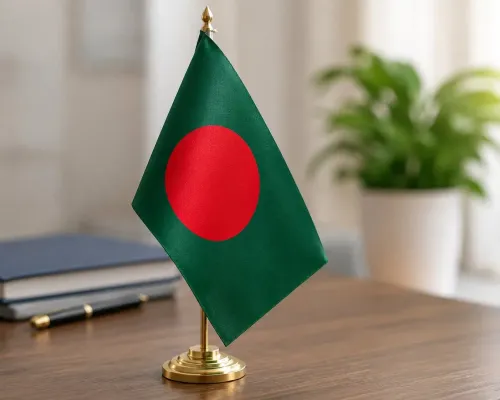
Bangladesh in deepening crisis since August 2024, Awami League alleges
Synopsis
The Awami League's sweeping indictment of Bangladesh's post-August 2024 situation puts hard numbers to a crisis that spans politics, public health, and industry — 1.5 million jobs lost, 979 measles deaths, and 33 million children with disrupted schooling. The breadth of the allegations, if even partially verified, signals a country under simultaneous institutional, economic, and humanitarian stress.
Key Takeaways
The Awami League alleges Bangladesh has been in a deepening multi-sector crisis since August 2024 , affecting children, women, workers, and low-income communities.
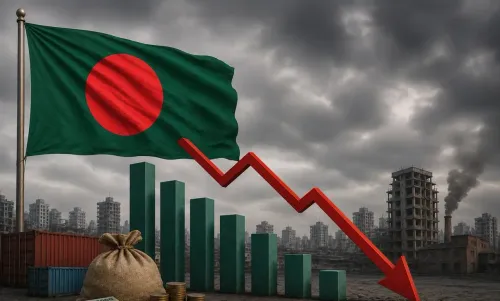
Approximately 1.5 million workers have reportedly lost jobs, with over 500 large export-oriented factories shut down; garment exports reportedly fell 12% to USD 37 billion .
Opposition groups claim more than 400,000 people have been arrested nationally, with around 30,000 reportedly in custody as of November 2025 .
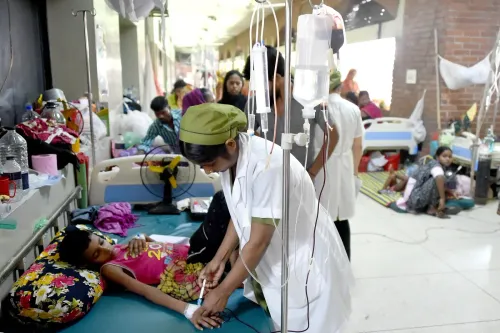
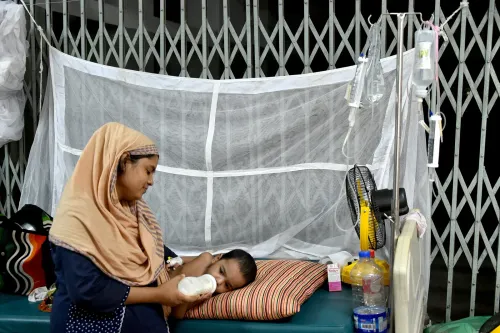
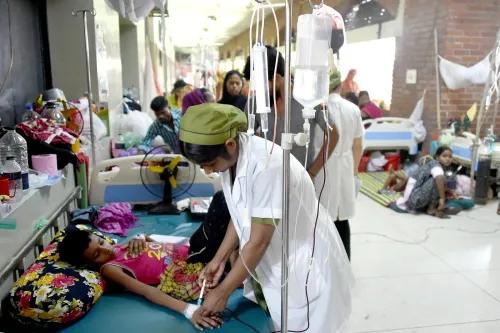
The measles outbreak has spread to all 64 districts of Bangladesh, with confirmed and suspected deaths reaching 979 this year as of Tuesday.
Around 33 million children have reportedly faced education disruptions due to political instability and climate events.
Women, who make up 80% of the garment workforce, reportedly account for around 90% of sector job losses.
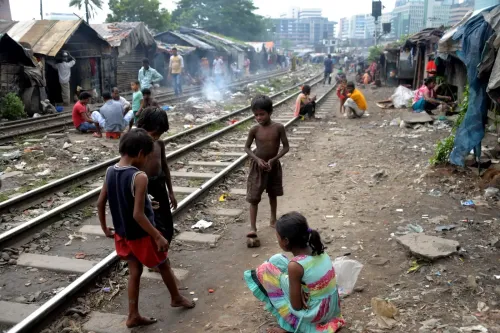
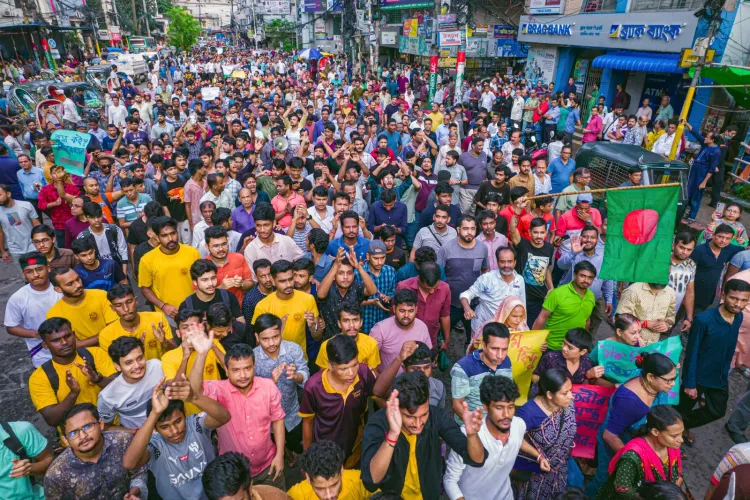
Bangladesh has been gripped by a deepening multi-sector crisis since August 2024, with political instability, mounting economic pressures, industrial job losses, public health emergencies, rising poverty, and climate-related disasters reinforcing one another, the Awami League has alleged. The party, citing data from multiple sources, contends that the deteriorating conditions have produced a significant humanitarian emergency, with children, women, workers, and low-income communities bearing the heaviest burden.
Political Arrests and Civil Liberties
According to the Awami League, political arrests and detentions have emerged as a serious concern in Dhaka, where more than 5,079 people were reportedly arrested in connection with 707 cases. At the national level, opposition groups have claimed that more than 400,000 people have been arrested overall, with approximately 30,000 reportedly in custody as of November 2025. The party also flagged that approximately 33 million children have experienced disruptions to their education due to political instability and climate-related events.
Industrial Collapse and Job Losses
The industrial sector has been severely affected, according to the Awami League's account. More than 500 large export-oriented factories, including garment units, have reportedly shut down, with over 300 closures recorded by October 2024 alone. Garment export earnings reportedly fell by around 12 per cent, declining from approximately USD 42 billion to USD 37 billion. An estimated 1.5 million workers have lost their jobs in this period.
Notable among the affected entities is the Beximco Group, which reportedly laid off approximately 40,000 workers. The leather sector saw 80 factory closures, while more than 100 factories or production units in Dhaka's ceramics industry have either closed or become inactive, the party stated.
Disproportionate Impact on Women Workers
The Awami League highlighted a stark gender dimension to the industrial crisis. Women account for approximately 80 per cent of the garment sector's workforce, yet available data suggests they may represent around 90 per cent of total job losses in the sector. The party said this has placed additional pressure on both women's employment prospects and the economic security of households across the country.
Public Health Crisis and Measles Outbreak
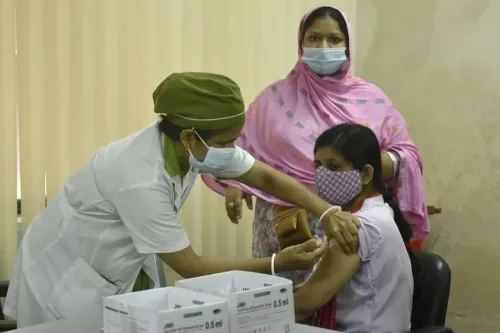
The measles outbreak has been identified by the Awami League as a particularly serious public health concern, reportedly spreading across all 64 districts of Bangladesh, while routine immunisation coverage has declined by approximately 4–5 percentage points annually. Local media reported on Tuesday that six more children died from the measles outbreak, raising the total number of confirmed and suspected deaths to 979 this year, underscoring the escalating scale of the health emergency.
Climate Disasters and Weakening Local Governance
Climate-related disasters have compounded the crisis further, the party noted, with the weakening of local government structures undermining basic disaster-prevention and preparedness mechanisms. This comes amid a broader collapse in institutional capacity that critics argue has left vulnerable communities with diminishing safety nets.
The Awami League concluded that the escalating pressures across all these sectors are placing multidimensional strain on Bangladesh's social and economic stability, with the impact falling most heavily on children, women, workers, and low-income households. How the current administration responds to these compounding crises is expected to define Bangladesh's political and economic trajectory in the months ahead.
Point of View
Several of its headline figures, particularly on measles deaths and garment sector job losses, align with independent reporting, which lends the broader picture credibility even if the precise aggregates remain unverified. The more significant story may be the measles crisis: a collapse in routine immunisation coverage across all 64 districts is a governance failure that transcends partisan framing. Bangladesh's international partners and development agencies will need to separate the verified humanitarian data from the political narrative — and respond to the former regardless of the latter.
NationPress
17 Oct 2026
Frequently Asked Questions
What crisis is the Awami League alleging in Bangladesh since August 2024?
The Awami League alleges that Bangladesh has experienced a compounding multi-sector crisis since August 2024, encompassing political instability, mass arrests, industrial job losses, a measles outbreak, education disruptions for 33 million children, and climate-related disasters. The party contends that vulnerable groups — children, women, workers, and low-income households — have been disproportionately affected.
How many people have reportedly lost jobs in Bangladesh's industrial sector?
According to the Awami League, an estimated 1.5 million workers have lost their jobs since August 2024, with over 500 large export-oriented factories shut down. Garment export earnings reportedly declined by around 12 per cent, from approximately USD 42 billion to USD 37 billion.
How serious is Bangladesh's measles outbreak in 2025?
The measles outbreak has reportedly spread across all 64 districts of Bangladesh, with confirmed and suspected deaths reaching 979 as of Tuesday. Routine immunisation coverage has declined by approximately 4–5 percentage points annually, according to the Awami League.
How many people have reportedly been arrested in Bangladesh since the 2024 political transition?
In Dhaka alone, more than 5,079 people were reportedly arrested in connection with 707 cases. Opposition groups have claimed that more than 400,000 people have been arrested at the national level, with approximately 30,000 reportedly in custody as of November 2025, according to the Awami League.
Why are women particularly affected by Bangladesh's industrial crisis?
Women constitute approximately 80 per cent of Bangladesh's garment sector workforce but reportedly account for around 90 per cent of total job losses in the sector, according to the Awami League. The party says this has placed additional strain on both women's employment and household economic security across the country.