Bangladesh measles outbreak death toll hits 854 as five more children die
Synopsis
Bangladesh's measles outbreak has now claimed a total of 854 confirmed and suspected lives, with five more children dying in a single 24-hour period. Beyond the death count, a joint BDRCS-IFRC assessment reveals a parallel financial catastrophe: nine in ten affected families have taken loans to survive treatment costs averaging Tk 16,000 — a crisis that a public health expert is calling 'medical impoverishment.'
Key Takeaways
Five more children died from measles in Bangladesh in the 24 hours up to Wednesday morning , raising the total confirmed and suspected death toll to 854 .
Confirmed deaths stand at 96 ; suspected deaths have climbed to 758 , according to the DGHS .
Total suspected cases have reached 132,905 , with 16,655 confirmed cases recorded so far.
A joint BDRCS-IFRC report found nine in ten affected families took loans for treatment, with average costs of Tk 16,000 per family.
Public health expert Mushtuq Husain described the financial toll as 'medical impoverishment,' criticising the government's failure to deliver on its free primary healthcare pledge.
At least five more children have died from the ongoing measles outbreak in Bangladesh, pushing the total number of confirmed and suspected deaths to 854, according to the country's Directorate General of Health Services (DGHS). The latest fatalities, reported in the 24 hours leading up to Wednesday morning, were classified as suspected deaths, raising urgent questions about the scale of the crisis.
Latest Case and Death Figures
The DGHS data shows that confirmed deaths remain at 96, while suspected deaths have climbed to 758. On the cases front, 959 new suspected measles cases were recorded in the same 24-hour window, bringing the cumulative suspected case count to 132,905. An additional 124 confirmed cases were added, taking the confirmed total to 16,655.
Financial Devastation for Families
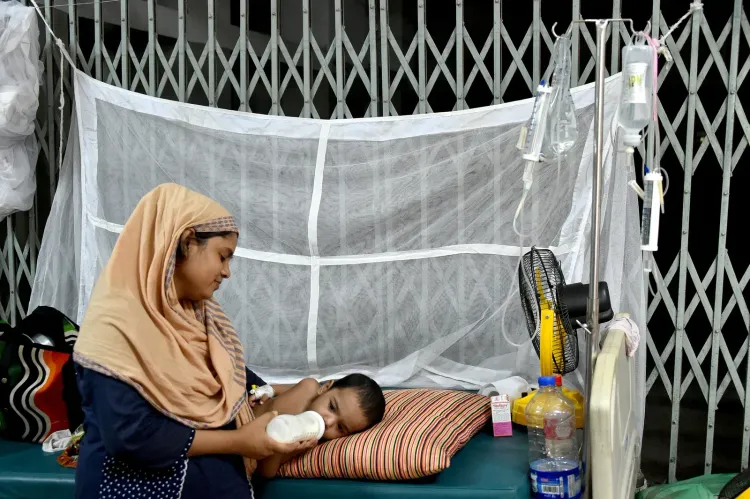
Beyond the death toll, the outbreak is inflicting severe economic damage on low-income households. According to a joint assessment by the Bangladesh Red Crescent Society (BDRCS) and the International Federation of Red Cross and Red Crescent Societies (IFRC), at least nine in every ten families with measles patients have been forced to take out loans to cover treatment costs, while six in ten have entirely exhausted their savings.
The assessment, which examined data from 2,746 families receiving treatment at 12 government medical colleges and district hospitals across the country, found that each family spent an average of approximately Tk 16,000 on measles-related care. Many parents also reported losing income — and in some cases their jobs — after being compelled to remain at hospital bedsides instead of working.
Experts Flag 'Medical Impoverishment'
Public health expert Mushtuq Husain described the financial burden on low-income families as a textbook case of what health economists call 'medical impoverishment.' Speaking to Bangladeshi daily Prothom Alo, he said: 'It is an extremely painful experience for any family. The incumbent government pledged in its election manifesto to ensure free primary healthcare. Yet, during this measles crisis, we have seen no reflection of that commitment. It is precisely during times like these that such support is needed most.'
Context and What Comes Next
The outbreak underscores longstanding gaps in Bangladesh's routine immunisation coverage, which health officials and international agencies have flagged repeatedly in recent years. The scale of suspected cases — now exceeding 132,000 — suggests the outbreak may be significantly larger than confirmed figures indicate, given the lag in laboratory verification. With the healthcare system under strain and household finances collapsing, pressure is mounting on the government to make good on its free primary healthcare pledge and mobilise emergency vaccination drives. International health organisations are expected to intensify their on-ground response in the coming days.
Frequently Asked Questions
What is the current death toll from the Bangladesh measles outbreak?
The total number of confirmed and suspected measles deaths in Bangladesh has reached 854, following five additional fatalities reported in the 24 hours up to Wednesday morning. Of these, 96 are confirmed deaths and 758 are classified as suspected.
How many measles cases have been recorded in Bangladesh?
As of the latest DGHS update, Bangladesh has recorded 132,905 suspected measles cases and 16,655 confirmed cases. A further 959 suspected and 124 confirmed cases were added in the most recent 24-hour reporting period.
What financial impact is the measles outbreak having on Bangladeshi families?
According to a joint BDRCS-IFRC assessment of 2,746 families, nine in ten households affected by measles have taken out loans to cover treatment, while six in ten have depleted their savings entirely. Each family spent an average of approximately Tk 16,000 on measles care.
What do health experts say about the Bangladesh measles crisis?
Public health expert Mushtuq Husain has described the financial burden on low-income families as 'medical impoverishment.' He criticised the government for failing to deliver on its election manifesto pledge of free primary healthcare, calling the measles outbreak precisely the kind of crisis where that commitment should be honoured.
Why is the number of suspected deaths so much higher than confirmed deaths?
The large gap between 758 suspected and 96 confirmed deaths reflects delays in laboratory verification of measles as the direct cause of death. Health experts warn this gap suggests the outbreak's true scale may be considerably larger than official confirmed figures indicate.