Bangladesh child crisis: Awami League slams BNP over 15,000+ missing kids in 2026
Synopsis
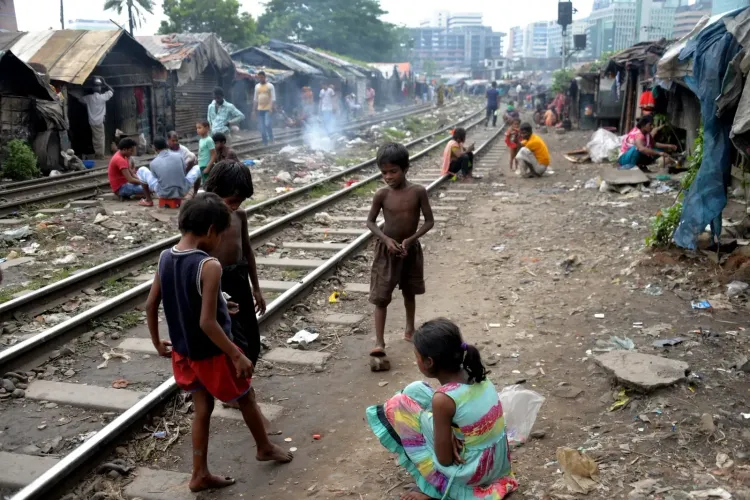
Bangladesh's Awami League has declared a full-scale governance indictment against the BNP administration — backed by police data showing 15,717 children missing in seven months and an Ain o Salish Kendra count of 155 killed. With UNICEF also flagging systemic failure, the crisis is fast acquiring international dimensions that go beyond partisan point-scoring.
Key Takeaways
Bangladeshi police confirmed 15,717 children went missing between January and July 2026 ; 2,038 remained untraced — nearly 13% of the total.
Rights body Ain o Salish Kendra (ASK) recorded 155 children killed between January and August 2026 in incidents involving murder, rape and physical abuse.
The Awami League accused the BNP-led administration of systemic governance failure, citing low conviction rates and slow investigations.
UNICEF and international organisations have reportedly warned about Bangladesh's failing child protection systems and a culture of impunity.
The opposition called on international media and human-rights bodies to treat the figures as a 'red flag', escalating pressure beyond domestic politics.
Bangladesh's opposition Awami League has launched a sharp attack on the BNP-led administration, accusing it of catastrophic failure to protect children amid a documented surge in missing-child cases that have ended in rape, torture and murder. The allegations, made in Dhaka on 25 September 2026, come after police data confirmed 15,717 children went missing in Bangladesh during the first seven months of the year alone.
The Scale of the Crisis
According to a press release issued by Bangladeshi police headquarters, 15,717 children disappeared nationwide between January and July 2026. Of those, 13,679 were subsequently traced, but 2,038 remained missing — accounting for nearly 13 per cent of the total. Separately, Dhaka-based rights organisation Ain o Salish Kendra (ASK) recorded 155 children killed between January and August 2026 in incidents involving murder following disappearance, rape, physical abuse and other forms of violence.
Various media reports, including Bangladesh's leading English-language newspaper The Daily Star, noted that over 15,000 children had disappeared nationwide in the first seven months of the year, underscoring what critics are calling a systemic child protection emergency.
Awami League's Indictment of the BNP Government
The Awami League did not mince words in its public statement, charging that the BNP administration had assumed office promising order and security, only to preside over escalating violence against the country's most vulnerable citizens.
'The BNP administration came to power promising order and security after years of turmoil. Instead, Bangladesh under its rule has produced a documented surge in violence against the most vulnerable. When children are killed after leaving school, after attending madrasa classes, while playing in village yards, or inside the houses of people they trust, the claim of effective governance collapses,' the party stated.
The party further questioned the government's actual response, noting that while special tribunals exist and laws against child repression are on the statute books, 'conviction rates remain low, investigations drag, and the daily average of missing-child reports stays alarmingly high.' It pointed to sporadic public attacks on accused homes as evidence of eroding faith in the official justice system.
Governance Failure with Generational Consequences
The Awami League escalated its critique beyond crime statistics, framing the situation as a fundamental failure of state legitimacy. 'This is not merely a crime wave. It is a governance failure with generational consequences. A state that cannot keep its children alive in schools, homes, and playgrounds has forfeited the most basic claim to legitimacy,' the party declared, calling on international media and human-rights bodies to treat the figures as a red flag.
The opposition also cited warnings from UNICEF and other international organisations about Bangladesh's failing child protection systems and what they have described as a culture of impunity. The Awami League argued that government claims about an 'active police force' and high recovery rates were hollow comfort to families of children who had not come home alive.
What Happens Next
The political pressure is mounting ahead of what observers say will be a critical period for Bangladesh's governance credibility. With international human rights bodies already flagging systemic failures, the BNP-led government faces growing demands to demonstrate meaningful progress on child safety — not just in recovery numbers, but in prosecutions and convictions. Whether the administration responds with structural reforms or dismisses the opposition's charges as political manoeuvring will likely shape both domestic and international scrutiny in the months ahead.
Point of View
But the data underpinning it is not — police headquarters itself confirmed 15,717 missing children in seven months, and ASK's 155 killings figure is independently sourced. The more uncomfortable question is whether the crisis is structural rather than a product of one government's tenure; Bangladesh's child protection infrastructure has been chronically under-resourced across multiple administrations. What is new is the scale, the international attention, and the increasingly explicit framing by UNICEF. The BNP government's silence or deflection will cost it credibility with donors and multilateral institutions whose funding is directly tied to child welfare outcomes.
NationPress
25 Sept 2026
Frequently Asked Questions
How many children went missing in Bangladesh in 2026?
Bangladeshi police headquarters confirmed that 15,717 children went missing between January and July 2026. Of those, 13,679 were traced, while 2,038 — nearly 13% — remained missing as of the latest figures.
How many children were killed in Bangladesh between January and August 2026?
Dhaka-based rights organisation Ain o Salish Kendra (ASK) recorded 155 children killed between January and August 2026, in incidents involving murder following disappearance, rape, physical abuse and other forms of violence.
Why is the Awami League blaming the BNP for the child safety crisis?
The Awami League argues that since the BNP-led administration took power, missing-child cases have surged and ended in violence, while conviction rates remain low and investigations move slowly. The party contends this reflects a governance failure, not merely a crime wave.
What have international organisations said about child safety in Bangladesh?
UNICEF and other international organisations have reportedly warned about Bangladesh's failing child protection systems and called for an end to the culture of impunity, according to the Awami League's statement citing those organisations.
What is Ain o Salish Kendra (ASK)?
Ain o Salish Kendra (ASK) is a Dhaka-based human rights and legal aid organisation that monitors and documents rights violations in Bangladesh, including violence against children. Its findings are widely cited in policy and media discussions on child protection.