Bangladesh child safety crisis: 155 killed, 2,038 still missing in 2026
Synopsis
Bangladesh's child safety crisis has hit a disturbing scale — 155 children killed in eight months, over 15,000 reported missing in seven months, and a pattern of abuse inside religious institutions. With 2,038 children still unaccounted for and no credible government response in sight, parents across the country describe living in daily dread.
Key Takeaways
Ain o Salish Kendra (ASK) recorded 155 children killed in Bangladesh between January and August 2026 .
15,717 children went missing in the first seven months of 2026 , of whom 2,038 remain untraced — nearly 13% of the total.
13-year-old Ishiat Shahriar Opratim from Cumilla district was found dead on 18 September 2026 , less than 24 hours after leaving home.
Three children from the same family were killed on the same day in Tahirpur upazila, Sunamganj district .
A seven-year-old boy in Savar, Dhaka was allegedly abused repeatedly over six months at his madrasa; a case has been filed against 10 individuals .
Rights groups and parents are demanding an emergency government response, with critics directly naming the Tarique Rahman administration.
A deepening child safety crisis in Bangladesh has left parents in a state of constant dread, as a wave of killings, disappearances and sexual abuse cases continues to mount across the country, according to a report by The Border Lens. Rights data compiled by the Dhaka-based organisation Ain o Salish Kendra (ASK) recorded 155 children killed between January and August 2026 in incidents involving murder following disappearance, rape, physical abuse and other forms of violence.
A Family's Worst Fear: The Case of Ishiat Opratim
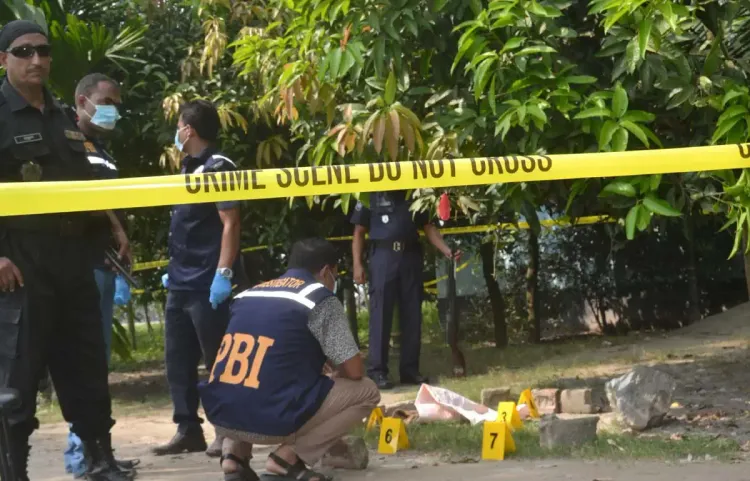
On 18 September 2026, a 13-year-old boy, Ishiat Shahriar Opratim, left his home in Cumilla district telling his mother he was heading out with friends to take photographs with her iPhone. He never returned. According to police and Bangladeshi media reports, his body was recovered nearly 24 hours later from the Sananda hillocks near Comilla University, where his mother, Nahida Begum, works as an associate professor.
'I have only one son. What do I have to live for now? They could have taken the iPhone, but why did they kill my son? I came to work in Cumilla — is this my crime? Why was my son killed? I want the answer to this. How will I live now?' The Border Lens quoted Nahida Begum as saying.
On the same day, three children from a single family — aged 10, seven, and two — were killed in Tahirpur upazila in Sunamganj district, according to the report.
The Missing Children Crisis
The killings represent only part of a wider emergency. According to a press release issued by Bangladeshi police headquarters, 15,717 children went missing during the first seven months of the year alone. While 13,679 were subsequently traced, 2,038 remained unaccounted for — nearly 13 per cent of the total. Multiple Bangladeshi media outlets, including the country's leading newspaper The Daily Star, reported the scale of disappearances as a national emergency.
This comes amid what observers describe as a sustained deterioration of law and order across Bangladesh, with parents — particularly in urban centres like Dhaka — expressing acute anxiety about their children's daily movements.
'We are passing a hard time in Bangladesh now. Our children are not safe in their own country. All the time we are very anxious about our children's safety,' said Sheuli Akter, a mother of a nine-year-old in Dhaka, as quoted by The Border Lens.
Abuse Inside Religious Institutions
The report flagged a troubling pattern involving residential religious institutions. In Savar, Dhaka, a seven-year-old boy was allegedly subjected to repeated sexual abuse over nearly six months at the madrasa where he lived and studied. His father subsequently registered a case against 10 individuals from the institution, including multiple teachers, according to the report.
'The case statement alleged that the child first experienced abuse within weeks of enrolling and later sought help from a teacher, who allegedly abused him and threatened him with expulsion if he told his parents,' the report noted. The allegations have not yet been independently verified by a court.
Political Accountability and What Comes Next
The deteriorating situation has drawn sharp criticism of the current administration. 'Under Tarique Rahman, the government cannot ensure the safety of our beloved children. There is no law and order. Almost every other day, we are losing our precious children. This is heartbreaking. A country cannot go on like this,' a mother from Dhaka told The Border Lens on condition of anonymity.
Rights organisations and child welfare advocates are now pressing the government for a dedicated emergency response mechanism. With ASK's data covering only the first eight months of the year, the final annual toll could be considerably higher if current trends persist.
Point of View
But of institutional safeguards for children at every level, from streets to schools to residential madrasas. What is striking is that the missing-children figure (15,717 in seven months) dwarfs the killing tally, suggesting the visible crisis may be only its most extreme expression. The government's response, measured by what has been publicly documented, amounts to a police press release — a data acknowledgement, not a policy intervention. With elections on the horizon and accountability politics intensifying, child safety has become both a humanitarian emergency and a test of whether Bangladesh's current dispensation can be held to account.
NationPress
26 Sept 2026
Frequently Asked Questions
How many children have been killed or gone missing in Bangladesh in 2026?
According to rights organisation Ain o Salish Kendra (ASK), 155 children were killed between January and August 2026. Separately, police headquarters confirmed that 15,717 children went missing in the first seven months of the year, of whom 2,038 remain untraced as of the latest data.
Who was Ishiat Shahriar Opratim and what happened to him?
Ishiat Shahriar Opratim was a 13-year-old boy from Cumilla district, Bangladesh. He left home on 18 September 2026 to take photographs with friends and never returned; his body was found near the Sananda hillocks close to Comilla University the following day, according to police and Bangladeshi media reports.
What is Ain o Salish Kendra and what did it find?
Ain o Salish Kendra (ASK) is a Dhaka-based human rights organisation. Its recent findings documented 155 child deaths in Bangladesh between January and August 2026, covering incidents of murder following disappearance, rape, physical abuse and other forms of violence.
What abuse allegations have emerged from religious institutions in Bangladesh?
A report by The Border Lens highlighted a pattern of alleged sexual abuse in residential madrasas. In one case in Savar, Dhaka, a seven-year-old boy was allegedly abused repeatedly over nearly six months by multiple teachers at his madrasa; his father has filed a case against 10 individuals from the institution. The allegations are yet to be adjudicated by a court.
What are parents and critics saying about the Bangladesh government's response?
Multiple parents interviewed by The Border Lens expressed acute fear for their children's safety, with some directly criticising the Tarique Rahman administration for failing to restore law and order. Rights groups are pressing for a dedicated emergency child-protection mechanism, but no formal government response plan has been announced publicly.