Women being pushed out of Bangladesh's garment industry: Report
Synopsis
Bangladesh's RMG sector — once a global symbol of women's economic empowerment — has seen female workforce representation collapse from 80% in the 1980s to just 53% in 2023. Automation, night-shift safety concerns, rampant harassment, and factory closures are driving women out of the very industry they built, with no meaningful retraining or protection in sight.
Key Takeaways
Women's share of Bangladesh's RMG workforce fell from 80% (1980–1994) to 53% in 2021 and 2023 , per BGMEA data.
The 2022 FSG report found nearly a third of female garment workers have no or incomplete primary education, against 18% of male workers.
Women hold under 15% of supervisory roles and under 5% of managerial roles in the sector.
The Icar report found 80% of women workers had experienced or witnessed sexual violence or harassment at work.
Factory closures linked to political uncertainty, banking problems, and falling international orders are also being used to dismiss women, according to the report.
Moshrefa Mishu of the Garments Sramik Unity Forum said workers' conditions have not improved in proportion to the industry's growth.
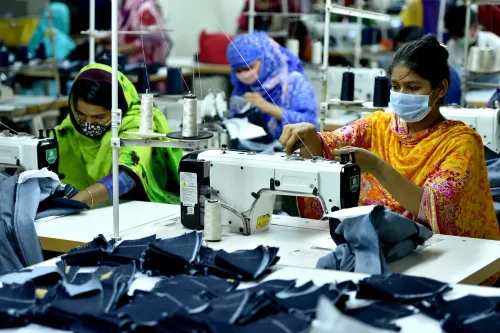
Women are losing ground in Bangladesh's ready-made garment (RMG) industry — once celebrated as a global model of female economic empowerment — as a combination of automation, unsafe working conditions, and factory closures accelerates their exit from the sector, according to a report by the Dhaka-based The Daily Star. The findings raise serious questions about whether the industry's growth is leaving its founding workforce behind.
A Decades-Long Decline in Female Representation
Women once dominated Bangladesh's garment floors. Data from the Bangladesh Garment Manufacturers and Exporters Association (BGMEA) shows women constituted roughly 80 per cent of the RMG workforce between 1980 and 1994. That share slid to 70 per cent by 2005, and further to approximately 53 per cent in both 2021 and 2023. The trend has been independently confirmed by studies from the Ethical Trading Initiative, GIZ, BRAC University, and the Bangladesh Institute of Development Studies (BIDS).
Automation and the Skills Gap Driving Women Out
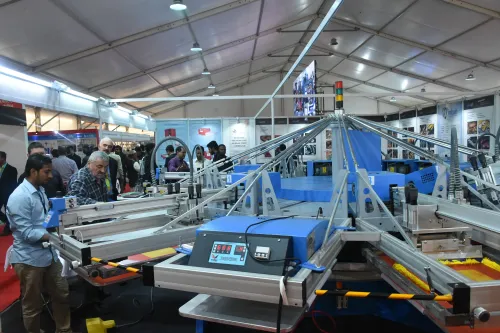
A central driver of this displacement is a widening skills mismatch created by new machinery. As factories introduce equipment such as overlock, flat lock, and button-hole machines — increasingly central to automated production lines — women are being left behind. The 2022 FSG report found that nearly a third of female workers have no or incomplete primary education, compared with 18 per cent of male workers. Men, the report noted, can operate a wider range of machinery and are preferred when production runs around the clock, including night shifts, due to employer safety concerns about women working after dark.
Women have rarely been trained to close this skills gap, the FSG report found. They hold under 15 per cent of supervisory roles and under 5 per cent of managerial roles — a disparity rooted in a widespread perception among owners and workers alike that men work faster and produce more.
Factory Closures and Older Women Exiting the Workforce
Beyond automation, two additional forces are shrinking women's presence in the sector. First, factories are closing outright amid political uncertainty, banking and loan difficulties, and falling international orders — circumstances that, according to the report, some businesses are also exploiting as a pretext to dismiss women. Second, older women — particularly those with children — are abandoning urban factory life and returning to their villages as living conditions near industrial zones become increasingly difficult to sustain.
Harsh Working Conditions Accelerating the Exit
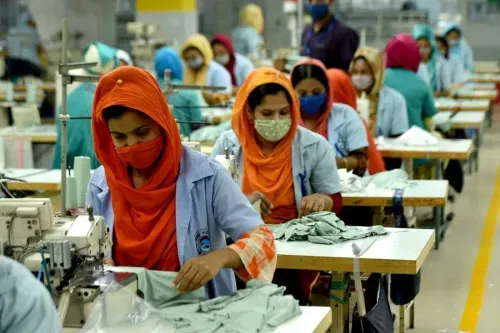
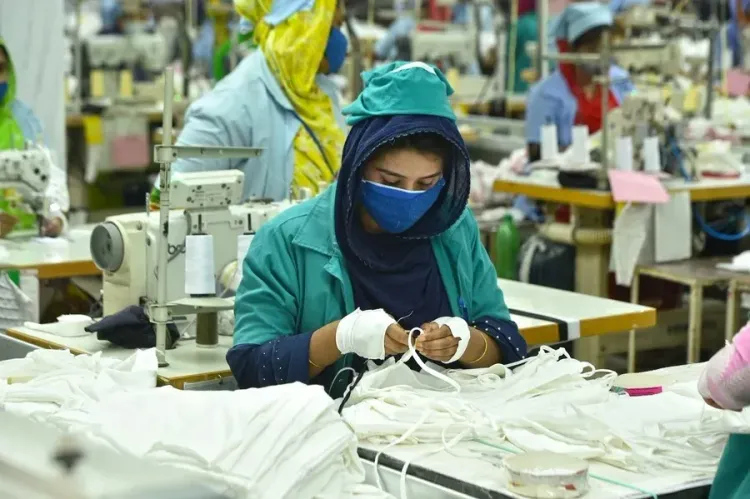
The FSG report described a punishing work environment: 12-hour days with limited breaks, hot and cramped factory floors packed with hundreds of workers, and recurring headaches, respiratory problems, and skin allergies among staff — none of whom are covered by employer health insurance. Verbal abuse from supervisors is reportedly common, and the report identified it as a key reason women leave the sector earlier than their male counterparts.
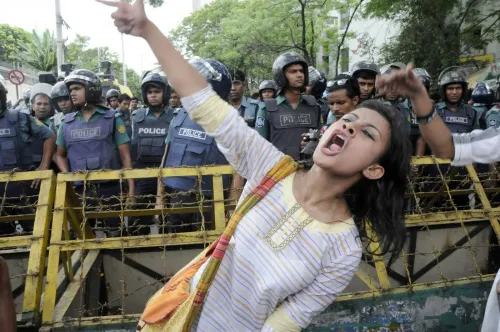
The report cited findings from the Icar study indicating that 80 per cent of women workers had experienced or witnessed sexual violence or harassment at work, alongside widespread psychological abuse.
Industry Growth Has Not Benefited Women Equally
Moshrefa Mishu, president of the Garments Sramik Unity Forum, was quoted as saying that workers' conditions have not improved in proportion to the industry's growth, with women remaining among its lowest-paid despite being its backbone. The RMG sector, which generates the vast majority of Bangladesh's export earnings, built its global reputation on the labour of millions of women — a legacy that critics argue is now being eroded without accountability. How Bangladesh and its global buyers respond to these findings will shape both the industry's future and the economic fate of millions of women workers.
Point of View
But the deeper failure is structural: decades of growth with no retraining pipelines, no harassment accountability, and no pathway for women into supervisory or technical roles. Global fashion brands that built supply chains on this workforce bear responsibility too. Sourcing audits that focus on price and delivery timelines while ignoring gender disaggregated employment data have made buyers complicit in a quiet displacement. The 53% figure is not a floor — without intervention, it will keep falling.
NationPress
26 Oct 2026
Frequently Asked Questions
Why are women losing jobs in Bangladesh's garment industry?
Women are being displaced from Bangladesh's RMG sector due to a combination of automation requiring skills many female workers lack, employer preferences against women on night shifts for safety reasons, harsh working conditions including harassment, and factory closures linked to political and economic instability. The 2022 FSG report and studies by BRAC University and BIDS all confirm the trend.
How much has women's share of Bangladesh's garment workforce declined?
Women made up roughly 80% of Bangladesh's garment workforce between 1980 and 1994, according to BGMEA data. That figure fell to 70% by 2005 and to approximately 53% in both 2021 and 2023 — a sustained, three-decade decline.
What role does automation play in pushing women out of the RMG sector?
New machinery such as overlock, flat lock, and button-hole equipment increasingly requires technical skills that many female workers — a third of whom have no or incomplete primary education — do not possess. Women have rarely been offered retraining to close this gap, while men who can operate a wider range of machines are preferred, especially for 24-hour production runs.
What working conditions do women face in Bangladesh's garment factories?
The FSG report described 12-hour shifts with limited breaks, overcrowded and hot factory floors, and health issues including headaches, respiratory problems, and skin allergies, with no employer-provided health insurance. The Icar report found 80% of women workers had experienced or witnessed sexual violence or harassment at work, alongside widespread psychological abuse from supervisors.
Who is affected most by the decline in female garment employment in Bangladesh?
Older women — particularly those with children — are among the hardest hit, with many returning to rural villages as urban living conditions near factories become unsustainable. Broadly, the millions of women who entered paid work through the RMG sector over the past four decades face an increasingly precarious foothold in an industry they helped build.