Why Has the ADB Reduced Bangladesh's Growth Forecast to 4.7%?
Synopsis
The ADB has once again revised Bangladesh's growth forecast downward to 4.7%, primarily due to stagnating investments and declining export earnings ahead of national elections. This article delves into the implications of these changes and the broader economic context, offering insights into the challenges the nation faces amidst political uncertainty.
Key Takeaways
The ADB has revised Bangladesh's growth forecast to 4.7%.
Investment stagnation and slower export growth are primary factors.
Export growth was only 0.62% in the latest reporting period.
The government has adjusted its economic growth targets downward.
Political uncertainties are impacting private sector credit growth.
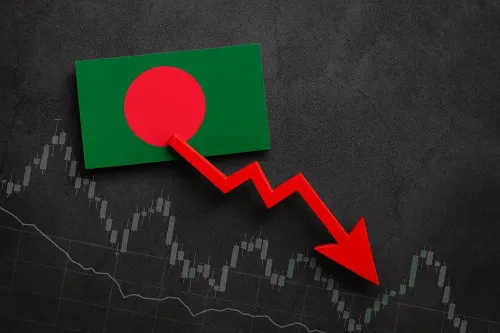
New Delhi, Dec 16 (NationPress) For the second time this year, the Asian Development Bank (ADB) has lowered its growth forecast for Bangladesh, citing stagnation in investment ahead of national elections and a decline in export earnings growth, according to a report on Tuesday.
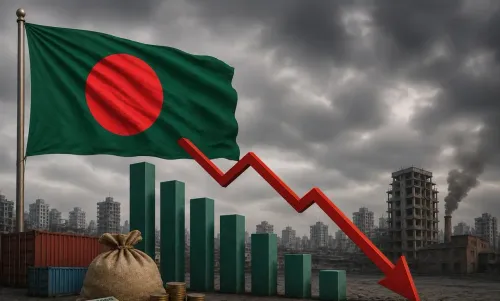
The ADB indicated that the gross domestic product growth for the current fiscal year (FY2025-26) might only reach 4.7 percent, a decrease from its previous forecast of 5 percent made in September, and 5.1 percent in April, as reported by The Daily Star.
“This downward revision reflects a weaker-than-anticipated export performance and increased uncertainty regarding investments due to the national elections scheduled for February,” noted the lender in its observations.
During the period of July to November FY26, exports grew merely 0.62 percent, a stark contrast to the 11.76 percent growth observed in the same timeframe the previous year, as indicated by data from the Export Promotion Bureau.
A significant strike at Chattogram Port in October, which is responsible for handling over 90 percent of Bangladesh’s trade, exacerbated the slowdown in exports, compounded by muted global demand, according to reports from local media.
Additionally, private sector credit growth witnessed a slowdown to 6.23 percent in October, down from 6.29 percent in September, marking the weakest pace in two decades. This trend reflects high borrowing costs, political uncertainty, and diminished consumer demand.
The government has revised its FY26 export growth target down to 9 percent from 10 percent and has also reduced the GDP growth target by 50 basis points to 5 percent.
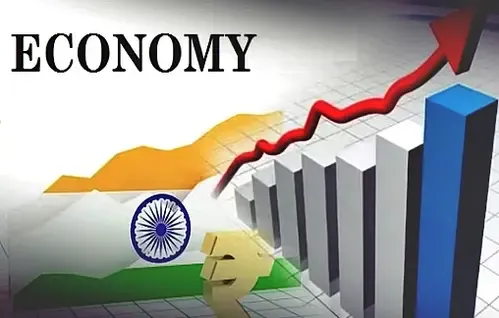
In October, the International Monetary Fund projected a growth rate of 4.9 percent for FY26, while the World Bank estimated a growth rate of 4.8 percent. The ADB's report also adjusted India’s growth forecast upwards for this year, and noted improvements in outlooks for Pakistan and Sri Lanka for 2025 and 2026.
Bangladesh is encountering substantial challenges in maintaining its trade relationships with major global economies due to the policy missteps of the interim government led by Muhammad Yunus, a report stated earlier this month.
Observers remark that Bangladesh initially seemed to strengthen its connections with its largest trade partner, China, after the political transition in July. However, after establishing trade agreements with the United States, China has adopted a more cautious approach in its trade relations with Bangladesh.
Point of View
It is crucial to recognize the economic shifts occurring in Bangladesh. The ADB's downward revision of growth forecasts highlights the urgent need for strategic planning and stability in governance. The nation must navigate these challenges while fostering stronger international trade relations.
NationPress
27 Sept 2026
Frequently Asked Questions
What is the new growth forecast for Bangladesh by ADB?
The ADB has reduced its growth forecast for Bangladesh to 4.7% for the fiscal year 2025-26.
Why has the ADB lowered its growth forecast?
The forecast was lowered due to stagnation in investments and slower growth in export earnings ahead of national elections.
What impact did the Chattogram Port strike have on exports?
The strike at Chattogram Port, which handles over 90% of Bangladesh's trade, contributed to the slowdown in export performance.
How did the government respond to these economic challenges?
The government has lowered its FY26 export growth target to 9% and reduced GDP growth expectations to 5%.
What are the projections from other financial institutions for Bangladesh's growth?
The IMF projects 4.9% growth, while the World Bank estimates 4.8% growth for FY26.