Bangladesh foreign loan commitments drop 37% in FY26 to $5.24 billion

Synopsis
Bangladesh's foreign loan commitments have collapsed by 37% in a single year — a $3 billion-plus shortfall that arrives just as debt repayments are climbing and remittance inflows remain below their historical floor. The timing could not be worse: the country is caught between losing concessional financing as it approaches middle-income status and not yet having the fiscal headroom to replace it.
Key Takeaways
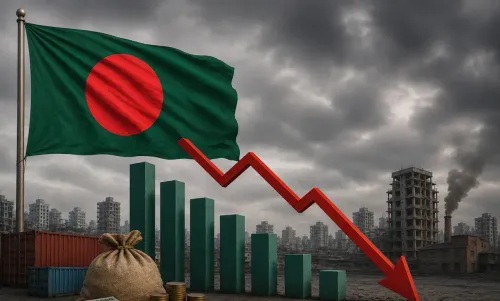
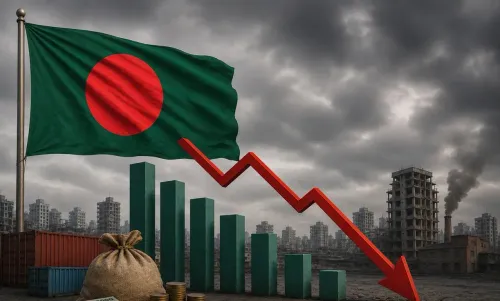
Bangladesh saw foreign loan commitments fall 37% in FY26 to $5.24 billion , down from $8.32 billion the prior year.
Actual foreign financing also declined, slipping to $8.07 billion from $8.57 billion a year earlier.
External loan repayments rose to $4.49 billion in FY26 from $4.09 billion , driven by the repayment phase of large infrastructure projects.
Remittances grew 15% year-on-year to $2.85 billion in July but remained below the $3 billion monthly historical threshold.
Higher fuel prices linked to West Asian conflict are widening Bangladesh's trade deficit and straining foreign exchange reserves.
Bangladesh recorded a 37 per cent fall in foreign loan commitments in FY26, with the figure sliding to $5.24 billion from $8.32 billion the previous year, according to a report by Dhaka-based The Daily Star. The sharp decline is eroding one of the country's key buffers against external shocks and raising serious questions about the sustainability of its development financing pipeline.
Scale of the Decline
Loan commitments represent future investment capacity — the pipeline of funds earmarked for infrastructure, energy, climate adaptation, and human development. A $3.08 billion year-on-year drop in commitments signals a significant contraction in resources available for these priorities in the years ahead.
Actual foreign financing also softened, slipping to $8.07 billion in FY26 from $8.57 billion a year earlier — a decline that the report describes as weakening external support 'precisely when Bangladesh requires substantial investment to sustain growth and strengthen resilience.'
Rising Debt Repayment Burden
The report flagged a 'more concerning' dimension: the rising cost of servicing existing debt. External loan repayments climbed to $4.49 billion in FY26, up from $4.09 billion the prior year. The increase reflects the repayment phase of loans disbursed over the past decade, many tied to large infrastructure and mega projects that experienced delays, cost overruns, or failed to generate expected economic returns within projected timeframes.
As a result, Bangladesh is now meeting repayment obligations before fully realising the productivity gains those investments were designed to deliver. According to the report, 'The challenge is likely to intensify as grace periods expire on additional foreign loans in the coming years.'
Middle-Income Transition and Concessional Finance
The report raised doubts about whether Bangladesh is becoming a less attractive destination for concessional financing as it transitions toward middle-income status. Countries at this income threshold typically lose access to the softest loan terms, yet may not yet be creditworthy enough to tap commercial markets at competitive rates — a financing gap that can constrain development momentum.
Remittances and Fuel Costs Add Pressure
Supporters of the government have pointed to remittance inflows as a counterweight. Remittances rose 15 per cent year-on-year to $2.85 billion in July, though this still fell short of the $3 billion monthly threshold that has historically marked a strong buffer. The report cautioned that 'one month does not establish a trend' and warned policymakers against assuming remittance growth can offset every external imbalance.
Compounding the pressure, higher international fuel prices driven by West Asian conflict are inflating Bangladesh's import bill even without significant increases in import volumes. According to the report, this 'places additional pressure on foreign exchange reserves, widens the trade deficit, and raises production costs across the economy.'
What Comes Next
Bangladesh faces a compounding set of pressures: shrinking loan commitments, rising debt servicing, a remittance base that remains below its historical floor, and an elevated import bill. How Dhaka navigates this confluence — through fiscal adjustment, new multilateral partnerships, or domestic resource mobilisation — will be critical to sustaining its development trajectory in the near term.
Point of View
Not yet creditworthy enough for cheap commercial capital. The simultaneous rise in debt servicing costs means the country is paying more for past investments while securing less for future ones. Remittances, long treated as a reliable shock absorber, are themselves under pressure. Without a credible strategy to deepen domestic resource mobilisation or forge new multilateral partnerships, Dhaka risks a development financing squeeze at precisely the moment its growth ambitions are most exposed.
NationPress
19 Sept 2026
Frequently Asked Questions
By how much did Bangladesh's foreign loan commitments fall in FY26?
Bangladesh's foreign loan commitments fell by 37 per cent in FY26, dropping to $5.24 billion from $8.32 billion the previous year, according to a report by The Daily Star. The decline signals a significant reduction in future investment capacity across infrastructure, energy, and human development.
Why are Bangladesh's foreign loan commitments declining?
The report points to Bangladesh's transition toward middle-income status as a key factor, which typically reduces eligibility for concessional financing. Many lenders and multilateral institutions offer softer terms to lower-income economies, and as Bangladesh crosses income thresholds, access to those terms narrows.
How much is Bangladesh paying in external debt repayments?
External loan repayments rose to $4.49 billion in FY26 from $4.09 billion a year earlier. The increase reflects the repayment phase of large infrastructure and mega projects from the past decade, many of which faced delays, cost overruns, or underdelivered on projected economic returns.
Are remittances helping offset Bangladesh's financing shortfall?
Remittances grew 15 per cent year-on-year to $2.85 billion in July, but this remained below the $3 billion monthly threshold considered a strong buffer. The report warned that one month of growth does not establish a trend and that remittances cannot be relied upon to offset every external imbalance.
What other pressures is Bangladesh's economy facing?
Higher international fuel prices, driven partly by the West Asian conflict, are inflating Bangladesh's import bill and widening its trade deficit even without significant volume increases. This is adding pressure on foreign exchange reserves and raising production costs across the economy.