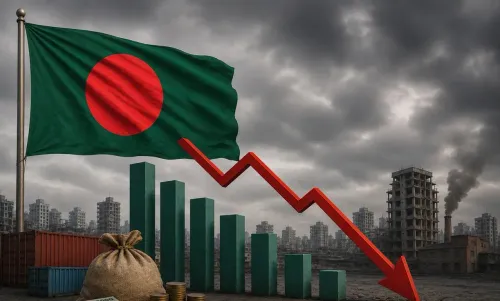
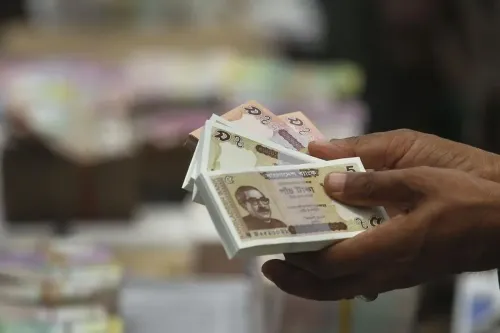
Bangladesh external debt hits $78.22 billion, debt servicing to rise: Finance Minister
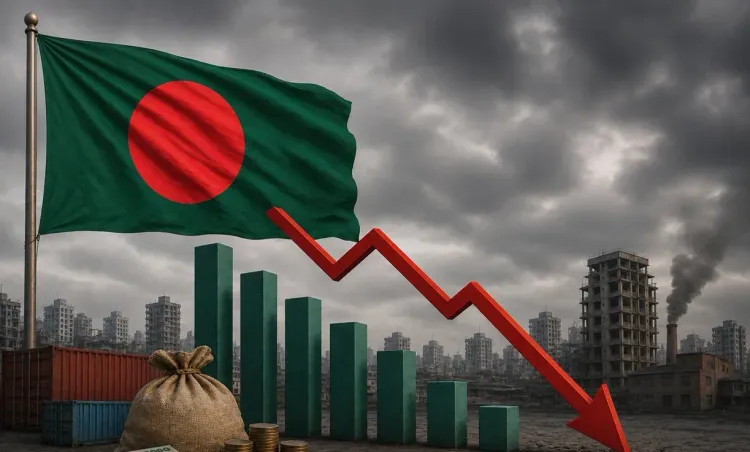
Synopsis
Bangladesh's external debt has crossed $78.22 billion, with over a third now in costlier non-concessional form — a direct consequence of its graduation to lower-middle-income status. With recurring revenue shortfalls, a ballooning budget deficit, and rising repayment obligations, Dhaka's fiscal tightrope is getting narrower.
Key Takeaways
Bangladesh's total external debt stood at $78.22 billion as of March 2025 , according to Finance Minister Amir Khosru Mahmud Chowdhury .
61.97 per cent of the debt is concessional; 38.03 per cent is non-concessional.
Access to highly concessional financing has declined since Bangladesh attained lower-middle-income status , per a World Bank assessment.
The government is updating its Medium-Term Debt Management Strategy (MTDS) and conducting a Debt Sustainability Analysis (DSA) .
Bangladesh's proposed budget stands at approximately Tk 9.3 lakh crore , with a fiscal deficit of roughly Tk 2.43 lakh crore — about 3.7 per cent of GDP .
Analysts warn of recurring revenue shortfalls, with the National Board of Revenue target set at Tk 6 lakh crore .
Bangladesh's total external debt stood at $78.22 billion as of March 2025, Finance Minister Amir Khosru Mahmud Chowdhury informed parliament, cautioning that the country's debt-servicing obligations are set to increase in the years ahead. The disclosure, reported by Dhaka-based The Business Standard, underscores mounting fiscal pressure on an economy navigating a tightening external financing environment.
Debt Composition and Concessional Access
Of the total external debt, 61.97 per cent is concessional in nature, while the remaining 38.03 per cent is non-concessional. The minister noted that Bangladesh's access to highly concessional financing has narrowed considerably since the country graduated from low-income to lower-middle-income status, according to a World Bank assessment. This structural shift means Dhaka must increasingly rely on costlier borrowing to fund development needs.
Government's Debt Management Measures
Finance Minister Chowdhury outlined several precautionary steps the administration has taken to ensure sustainable debt management. 'Proposals for new foreign loans and related development projects are being scrutinised more rigorously to avoid financing unnecessary or low-priority projects through high-interest external borrowing,' he was quoted as saying. The government is reportedly considering only projects with high economic returns for foreign financing. Monitoring of foreign-funded projects has also been strengthened to curb the long-standing problem of project delays and cost overruns.
Additionally, the government is updating its Medium-Term Debt Management Strategy (MTDS) and conducting a Debt Sustainability Analysis (DSA) to reinforce the resilience of public debt management over the medium term.
Broader Fiscal Pressures
The debt disclosure comes against a backdrop of wider fiscal stress. The National Board of Revenue has been assigned a collection target of approximately Tk 6 lakh crore, but analysts have warned that substantial shortfalls have been recurring. The government has proposed a budget of roughly Tk 9.3 lakh crore and projected a fiscal deficit of around Tk 2.43 lakh crore, equivalent to approximately 3.7 per cent of GDP. Notably, reports earlier this month suggested that estimated losses from corruption, overpricing, and systemic inefficiency could possibly exceed the country's budget deficit — a claim that, if accurate, would compound the debt-servicing challenge significantly.
What This Means Going Forward
The growing volume of foreign borrowing will increase future principal and interest repayment burdens, the minister acknowledged. With concessional windows narrowing and non-concessional debt accounting for over a third of the total, Bangladesh faces a more expensive borrowing environment at precisely the moment its fiscal headroom is under pressure. Analysts will be watching whether the updated MTDS and DSA translate into tangible course corrections — or remain policy documents on paper.
Point of View
The MTDS update is necessary — but updating a strategy document is not the same as fixing the underlying incentive structures that drive project delays, cost overruns, and corruption losses. The real test is whether the stricter loan scrutiny the minister described is applied consistently, or whether political priorities override it as they have in the past.
NationPress
26 Sept 2026
Frequently Asked Questions
What is Bangladesh's total external debt as of 2025?
Bangladesh's total external debt stood at $78.22 billion as of March 2025, according to Finance Minister Amir Khosru Mahmud Chowdhury's statement to parliament. Of this, 61.97 per cent is concessional and 38.03 per cent is non-concessional.
Why is Bangladesh's access to concessional loans declining?
Bangladesh's access to highly concessional financing has narrowed because the country graduated from low-income to lower-middle-income status, as assessed by the World Bank. This means it no longer qualifies for the softest loan terms offered by multilateral lenders, pushing it toward costlier borrowing.
What steps is Bangladesh taking to manage its debt sustainably?
The government is scrutinising new foreign loan proposals more rigorously, prioritising only high-economic-return projects for foreign financing, and strengthening monitoring of foreign-funded projects to reduce delays and cost overruns. It is also updating its Medium-Term Debt Management Strategy (MTDS) and conducting a Debt Sustainability Analysis (DSA).
What is Bangladesh's fiscal deficit for the current budget?
Bangladesh has projected a fiscal deficit of approximately Tk 2.43 lakh crore for the current budget cycle, equivalent to about 3.7 per cent of GDP, against a total proposed budget of roughly Tk 9.3 lakh crore.
How does Bangladesh's revenue shortfall affect its debt situation?
The National Board of Revenue has a collection target of about Tk 6 lakh crore, but analysts warn that substantial shortfalls have been occurring repeatedly. Combined with rising debt-servicing obligations and a widening fiscal deficit, persistent revenue underperformance tightens the government's ability to manage external debt without further borrowing.