Bangladesh's governance deficit may dwarf its budget gap, report warns
Synopsis
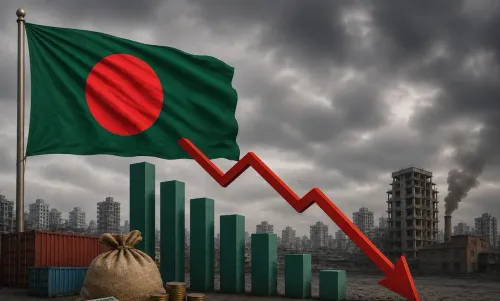
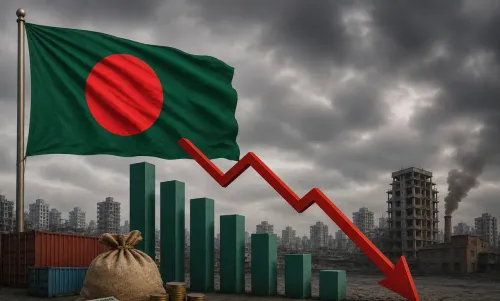
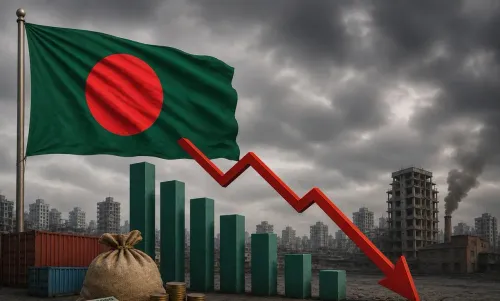
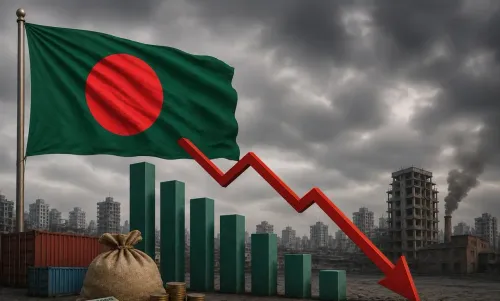
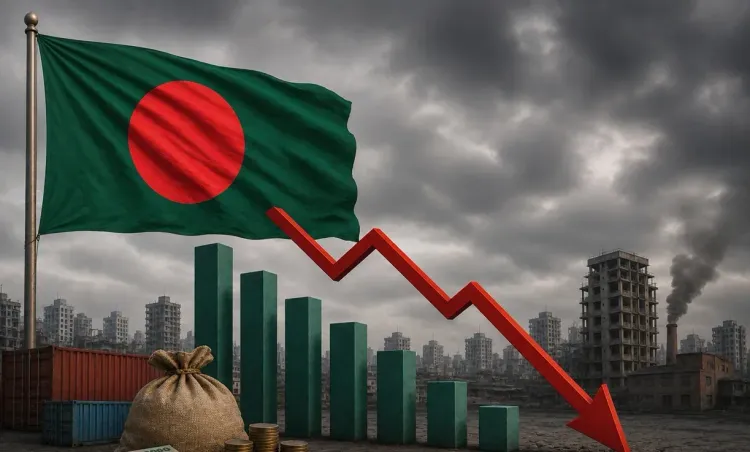
Bangladesh's real fiscal problem isn't the budget gap — it's the 'EGG deficit': the systemic shortfall in ethics and good governance. A new report argues that institutionalised extraction and elite capture may be costing the country more than its entire budget deficit, while post-budget debate fixates on the wrong numbers.
Key Takeaways
The Business Standard (Dhaka) report identifies an 'EGG deficit' — a deficit in ethics and good governance — as Bangladesh's most critical economic problem.
Bangladesh's proposed budget stands at approximately Tk 9.3 lakh crore , with a projected fiscal deficit of Tk 2.43 lakh crore , or about 3.7% of GDP .
The NBR has a revenue collection target of Tk 6 lakh crore ; recent shortfalls have ranged from Tk 40,000 crore to over Tk 1 lakh crore .
Some analysts estimate up to 40% of public expenditure is lost to extraction, overpricing, and inefficiency.
The report describes the budget deficit as a 'fiscal mirage' generated by systematic, institutionalised extraction within an elite-captured system.
Luxury consumption and high-end real estate continue to grow, indicating taxable wealth exists but remains outside the effective tax net.
Bangladesh's fiscal shortfalls — widely discussed in post-budget commentary — may be symptoms of a far deeper structural crisis rooted in ethics and governance failures, according to a report by Dhaka-based The Business Standard. The report argues that losses from corruption, overpricing, inefficiency, and systemic extraction could potentially exceed the country's budget deficit itself, making the governance gap the most urgent — and least debated — problem facing Bangladesh's economy.
The Three Deficits
The report identifies three concurrent deficits burdening the Bangladeshi economy. The first is the budget deficit: the government has proposed a budget of approximately Tk 9.3 lakh crore with a projected fiscal deficit of roughly Tk 2.43 lakh crore, equivalent to about 3.7 per cent of GDP. The second is the revenue deficit: the National Board of Revenue (NBR) has been assigned a collection target of about Tk 6 lakh crore, yet analysts warn that substantial shortfalls have recurred repeatedly, with recent NBR deficits ranging from Tk 40,000 crore to more than Tk 1 lakh crore.
The third — and according to the report, the most consequential — is what it terms the 'EGG deficit': the deficit in ethics and good governance. This third deficit, the report contends, is the root cause that makes the other two structural rather than cyclical.
Scale of Extraction and Leakage
Some analysts cited in the report estimate that as much as 40 per cent of public expenditure may be lost to extraction, though other studies point to lower — but still substantial — leakage figures. The report describes much of the budget deficit as less an economic necessity and more what it calls a 'fiscal mirage' — one created by 'systematic, institutionalised extraction within an elite-captured system.'
Notably, this framing shifts the analytical lens from macroeconomic management to political economy: the problem, the report argues, is not a lack of resources but a failure to mobilise and retain them within the public system.
Wealth Exists, But Remains Untaxed
The report points to a visible paradox: luxury consumption continues to grow in Bangladesh, and high-end real estate markets remain active — indicators that substantial private wealth exists. Yet misgovernance has allowed a large portion of taxable wealth to remain effectively outside the reach of the tax system. This structural gap between existing wealth and tax-system reach is, the report argues, a direct consequence of governance failure rather than economic underdevelopment.
What Needs to Change
The report is unambiguous in its prescription: Bangladesh is expected to remain trapped in this cycle unless 'corruption and extraction are reduced.' It criticises the tendency of post-budget public discourse to focus almost exclusively on the size of the budget, the fiscal deficit, revenue targets, and borrowing requirements — while sidestepping the governance failures that make those numbers structurally worse year after year.
This comes amid broader concerns across South Asia about elite capture of fiscal systems and the widening gap between nominal budget ambition and on-the-ground outcomes. Whether Bangladesh's current administration treats the EGG deficit as a policy priority — rather than a rhetorical one — will likely determine the trajectory of its fiscal health in the years ahead.
Point of View
But it risks becoming another rhetorical device unless it is backed by measurable governance benchmarks. Bangladesh is not unique in having elite-captured fiscal systems — the pattern recurs across South Asia — but the scale of alleged extraction described here, potentially exceeding the budget deficit itself, signals a systemic rather than incidental failure. The deeper problem is that post-budget discourse, as the report rightly notes, remains trapped in a numbers game that obscures the political economy underneath. Until governance reform is treated as a fiscal intervention — not just a moral aspiration — the revenue shortfall will keep recurring regardless of how ambitious the NBR target is set each year.
NationPress
19 Sept 2026
Frequently Asked Questions
What is the 'EGG deficit' in Bangladesh?
The 'EGG deficit' refers to the deficit in ethics and good governance, a term used in a report by The Business Standard (Dhaka) to describe the systemic losses Bangladesh incurs through corruption, overpricing, inefficiency, and institutionalised extraction. The report argues this governance deficit is the root cause behind the country's recurring budget and revenue shortfalls.
How large is Bangladesh's current budget deficit?
The Bangladesh government has proposed a budget of approximately Tk 9.3 lakh crore, with a projected fiscal deficit of roughly Tk 2.43 lakh crore, equivalent to about 3.7 per cent of GDP. The National Board of Revenue's collection target is set at about Tk 6 lakh crore, though analysts warn of a substantial recurring shortfall.
How much public money is estimated to be lost to corruption in Bangladesh?
Some analysts cited in the report estimate that as much as 40 per cent of public expenditure may be lost to extraction, overpricing, and inefficiency, though other studies suggest lower but still significant leakage. The report argues these losses could potentially exceed the budget deficit itself.
Why does Bangladesh's tax system fail to capture existing wealth?
According to the report, misgovernance has allowed a large portion of taxable wealth to remain outside the effective reach of the tax system, even as luxury consumption and high-end real estate markets continue to grow. This gap is attributed to governance failure rather than a lack of wealth in the economy.
What needs to change for Bangladesh to break out of this cycle?
The report states that Bangladesh will continue in the same trend unless corruption and extraction are reduced. It calls for post-budget discourse to move beyond headline fiscal numbers and address the underlying governance failures that make recurring deficits structurally inevitable.