Bangladesh garment industry rivers: 2.4 bn litres of daily toxic discharge
Synopsis
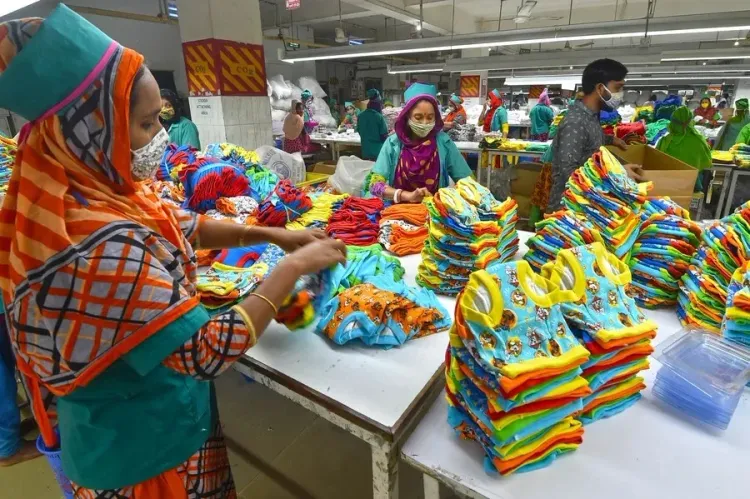
Bangladesh's garment factories — the backbone of 80% of the country's export earnings — are dumping 2.4 billion litres of untreated toxic effluents into rivers every day, a new report reveals. With pollution linked to 26.6% of all deaths in Bangladesh and green certifications failing to cover full supply chains, the crisis is no longer just environmental — it is a trade-access time bomb.
Key Takeaways
Over 7,000 factories in greater Dhaka discharge 2.4 billion litres of untreated effluents daily into nearby water bodies.
Bangladesh's garment industry generates nearly 80 per cent of the country's export earnings.
The Lancet Commission estimated pollution is responsible for 26.6 per cent of all deaths in Bangladesh.
Despite 273 LEED-certified green factories, certifications do not guarantee clean wet processing or wastewater management across supply chains.
Weak enforcement by the Department of Environment — with penalties too low to deter illegal discharge — is identified as a key structural failure.
The report calls for higher fines, public naming of violators, and open access to monitoring data, warning that environmental compliance is becoming a condition for international market access.
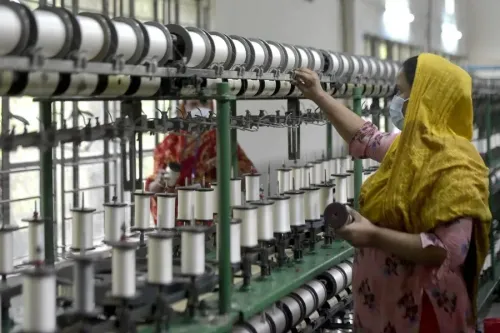
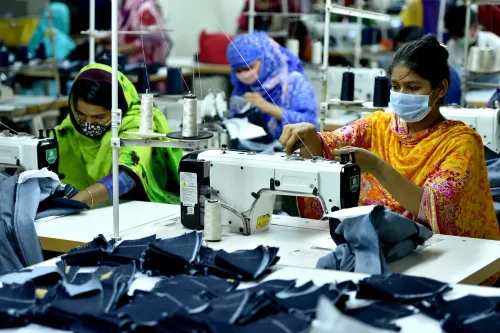
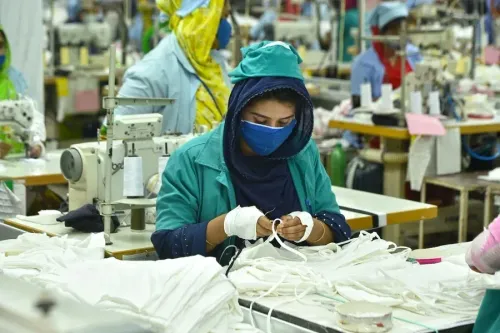
Bangladesh's garment industry, which accounts for nearly 80 per cent of the country's total export earnings, is driving its rivers to environmental breaking point, according to a new report citing World Bank data. More than 7,000 factories in the greater Dhaka region collectively discharge approximately 2.4 billion litres of untreated effluents every day into surrounding water bodies.
Scale of the Crisis
The findings, published by Dhaka-based daily The Daily Star, paint a stark picture of an industry whose low-cost advantage for international buyers is being subsidised by catastrophic environmental damage borne by local communities. Farmers can no longer irrigate their fields with river water, garment workers have spent years inhaling textile dust, and children in riverside slums are reportedly showing developmental delays — consequences, the report argues, that never surface in corporate ESG disclosures.
'The people bearing these costs are the farmers who can no longer irrigate with river water, garment workers whose lungs have absorbed years of textile dust, and children in riverside slums whose developmental delays will never appear in a corporate ESG disclosure,' the report noted.
Green Certifications Fall Short
Despite Bangladesh hosting 273 LEED-certified green factories — among the highest concentrations globally — the report cautions that these certifications 'do not automatically guarantee that wet processing, dyeing, washing, and wastewater discharge are being managed across the entire production chain.' In other words, a green-certified building does not equal a clean supply chain.
This gap between certification optics and on-the-ground reality is at the core of what critics call 'sustainability washing' — a practice that allows multinational fashion brands to publicly commit to goals such as 'carbon neutrality', 'circular fashion', or 'net-zero supply chains' while their distant production sites absorb the true environmental cost, invisible to corporate sustainability reports.
Weak Enforcement Enables Pollution
The report identifies weak domestic law enforcement as the structural enabler of the crisis. Bangladesh's Department of Environment is reportedly hampered by limited staffing and resources, with penalties for illegal discharge set so low that polluting is often the economically rational choice for factories. 'If the cost of treating waste exceeds the expected penalty for illegal discharge, pollution becomes the economically rational decision,' the report stated.
This enforcement vacuum has allowed international buyers to extract cost advantages from Bangladesh's manufacturing base while the environmental burden falls squarely on local communities — a dynamic critics argue constitutes a form of regulatory arbitrage.
The Human Health Toll
The health consequences are severe. A brief by the Lancet Commission on Bangladesh estimated that pollution across air, water, and soil was responsible for 26.6 per cent of all deaths in the country — a figure that underscores how the environmental crisis has become a public health emergency. Bangladesh's rivers, once lifelines for agriculture and daily sustenance, are increasingly unfit for use by riverside communities.
What the Report Recommends
The report urges Bangladesh's government to substantially raise fines on polluters, publicly name rule violators, and make environmental monitoring data accessible to the public. It also frames the issue as one with direct trade implications: 'This issue is becoming increasingly urgent because environmental compliance is evolving from a domestic regulatory concern into a condition for maintaining access to international markets.' With the European Union and other major markets tightening supply chain due-diligence regulations, Bangladesh's garment sector faces the prospect that its environmental record could eventually threaten its export access — the very lifeline the industry depends on.
Point of View
Local rivers and lungs absorb the damage. The 273 LEED certifications are a fig leaf — green buildings do not equal green supply chains, and the report is right to call that out. What is missing from most coverage is the trade dimension: as the EU's supply chain due-diligence rules tighten, Bangladesh's environmental deficit is not just a moral problem but a market-access risk that could unravel the very export engine the country depends on. The real accountability gap is not in Dhaka — it is in the boardrooms of the brands that set the price points that make pollution the rational choice.
NationPress
22 Sept 2026
Frequently Asked Questions
How much untreated effluent do Bangladesh's garment factories discharge daily?
Over 7,000 factories in the greater Dhaka region discharge approximately 2.4 billion litres of untreated effluents into nearby rivers and water bodies every day, according to a report citing World Bank data. The scale makes it one of the most severe industrial water-pollution crises in South Asia.
What share of Bangladesh's exports does the garment industry account for?
The garment industry generates nearly 80 per cent of Bangladesh's total export earnings, making it the dominant pillar of the country's economy. This economic centrality has historically made strict environmental enforcement politically difficult.
What does the Lancet Commission say about pollution deaths in Bangladesh?
The Lancet Commission's Bangladesh brief estimated that pollution across air, water, and soil is responsible for 26.6 per cent of all deaths in the country. This makes environmental degradation one of the leading drivers of mortality in Bangladesh.
Do Bangladesh's LEED-certified factories solve the pollution problem?
Not fully, according to the report. Despite 273 LEED-certified green factories, the certifications do not automatically guarantee that wet processing, dyeing, washing, and wastewater discharge are managed cleanly across the entire production chain. Certification covers building standards, not necessarily supply-chain environmental performance.
What reforms does the report recommend to address river pollution in Bangladesh?
The report urges the government to substantially raise fines on polluters, publicly name rule violators, and make environmental monitoring data available to the public. It also warns that environmental compliance is fast becoming a prerequisite for maintaining access to international export markets, adding a trade-policy urgency to the domestic regulatory challenge.