Is Climate Change and Industrial Pollution Amplifying the Healthcare Crisis in Bangladesh?
Synopsis
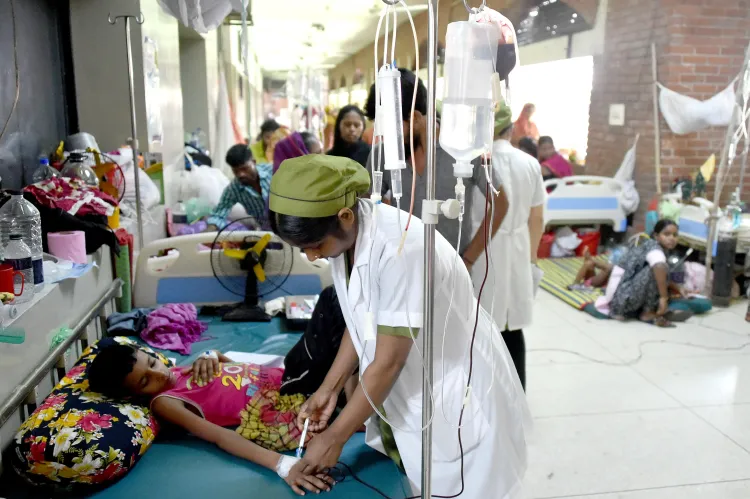
Climate change and industrial pollution are critically impacting healthcare in Bangladesh, causing a rise in respiratory diseases and overwhelming medical facilities. As political instability looms, experts urge immediate action to address the crisis and improve living conditions for millions affected.
Key Takeaways
Climate change and industrial pollution are significantly affecting public health.
Dhaka has some of the worst air quality in the world.
Rising healthcare costs lead to debt and migration for work.
Political instability hinders effective responses to the crisis.
Urgent action is needed to separate industrial and residential areas.
New Delhi, Feb 5 (NationPress) Climate change and industrial pollution are exacerbating the healthcare crisis in Bangladesh, as highlighted by a recent media report.
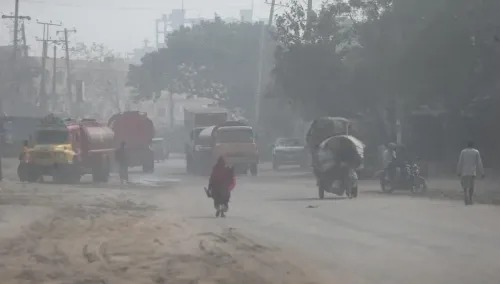
The Irish Times noted that even though Bangladesh contributes only around 0.3% to global CO2 emissions from combustible fuels, the air quality in its capital, Dhaka, frequently ranks among the worst globally.
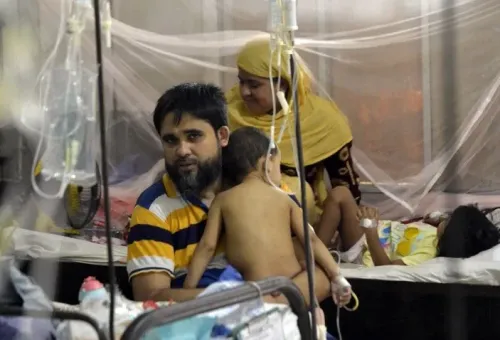
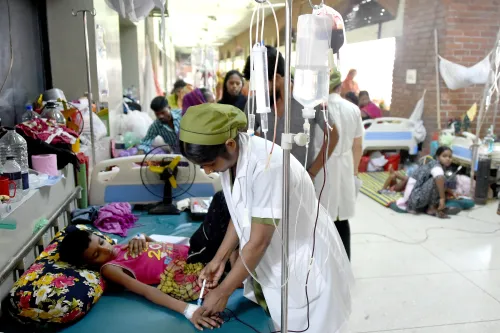
This deteriorating air quality is leading to a rise in diseases like asthma, lung cancer, bronchitis, pneumonia, and chronic obstructive pulmonary disease in the capital.
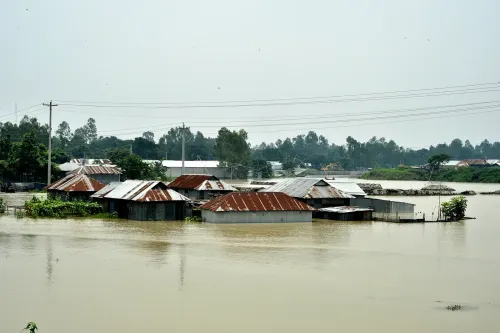
Climate scientists assert that Bangladesh, due to its low-lying terrain, is among the most susceptible nations to the impacts of climate change.
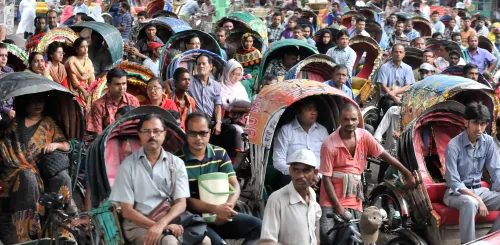
With a current population of approximately 174 million, projections indicate that by 2050, it could evolve into one of the most densely populated regions, according to a recent UN report.
If environmental pollution continues to escalate, it could lead to a total collapse of Bangladesh’s healthcare system, warned Dr. Mustafijur Rahman from the National Institute of Diseases of the Chest and Hospital in Dhaka.
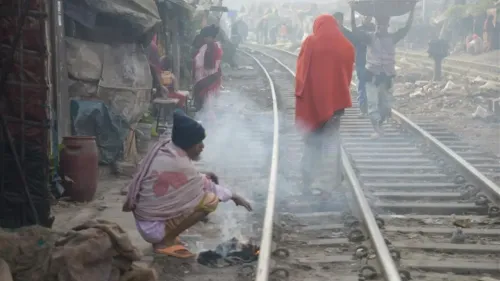
Dr. Rahman pointed out that many residents live in slums near industrial zones where the sewage infrastructure is inadequate for decent living conditions, resulting in a transfer of infections among the population.
“Brickfields surrounding Dhaka are a health risk, as are garment factories and tanneries, which release harmful emissions and dispose of toxic waste into the rivers, contaminating local water sources,” the report mentioned.
The report also highlighted the steep healthcare expenses that often plunge families into debt, compelling them to seek work abroad, sometimes resorting to perilous methods to cross into Europe.
“Political instability in our country exacerbates this situation,” lamented Dr. Md. Safiun Islam, a 50-year-old assistant professor of respiratory medicine at the hospital.
He noted an “exponential increase” in patient numbers over the past five years, with some days seeing 20-30 individuals waiting for ICU admission.
Addressing the “pollution-producing sectors” is an urgent priority, he emphasized.
With elections scheduled for February 12, the first since the ousting of long-standing Prime Minister Sheikh Hasina in August 2024, Dr. Rahman called for initiatives to segregate industrial zones from residential areas, alongside educating Dhaka’s populace about sanitation and hygiene practices to minimize health risks.
He urged the incoming government to undertake “strategic planning” and ensure the “right individuals in appropriate positions.”
Point of View
I firmly believe that the ongoing healthcare crisis in Bangladesh, exacerbated by climate change and pollution, deserves urgent attention. The statistics are alarming, and the implication on public health is profound. We must advocate for sustainable practices and policies that prioritize the well-being of the population.
NationPress
27 Sept 2026
Frequently Asked Questions
What is causing the healthcare crisis in Bangladesh?
The healthcare crisis in Bangladesh is primarily driven by climate change and industrial pollution, leading to poor air quality and a rise in respiratory and other diseases.
How does pollution affect health in Dhaka?
Pollution in Dhaka contributes to increased cases of asthma, lung cancer, bronchitis, pneumonia, and chronic obstructive pulmonary disease due to poor air quality.
What are the economic impacts of healthcare costs in Bangladesh?
High healthcare costs often lead families into debt, and many are forced to seek employment abroad, sometimes through dangerous routes.
What steps are being taken to address this crisis?
Experts are calling for better urban planning, separation of industrial and residential areas, and education on hygiene and sanitation to mitigate health risks.
What role does political instability play in this situation?
Political unrest complicates efforts to address healthcare issues, making it challenging to implement effective solutions for pollution and public health.