Why Does Bangladesh's Capital Dhaka Struggle to Become a Modern City?
Synopsis
Dhaka, the capital of Bangladesh, is expanding rapidly yet remains unlivable and poorly planned. A recent report highlights critical issues such as inadequate infrastructure, pollution, and socio-economic challenges facing its residents. Explore the factors preventing Dhaka from transforming into a modern city.
Key Takeaways
Dhaka's growth is rapid but unplanned.
High rates of pollution are a major concern.
Inadequate infrastructure impacts livability.
Social issues like child marriage are prevalent.
Flooding poses a constant threat to residents.
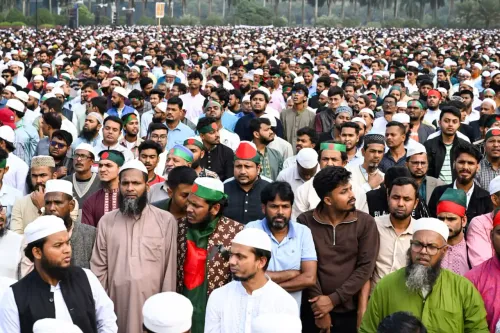
Dhaka, Jan 10 (NationPress) The evolution of Bangladesh’s capital, Dhaka, largely mirrors the expansion of a delicate economic framework, resulting in the city not achieving the status of a modern metropolis. Despite its rapid growth in both area and population over recent decades, Dhaka remains unlivable, characterized by a lack of planning and organization, according to a report released on Saturday.
“Transportation remains a persistent source of distress. Urban housing shows minimal evidence of strategic planning. Essential services such as electricity, water, and gas are of substandard quality. The absence of green spaces and sidewalks is glaring. Noise and air pollution are rampant. The list of challenges continues to grow. A management crisis is widespread throughout the city,” detailed a report from Bangladesh’s Bengali daily Prothom Alo.
The report indicates that Dhaka is increasingly transforming into a city of slums, with informal settlements proliferating throughout the capital, often making headlines during evictions and fire-related incidents.
While urbanization has altered the demographic landscape, there is a noticeable lack of attention to the living conditions of its inhabitants, their employment, the development of social ties, and the formation of new communities.
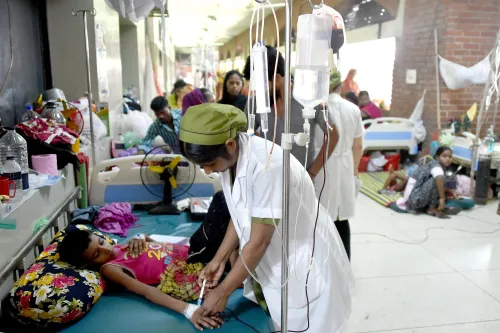
“High rates of child marriage, widespread child malnutrition, low educational achievements, elevated crime rates, and limited access to healthcare are prevalent issues,” highlighted the report.
In July 2025, the Economist Intelligence Unit (EIU), the research branch of the British media group 'The Economist', released a global survey of 173 cities, evaluating them on criteria such as stability, healthcare, culture and environment, education, and infrastructure. In this survey, Dhaka ranked 171st on the Global Liveability Index.
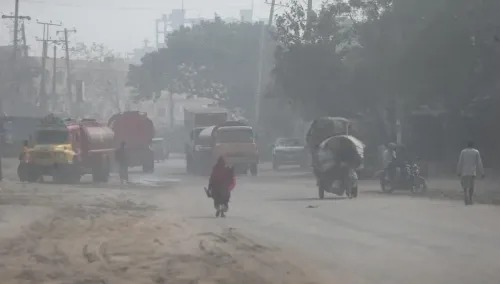
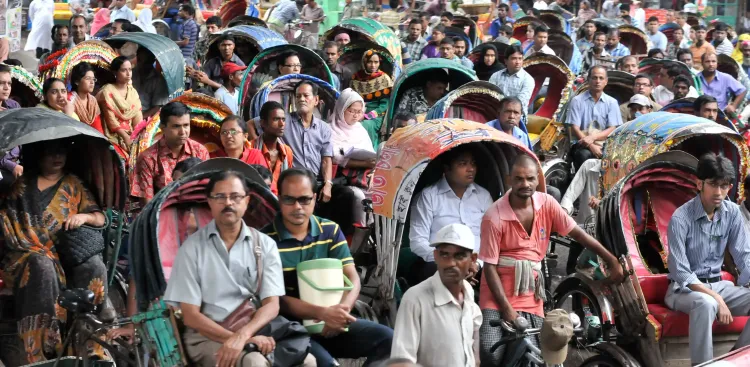
“Furthermore, daily global assessments of air pollution consistently place Dhaka among the most polluted cities globally. When discussing the metropolitan region of Dhaka, the image that often arises is that of a densely packed, chaotic city. Traffic congestion has severely hampered the city’s functionality, drastically slowing the pace of life for its residents,” the report elaborated.
The report also emphasized that the capital's residents live in constant fear of flooding due to an inadequate drainage system and poor governance, leading to the accumulation of waste throughout the city.
“Construction activities are ongoing year-round, generating dust that fills the air of the city. The urban landscape appears bleak and dreary. Compounding these issues are poverty, social inequality, a strained healthcare system, and ineffective governance,” it concluded.
Point of View
It is imperative to acknowledge the challenges facing Dhaka, Bangladesh's capital. While urbanization has brought growth, it has also highlighted significant socio-economic disparities and infrastructural inadequacies. Our commitment is to inform and engage with these crucial issues, fostering an understanding of the complexities that shape our capital.
NationPress
5 Oct 2026
Frequently Asked Questions
What are the main issues facing Dhaka?
Dhaka faces numerous challenges, including unplanned urban growth, inadequate infrastructure, high pollution levels, and social issues such as child marriage and malnutrition.
How does Dhaka rank globally in terms of livability?
According to the Economist Intelligence Unit, Dhaka ranked 171st on the Global Liveability Index, highlighting its struggles in various livability metrics.
What are the health concerns in Dhaka?
Health concerns in Dhaka include limited access to healthcare, high child malnutrition rates, and the prevalence of communicable diseases due to poor living conditions.
Is Dhaka safe from flooding?
Residents live under the constant threat of flooding due to inadequate drainage systems and poor urban planning, leading to waste accumulation and health risks.
What is the future outlook for Dhaka?
The future of Dhaka depends on addressing its infrastructural and socio-economic challenges, which requires comprehensive urban planning and governance reforms.