BIS rolls out 6 new standards for medical assistive tech under ICMR's NLEAP
Synopsis
India has quietly laid the regulatory groundwork for its assistive technology sector: six new BIS standards covering everything from elbow crutches to braille signage now set a quality baseline for manufacturers, healthcare providers, and policymakers — and could open the door for Indian-made assistive products to reach international markets.
Key Takeaways
BIS introduced 6 new standards for medical assistive technologies on 1 May 2025 under the NLEAP initiative.
Standards cover elbow crutches , walking sticks (single and multi-legged), portable ramps , tactile guide maps , and braille on signage and appliances.
The walking sticks standard is an indigenous standard developed with Indian industry experts, according to the Ministry of Consumer Affairs, Food and Public Distribution .
Standards are aligned with global practices , making compliant Indian products eligible for international export .
The initiative is part of ICMR's NLEAP framework, aimed at formalising India's assistive technology ecosystem.
The Bureau of Indian Standards (BIS) has introduced six new standards for medical assistive technologies under the National List of Essential Assistive Products (NLEAP) initiative, spearheaded by the Indian Council of Medical Research (ICMR). Announced on Friday, 1 May, the standards are designed to guide policymakers, healthcare providers, and industry stakeholders on the provision and development of assistive products across India.
What the Six Standards Cover
The new BIS standards span a range of mobility and accessibility aids. Standards for elbow crutches specify requirements and test methods covering safety, ergonomics, performance, and manufacturer information including marking and labelling.
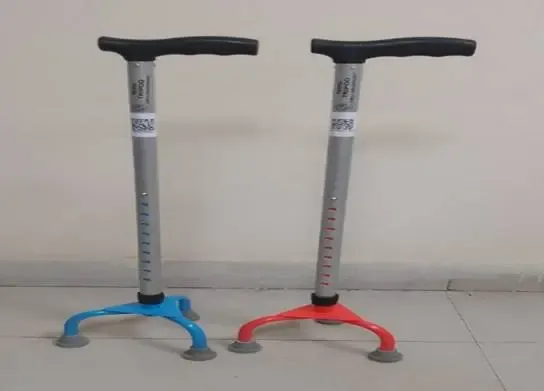
Two separate standards address walking sticks: one covers material, shape, dimensions, workmanship, finish, and performance across wooden, cane, aluminium, plastic, and rubber variants; the other specifies requirements for walking sticks with three or more legs, including handle and tip specifications along with safety, ergonomics, and labelling guidelines. The Ministry of Consumer Affairs, Food and Public Distribution confirmed that the walking sticks standard is an indigenous standard developed in consultation with technical experts from Indian industry.
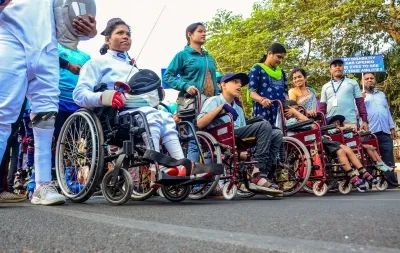
The standard for portable ramps covers ramps designed for wheelchair users, as well as individuals pushing strollers, carts, or other wheeled objects, to more easily access steps, buildings, and transport systems. It applies to powered and manual wheelchair users, older persons, and children, with or without caregiver assistance, across home, workplace, and community environments.
Accessible Design Standards for the Visually Impaired
Two standards under the Accessible Design category address the needs of persons with visual impairments. The first explains what information tactile guide maps should include and how they should be designed and displayed — helping people who are blind or have low vision navigate public buildings, transport areas, and parks safely and independently.
The second Accessible Design standard specifies fundamental requirements for braille used on signage, equipment, and appliances, covering dimensional parameters, material characteristics, and guidelines for practical implementation.
Why These Standards Matter
According to the government statement, there is a growing need for standards in the assistive products space, which are critical for enhancing quality of life and promoting independence among individuals with functional impairments. The standards are aligned with global practices, which means compliant products from Indian domestic manufacturers would meet international quality benchmarks and become eligible for export to international markets.
This is also part of a broader push to formalise and scale India's assistive technology ecosystem, which has historically lacked a unified regulatory and quality framework. The NLEAP initiative represents a structured attempt to bridge that gap by identifying essential assistive products and building standards around them.
What Comes Next
The standards are expected to serve as a reference framework for public procurement, healthcare delivery, and product development. Industry bodies and manufacturers are anticipated to align their production processes with these benchmarks, potentially opening new export avenues. The government's focus on aligning domestic standards with global norms signals a longer-term intent to position India as a credible supplier of assistive technologies in international markets.
Point of View
But the harder work lies ahead: enforcement, public procurement alignment, and ensuring that small domestic manufacturers can actually meet the benchmarks without being priced out. The export-eligibility angle is a smart incentive, but it only works if compliance infrastructure — testing labs, certification pathways — scales alongside the standards themselves. The real measure of NLEAP's success will not be the number of standards notified, but the number of compliant products reaching the people who need them most.
NationPress
19 Sept 2026
Frequently Asked Questions
What are the six new BIS standards for medical assistive technology?
The six new BIS standards cover elbow crutches, two variants of walking sticks (single-leg and multi-legged), portable ramps, tactile guide maps, and braille requirements for signage and appliances. They were announced on 1 May 2025 under the NLEAP initiative led by ICMR.
What is the NLEAP initiative?
NLEAP stands for National List of Essential Assistive Products, an initiative by the Indian Council of Medical Research (ICMR) aimed at identifying and standardising essential assistive products for persons with disabilities and functional impairments in India.
Why are these BIS standards significant for Indian manufacturers?
The standards are aligned with global practices, meaning Indian manufacturers whose products comply will meet international quality benchmarks and become eligible to export to international markets. This could open significant new revenue opportunities for domestic assistive technology producers.
Who will benefit from the new accessible design standards?
The accessible design standards — covering tactile guide maps and braille on signage and appliances — primarily benefit persons who are blind or have low vision, helping them navigate public spaces, transport areas, and buildings more safely and independently.
Who developed the new BIS standards for assistive technology?
The standards were developed by the Bureau of Indian Standards (BIS) under the NLEAP framework led by ICMR. The walking sticks standard, in particular, was developed as an indigenous standard in consultation with technical experts from the Indian industry, according to the Ministry of Consumer Affairs, Food and Public Distribution.