S. Korea's Finance Minister urges ASEAN+3 cooperation amid Iran war economic risks
Synopsis
South Korean Finance Minister Koo Yun-cheol used the ASEAN+3 summit in Samarkand to sound the alarm on the Iran war's economic ripple effects across Asia — and to push for a coordinated regional response. With a ₩26.2 trillion emergency budget already in play and a new South Korean director joining the World Bank Group, Seoul is clearly moving on multiple fronts to manage the fallout.
Key Takeaways
Finance Minister Koo Yun-cheol called for stronger ASEAN+3 regional cooperation at the 29th Finance Ministers Meeting in Samarkand, Uzbekistan .
Koo warned that the U.S.-Israeli war against Iran has "further expanded regional economic uncertainty".
South Korea has created a 26.2 trillion-won (US$17.7 billion) extra budget to cushion the domestic economy.
Koo also chaired a trilateral meeting of finance ministers from South Korea , China , and Japan to address shared downside risks.
Min Jee-nah has been appointed Director of Market and Counterparty Risk at the World Bank Group , becoming the fourth South Korean at director level in the institution.
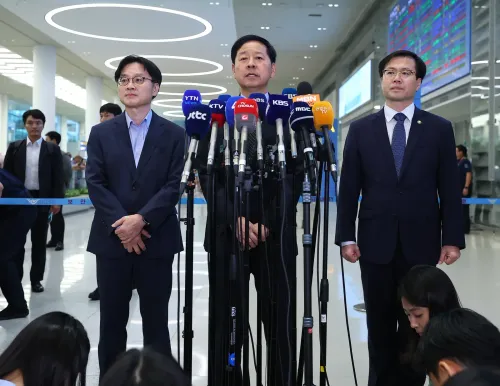
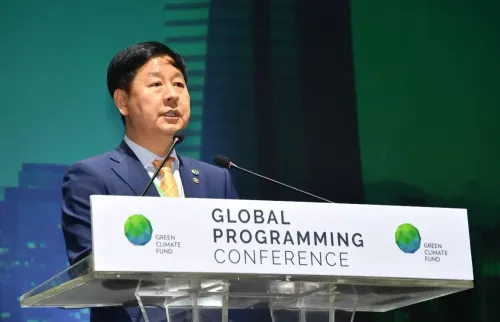
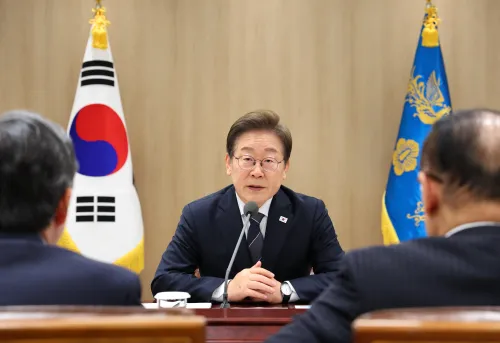
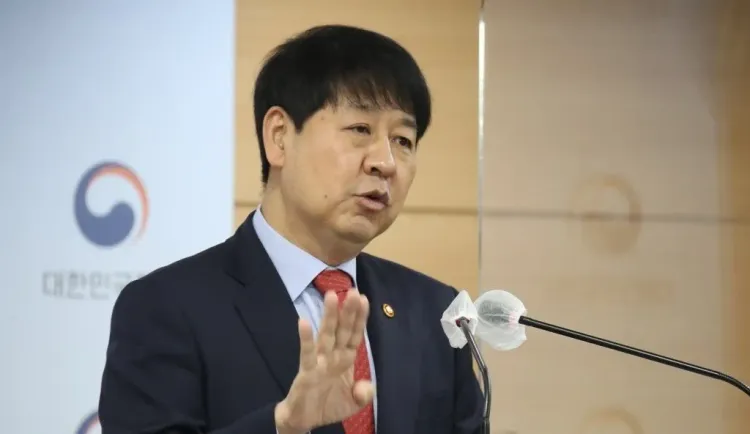
South Korean Finance Minister Koo Yun-cheol on Sunday, 4 May 2025, called for stronger regional cooperation to counter mounting economic uncertainty stemming from the U.S.-Israeli war against Iran, the South Korean finance ministry said. Koo made the appeal at the 29th ASEAN+3 Finance Ministers and Central Bank Governors Meeting held in Samarkand, Uzbekistan, according to the ministry, citing Yonhap news agency.
Key Developments at the Samarkand Meeting
ASEAN+3 brings together the ten member states of the Association of Southeast Asian Nations (ASEAN) and its three Northeast Asian dialogue partners — South Korea, Japan, and China. Speaking at the forum, Koo warned that the ongoing Middle East conflict had deepened regional economic vulnerability. "The Middle East war has further expanded regional economic uncertainty," he said. "Against this backdrop, ASEAN+3 cooperation, which has served as a buttress during a regional crisis, is becoming increasingly important."
Impact on South Korea's Economy
Koo highlighted that the Iran war poses a direct threat to the South Korean economy, and outlined steps the government has taken to shore up growth. Central among these is the creation of a 26.2 trillion-won (approximately US$17.7 billion) extra budget, designed to cushion the domestic economy against external shocks. This comes amid broader global anxiety over energy supply disruptions and trade route instability linked to the Middle East conflict.
South Korea-China-Japan Trilateral Talks
Separately, Koo chaired a trilateral meeting of finance ministers and central bank governors from South Korea, China, and Japan on the sidelines of the ASEAN+3 summit. He reportedly called for intensified cooperation among the three nations to address downside economic risks arising from the Iran war. Notably, this trilateral engagement signals a rare alignment of the three Northeast Asian economies on a shared external risk — a dynamic that analysts say could prove consequential for regional financial architecture.
South Korean National Appointed to World Bank Role
In a separate announcement, the South Korean finance ministry confirmed that Min Jee-nah, the former head of credit for state-owned enterprises and reinsurance at the Multilateral Investment Guarantee Agency (MIGA), has been appointed as the new Director of Market and Counterparty Risk at the World Bank Group (WBG). She is set to assume the role starting next month. With this appointment, Min becomes the fourth South Korean national to hold a director-level position at the global financial institution — a milestone the ministry highlighted as a mark of growing South Korean influence in multilateral finance.
What to Watch Next
With geopolitical tensions in the Middle East showing little sign of abating, the ASEAN+3 framework is likely to face pressure to operationalise its crisis-response mechanisms more concretely. South Korea's push for a coordinated regional response — backed by a substantial domestic stimulus package — signals that Seoul is positioning itself as a proactive voice in managing the economic fallout from the Iran war across Asia.
Point of View
And any joint framework they endorse carries real weight. The appointment of a South Korean to a World Bank director role, while largely symbolic in isolation, reflects a deliberate long-game strategy by Seoul to embed its nationals in institutions that shape global financial rules.
NationPress
30 Sept 2026
Frequently Asked Questions
Why did South Korea's Finance Minister call for ASEAN+3 cooperation?
Finance Minister Koo Yun-cheol called for stronger ASEAN+3 cooperation because the U.S.-Israeli war against Iran has deepened regional economic uncertainty, threatening trade, energy supply chains, and growth across Asia. He made the appeal at the 29th ASEAN+3 Finance Ministers Meeting in Samarkand, Uzbekistan.
What is South Korea's extra budget and why was it created?
South Korea has created a 26.2 trillion-won (approximately US$17.7 billion) extra budget to support its economy against external shocks, including those stemming from the Iran war. The budget is aimed at propping up domestic growth amid rising global uncertainty.
What is ASEAN+3 and who are its members?
ASEAN+3 is a regional forum comprising the ten member states of the Association of Southeast Asian Nations (ASEAN) and three Northeast Asian dialogue partners — South Korea, Japan, and China. It has served as a key regional financial cooperation mechanism during past crises.
Who is Min Jee-nah and what is her new role?
Min Jee-nah is a South Korean financial professional and former head of credit for state-owned enterprises and reinsurance at the Multilateral Investment Guarantee Agency (MIGA). She has been appointed Director of Market and Counterparty Risk at the World Bank Group, becoming the fourth South Korean to hold a director-level position there.
What was discussed at the South Korea-China-Japan trilateral meeting?
Finance Minister Koo Yun-cheol chaired a trilateral meeting of finance ministers and central bank governors from South Korea, China, and Japan on the sidelines of the ASEAN+3 summit. The talks focused on stepped-up cooperation to manage downside economic risks arising from the Iran war.