Are Rahul Gandhi's GST Comments Politically Motivated?
Synopsis
The BJP has slammed Rahul Gandhi's recent GST comments, calling them politically motivated and inconsistent. The party emphasizes the economic benefits of GST and rebuts Gandhi's claims regarding manufacturing disincentives. With significant data backing their stance, the BJP challenges Gandhi's understanding of economic principles.
Key Takeaways
The BJP challenges Rahul Gandhi's inconsistent GST remarks.
GST is presented as beneficial for both consumers and producers.
Government initiatives like the PLI scheme support manufacturing growth.
Data shows significant increases in manufacturing output.
Political discourse influences public perception of economic policies.
New Delhi, Dec 24 (NationPress) The BJP responded sharply on Wednesday to Leader of Opposition (LoP) Rahul Gandhi's recent remarks regarding GST and the manufacturing sector, labeling them as inconsistent and disconnected from real economic conditions.
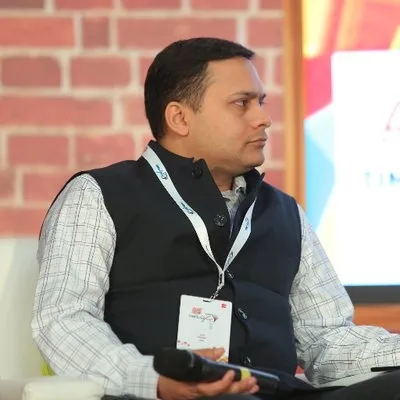
In response to Gandhi's statements made during a discussion in Berlin, BJP Information Technology Cell Chief Amit Malviya expressed that these remarks are a reflection of political expediency rather than a genuine grasp of economic principles.
“For years, Rahul Gandhi has referred to GST as the ‘Gabbar Singh Tax,’ accusing it of harming consumers. Now, while speaking from Berlin, he labels the same GST framework as beneficial for consumers and detrimental to producers,” Malviya articulated in a post on social media platform X.
“These opposing viewpoints cannot coexist. A tax framework cannot be simultaneously criticized for harming consumers and lauded for favoring them at the cost of producers. This rhetorical shift is purely politically motivated,” he asserted.
The BJP leader emphasized that reducing indirect tax rates like GST benefits both consumers and producers alike.
Lower taxes lead to decreased prices, making goods more affordable for consumers, while producers enjoy increased demand, higher sales volumes, and enhanced utilization of their manufacturing facilities.
“This inconsistency alone highlights a lack of economic understanding; his grasp of economic fundamentals is significantly flawed,” Malviya remarked.
In response to Gandhi’s claim that the BJP has discouraged manufacturing, the BJP leader presented official statistics to refute this assertion.
“Manufacturing has been actively supported through policy initiatives like the Production Linked Incentive (PLI) scheme,” he noted.
This scheme encompasses 14 critical sectors with an investment of Rs 1.97 lakh crore. It has already attracted investments totaling Rs 1.76 lakh crore, led to production and sales exceeding Rs 16.5 lakh crore, created over 12 lakh jobs, and disbursed incentives amounting to over Rs 21,500 crore.
“These are direct incentives tied to production and competitiveness, making it incorrect to label the policy as anti-producer,” Malviya asserted.
He also dismissed Gandhi’s claim that large Indian corporations are merely trading Chinese goods instead of manufacturing domestically.
He highlighted the electronics and mobile phone sector, where production surged from Rs 1.9 lakh crore in 2014–15 to Rs 11.3 lakh crore in 2024–25.
“Rahul Gandhi’s comments are based on fluctuating slogans rather than sound economic reasoning,” Malviya concluded.
Point of View
It's essential to remain impartial in analyzing political exchanges. The BJP's rebuttal to Rahul Gandhi's comments underscores the ongoing debate about GST's impact on the economy. It is crucial to assess both perspectives to understand the broader implications for economic policy and political strategy.
NationPress
6 Oct 2026
Frequently Asked Questions
What did Rahul Gandhi say about GST?
Rahul Gandhi described the GST regime as pro-consumer and anti-producer during an interaction in Berlin, contradicting his previous criticisms of GST.
How did the BJP respond to Gandhi's remarks?
The BJP, led by Amit Malviya, criticized Gandhi's statements as politically motivated and inconsistent with economic realities.
What is the Production Linked Incentive (PLI) scheme?
The PLI scheme is a government initiative covering 14 key sectors with significant investment aimed at boosting manufacturing and output in India.
How has manufacturing performed under the current government?
Manufacturing has seen substantial growth, with production in the electronics and mobile phone sector rising dramatically from Rs 1.9 lakh crore in 2014–15 to Rs 11.3 lakh crore in 2024–25.
What are the main criticisms of Rahul Gandhi's statements?
Critics, including the BJP, argue that Gandhi's remarks lack economic understanding and are politically convenient rather than based on sound reasoning.