Kiren Rijiju pledges action on Parsi population decline at Mumbai seminar
Synopsis
India's Parsi community — once the engine of the country's industrial rise — faces an acute demographic crisis. At a Mumbai seminar, Minority Affairs Minister Kiren Rijiju pledged sustained government action, spotlighting the Jiyo Parsi scheme and Avestan language revival, while calling the community's impact far greater than its numbers suggest.
Key Takeaways
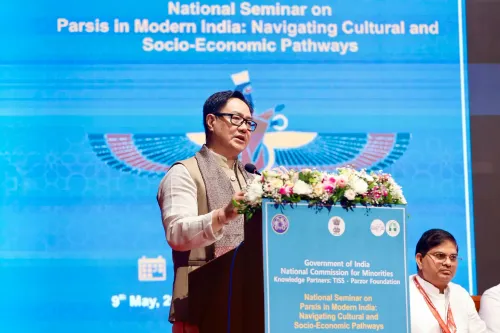
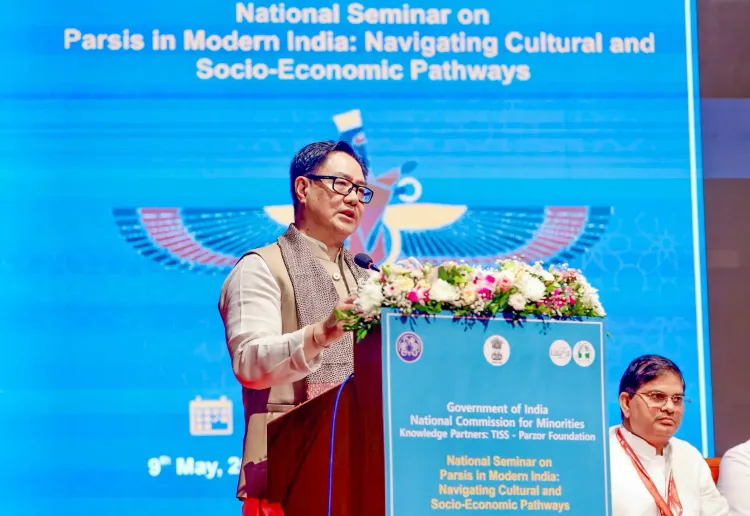
Minority Affairs Minister Kiren Rijiju addressed a national seminar on Parsis at the Yashwantrao Chavan Centre, Mumbai on 9 May .
The government reiterated its commitment to the Jiyo Parsi scheme and efforts to revive the Avestan language .
Minister of State George Kurian flagged declining Parsi population trends as a challenge requiring both policy support and community participation.
Alka Upadhyaya , Secretary of the National Commission for Minorities , underlined the importance of preserving India's pluralistic cultural ethos.
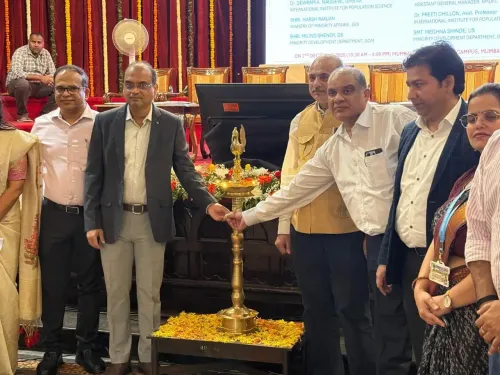
The seminar brought together Union and state ministers, policymakers, scholars, industrialists, and community representatives.
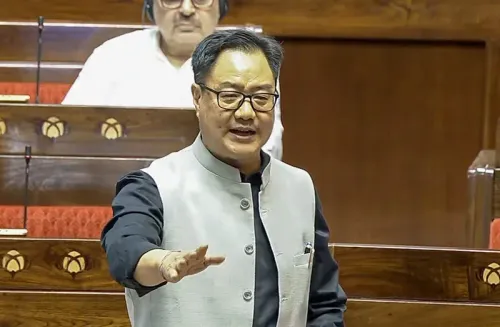
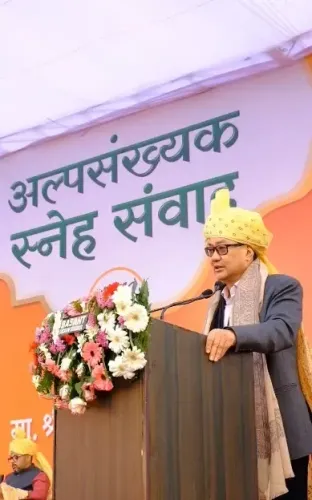
Minority Affairs Minister Kiren Rijiju on Saturday, 9 May reaffirmed the government's commitment to addressing the declining Parsi population and preserving the community's cultural heritage, speaking at a national seminar in Mumbai. Addressing delegates at the Yashwantrao Chavan Centre, Rijiju outlined ongoing policy measures — including the Jiyo Parsi scheme — and invited community suggestions to strengthen them.
Key Announcements at the Seminar
The seminar, titled
Point of View
Yet policy responses have remained largely aspirational. The Jiyo Parsi scheme has existed for over a decade with limited measurable impact on birth rates. Rijiju's reaffirmation at a seminar is welcome optics, but the community — and critics — will want to see updated data on scheme uptake and verifiable demographic outcomes, not just rhetorical commitment to 'Sabka Saath'. The real question is whether the government is willing to move beyond heritage preservation into structural incentives that address the socio-economic reasons why Parsi families are choosing smaller family sizes.
NationPress
22 Sept 2026
Frequently Asked Questions
What is the Jiyo Parsi scheme?
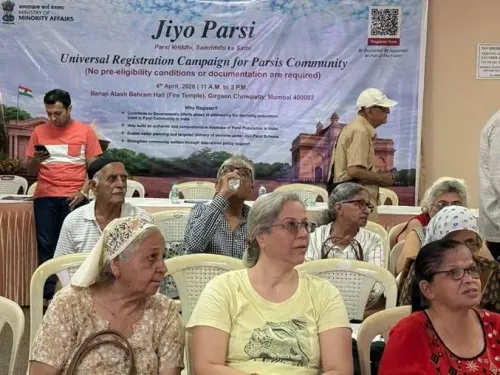
The Jiyo Parsi scheme is a Central Government initiative aimed at reversing the declining population of the Parsi community in India by providing financial and medical assistance to eligible Parsi couples. It has been operational for over a decade under the Ministry of Minority Affairs.
Why is the Parsi population declining in India?
The Parsi community faces declining population due to low birth rates, late marriages, a high proportion of celibacy, and changing social patterns. These demographic challenges have been a subject of national-level discussion, as noted by Minister of State George Kurian at the seminar.
What did Kiren Rijiju say at the Mumbai seminar?
Rijiju lauded the Parsi community's contributions to India's industrial and economic development, citing the Tata family's sponsorship of India's 1920 Olympic teams and the community fielding India's first cricket team in the 1880s. He reiterated the government's commitment to heritage preservation, socio-economic welfare, and population revival, and invited community suggestions on the Jiyo Parsi scheme.
Who attended the national seminar on Parsis in Mumbai?
The seminar at the Yashwantrao Chavan Centre brought together Union and state ministers, policymakers, scholars, industrialists, academicians, and representatives of the Parsi community to discuss cultural preservation, demographic concerns, and socio-economic status.
What is the government doing to preserve Avestan language?
Minority Affairs Minister Kiren Rijiju referred to government efforts towards the rejuvenation of the Avestan language — the liturgical language of the Parsi Zoroastrian community — as part of broader measures to preserve Parsi cultural heritage, though specific programme details were not elaborated at the seminar.