Is a 'K-shaped' Recovery Looming with Sector Disparities?
Click to start listening
Synopsis
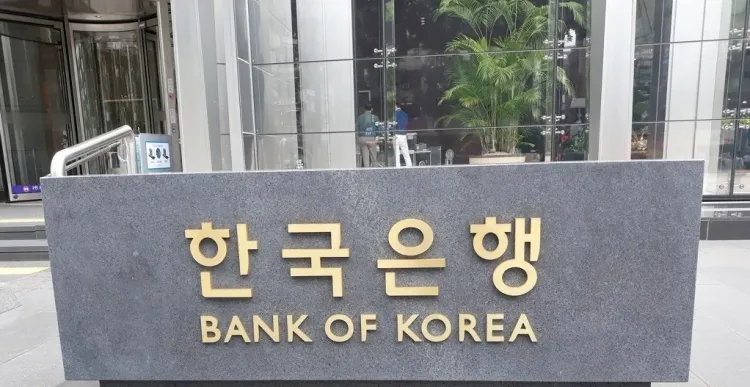
Bank of Korea's Governor Rhee warns of persistent economic polarization and uncertainty in 2026. With a 'K-shaped' recovery expected, he emphasizes the need for balanced policymaking amidst rising challenges in global trade and fiscal policies. The government aims to promote growth through significant financial initiatives.
Key Takeaways
- Economic polarization and uncertainty are anticipated this year.
- A 'K-shaped' recovery may create a disconnect between growth metrics and public sentiment.
- Global trade uncertainties pose significant challenges.
- The BOK forecasts a growth of 1.8% in 2026.
- The government emphasizes productive finance to stimulate growth.
Seoul, Jan 5 (NationPress) The Governor of the Bank of Korea (BOK), Rhee Chang-yong, stated on Monday that this year will likely see ongoing economic polarization and uncertainty, emphasizing the importance of careful and balanced policymaking.
These comments were made during a meeting with financial leaders and industry officials in Seoul, attended by Financial Services Commission Chairman Lee Eog-weon and Financial Supervisory Service Governor Lee Chan-jin, as reported by Yonhap news agency.
Rhee projected that while the economy may experience higher growth this year compared to last, a 'K-shaped' recovery characterized by significant disparities among sectors could result in a notable disconnect between overall growth figures and the public's actual sentiment towards the economy.
He highlighted challenges posed by uncertainties in the global trade landscape and the fiscal policies of major economies, also noting the potential for reevaluation of expectations surrounding the global artificial intelligence (AI) sector.
The central bank plans to implement monetary policy with increased precision, vigilantly tracking various economic indicators due to heightened uncertainty impacting the trade-offs among key policy parameters like economic growth, inflation, and financial stability, Rhee added.
In its latest projections from November, the BOK anticipates the local economy to grow by 1.8% in 2026, improving from last year’s forecast of 1%.
Finance Minister Koo Yun-cheol asserted the government's commitment to fostering balanced growth through productive finance, which includes a substantial 150 trillion-won (approximately US$103 billion) public growth fund and tax incentives for investors in the domestic capital market, as conveyed by First Vice Finance Minister Lee Hyoung-il during the meeting.
“The year 2026 must mark a significant leap for the South Korean economy, enhancing its growth potential and addressing economic polarization,” Koo was quoted as saying, emphasizing the critical role of finance.
To achieve this goal, Koo pledged to tackle stock manipulation, stabilize the foreign exchange market, and alleviate household debt.
Point of View
My perspective aligns with the Nation's approach to emphasizing the importance of careful economic policymaking. The challenges highlighted by Governor Rhee reflect a critical moment for South Korea's economy, requiring vigilant attention to ensure balanced growth amidst disparities.
NationPress
06/01/2026
Frequently Asked Questions
What is a 'K-shaped' recovery?
A 'K-shaped' recovery describes an economic situation where different sectors recover at different rates, leading to disparities in economic performance and public sentiment.
What measures is the Bank of Korea taking?
The Bank of Korea plans to conduct monetary policy more finely tuned, monitoring various economic indicators to manage trade-offs among growth, inflation, and stability.
What are the government's plans for economic growth?
The government aims to promote balanced growth through a large public growth fund and tax incentives for investors in the local market.