Why is Odisha CM Majhi Defending the VB-G RAM G Act Against the Opposition's Claims?
Synopsis
Odisha Chief Minister Mohan Charan Majhi staunchly defends the VB-G RAM G Act, countering opposition claims of it being anti-poor and anti-farmer. He asserts that the new act aims to enhance rural self-employment and create significant job opportunities, challenging the effectiveness of previous initiatives.
Key Takeaways
VB-G RAM G Act aims to boost rural employment.
Guaranteed employment duration increased to 125 days.
Focus on water conservation and rural infrastructure.
Funding model ensures shared responsibility.
Temporary suspension of work during critical farming periods.
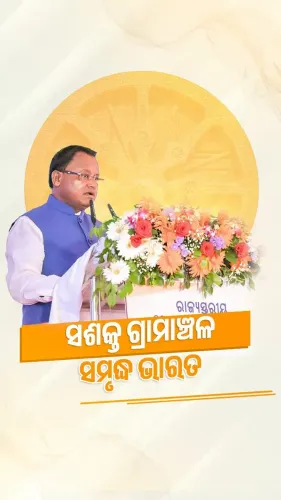
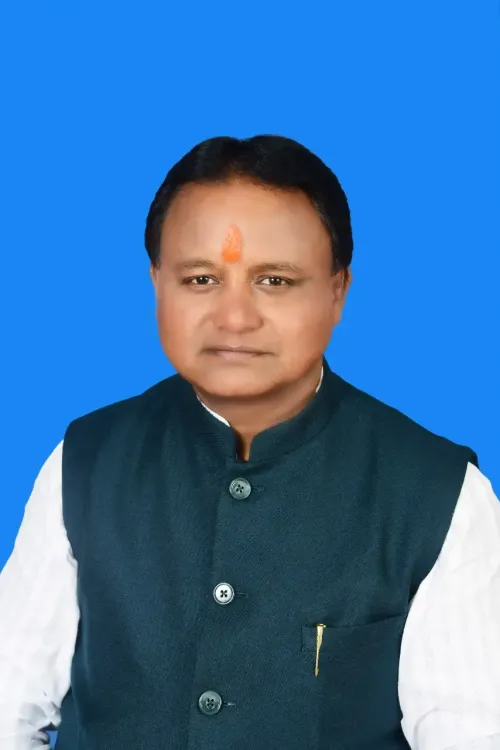
Bhubaneswar, Jan 6 (NationPress) Odisha Chief Minister Mohan Charan Majhi strongly criticized the opposition parties for disseminating misleading information regarding the newly introduced Viksit Bharat – Guarantee for Rozgar and Ajeevika Mission (Gramin) Act, 2025, labeling the initiative as "anti-poor" and "anti-farmer".
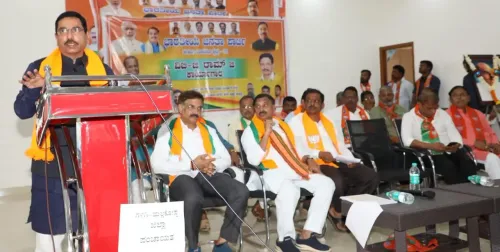
During a press conference held at the state BJP office, CM Majhi articulated that the main goal of the VB–G RAM G initiative, which supersedes the Mahatma Gandhi National Rural Employment Guarantee Scheme (MGNREGS), is to foster a Viksit Bharat by 2047, in accordance with Mahatma Gandhi's vision for rural self-employment.
He pointed out that, contrary to the accusations from the opposition, the legislation encompasses comprehensive provisions aimed at the welfare of farmers and laborers.
CM Majhi asserted that various efforts have been undertaken in India before and after Independence to enhance employment prospects for farmers and economically disadvantaged individuals.
Furthermore, he mentioned that these programs only guaranteed work when it was available.
"However, these initiatives lacked provisions to proactively generate employment for individuals. There was no emphasis on ensuring consistent work opportunities for people, which would improve their economic status," CM Majhi stated.
He noted that the National Rural Employment Guarantee Act (NREGA), initiated in 2005 and later renamed as the Mahatma Gandhi NREGA in 2009, did not undergo any fundamental structural changes.
CM Majhi claimed that the previous UPA government implemented the scheme largely for political gain by leveraging Mahatma Gandhi's name.
Citing significant scandals reported in Bihar and Uttar Pradesh, he asserted that despite over two decades of execution, the scheme has been marred by extensive irregularities.
He also recalled serious discrepancies that emerged in Sambalpur, Odisha, in 2012 under the MGNREGS, where wages were fraudulently withdrawn under the names of deceased individuals, sick persons, and beneficiaries already receiving old-age pensions.
"Fraudulent entries were recorded in muster rolls, and public funds were misappropriated without any actual road construction taking place," he added.
To combat such corruption through technological advancements and ensure effective execution of the scheme, Prime Minister Narendra Modi introduced the VB–G RAM G Bill. The new initiative has been crafted to faithfully implement Mahatma Gandhi's vision of Gram Swaraj and to pave a way towards a Viksit Bharat, with a framework in place that keeps the 2047 goal in focus," CM Majhi elaborated.
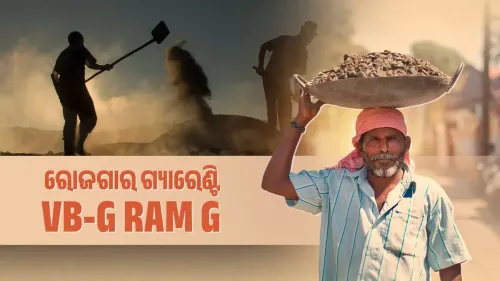
Under the revamped scheme, the guaranteed employment duration has been extended from 100 to 125 days, which is anticipated to significantly enhance productivity across various sectors in rural regions.
The funding model has been designed to ensure a shared responsibility, with a 90:10 Centre-state ratio for northeastern states and full central funding for Union Territories.
For other states, costs will be distributed in a 60:40 ratio between the Central and state governments.
The scheme emphasizes four priority domains: water conservation, rural infrastructure development, livelihood enhancement, and climate resilience.
To safeguard farmers' interests, all activities related to the scheme will be paused during the sowing and harvesting periods for up to 60 days annually, which will assist in addressing labor shortages in agriculture and mitigate unnecessary wage hikes.
Point of View
It is essential to recognize the ongoing debate surrounding employment schemes in India. While the Odisha Chief Minister's defense of the VB-G RAM G Act highlights its potential benefits, it is crucial to remain vigilant about the implementation and effectiveness of these initiatives. As the nation strives for economic growth, ensuring that all voices are heard, especially those of farmers and laborers, will be vital.
NationPress
30 Sept 2026
Frequently Asked Questions
What is the VB-G RAM G Act?
The VB-G RAM G Act, or Viksit Bharat – Guarantee for Rozgar and Ajeevika Mission (Gramin) Act, 2025, aims to enhance rural employment and self-sufficiency, replacing the Mahatma Gandhi National Rural Employment Guarantee Scheme.
How does the new act differ from MGNREGS?
The VB-G RAM G Act extends the guaranteed employment period from 100 days to 125 days and introduces a more structured funding model to address rural employment needs effectively.
What are the key focus areas of the VB-G RAM G Act?
The act focuses on water conservation, rural infrastructure development, livelihood expansion, and climate resilience to boost productivity in rural areas.
Are there any safeguards for farmers in the new act?
Yes, the act includes provisions that temporarily suspend scheme-related work during sowing and harvesting periods to protect farmers' interests and prevent labor shortages.
What is the funding structure for the new scheme?
The funding structure ensures a 90:10 Centre-state ratio for northeastern states, 100% central funding for Union Territories, and a 60:40 ratio for other states.