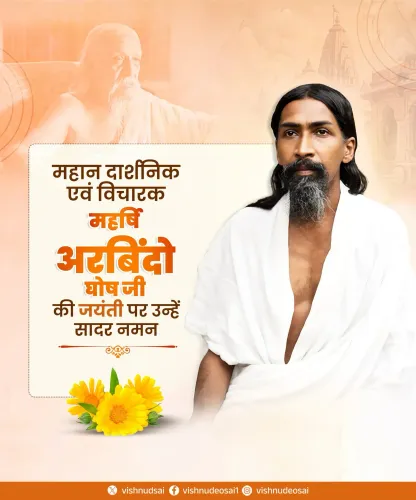
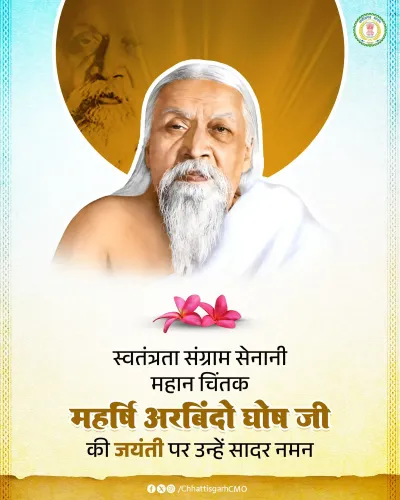
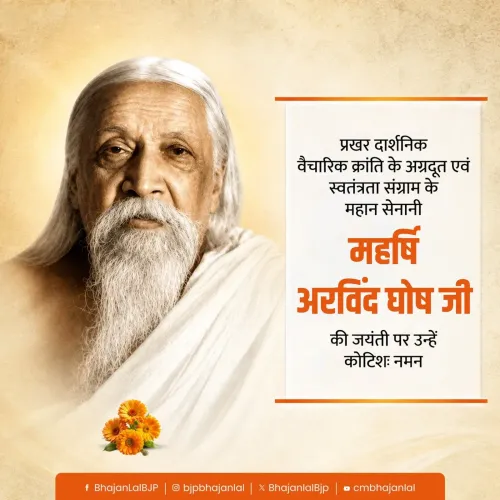
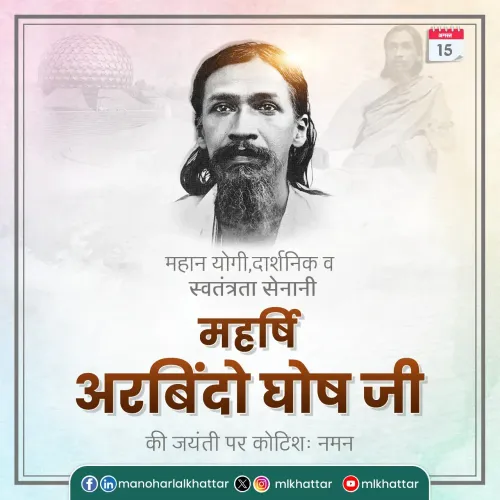
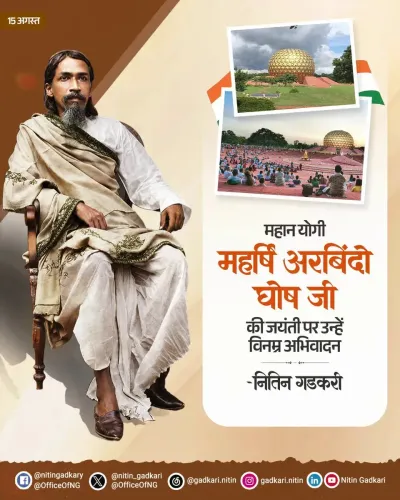
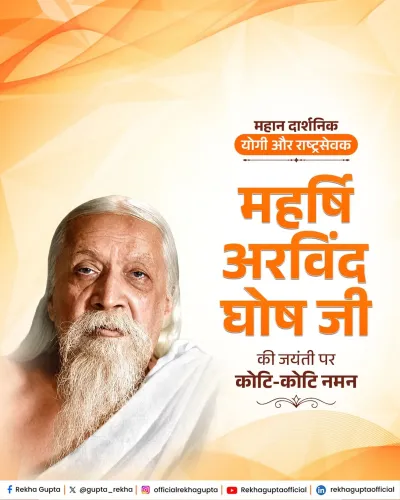
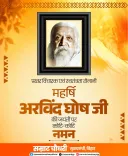
Nadda Pays Tribute to Sri Aurobindo on His 154th Birth Anniversary
Synopsis
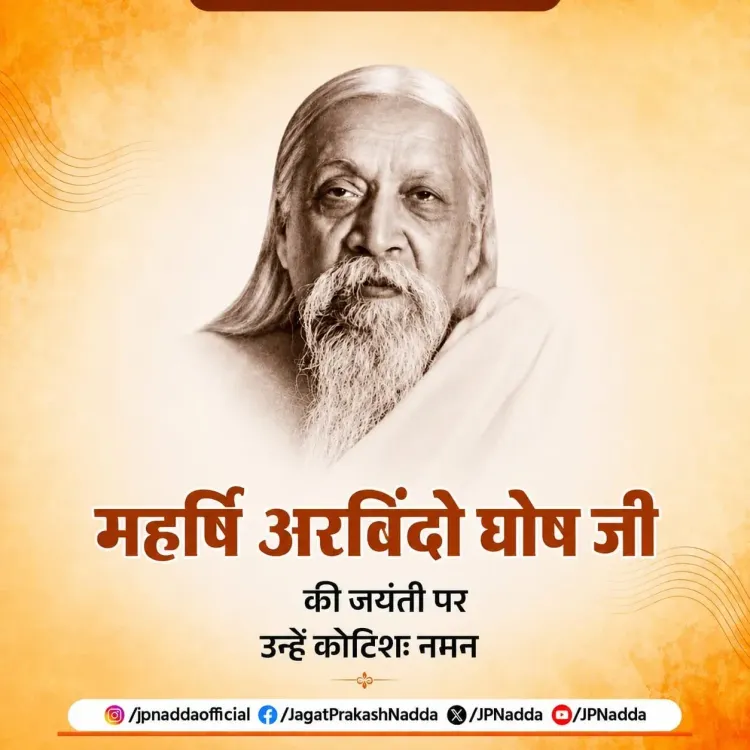
Union Health Minister J. P. Nadda paid tribute to Maharshi Aurobindo Ghosh on his 154th birth anniversary on Independence Day, 15 August, honouring Aurobindo's role in the Swadeshi movement and his influence on revolutionary thought during India's freedom struggle.
Key Takeaways
Nadda , Union Health Minister and BJP national president, paid tribute to Maharshi Aurobindo Ghosh on 15 August , his birth anniversary and India's Independence Day.
Sri Aurobindo was born on 15 August 1872 , exactly 75 years before Indian independence — a coincidence he regarded as spiritually significant.
Nadda highlighted Aurobindo's role in inspiring the boycott of foreign goods and igniting revolutionary spirit during the freedom struggle.
Aurobindo later founded the Sri Aurobindo Ashram in Puducherry , where he developed his philosophy of integral yoga.
Annual commemorations at the Sri Aurobindo Ashram, Puducherry mark the occasion each Independence Day.
On the morning of Independence Day, 15 August, Union Health Minister J. P. Nadda paid homage to Maharshi Aurobindo Ghosh — yogi, philosopher, and nationalist — calling his teachings an enduring source of inspiration for humanity and national pride.
Posting in Hindi, Nadda wrote: 'महान योगी, दार्शनिक और राष्ट्रवादी महापुरुष महर्षि अरबिंदो घोष जी की जयंती पर उन्हें कोटिशः नमन करता हूँ' — 'I bow in countless salutations to the great yogi, philosopher and nationalist Maharshi Aurobindo Ghosh on his birth anniversary.' He specifically recalled how Aurobindo's writings and ideas 'lit the flame of boycotting foreign goods' and 'ignited the fire of revolution among the people during the freedom struggle.'
A Birth Date That Doubled as a Prophecy
Sri Aurobindo was born on 15 August 1872 — exactly 75 years before India won its independence. That numerical coincidence was not lost on Aurobindo himself, who saw it as a sign of divine purpose. He spent his early years as one of the most radical voices of the nationalist movement, using his pen to mobilise mass resistance against British rule and to popularise the Swadeshi ideal of rejecting foreign-manufactured goods in favour of Indian produce.
His advocacy predated and helped shape the broader Swadeshi movement that would later become central to the independence struggle. After a period of intense political activity — including arrest and trial — Aurobindo withdrew from active politics and moved to Pondicherry, where he founded the Sri Aurobindo Ashram and devoted the rest of his life to spiritual philosophy and integral yoga.
Why Independence Day Tributes to Aurobindo Carry Extra Weight
For Indian political leaders, paying tribute to Aurobindo on 15 August is an act that collapses two commemorations into one. The date simultaneously marks the nation's freedom and the birth of a man who argued, decades before 1947, that India's civilisational spirit was indestructible and destined to reassert itself. Nadda's emphasis on Aurobindo's call to boycott foreign goods — 'विदेशी सामान के बहिष्कार की अलख जगाई' — carries a resonance that extends well beyond historical tribute, touching themes of self-reliance that remain alive in contemporary policy discourse.
Commemorative programmes at the Sri Aurobindo Ashram in Puducherry mark the occasion each year, drawing scholars, disciples, and officials who continue to engage with his philosophical legacy.
Aurobindo's teachings, Nadda concluded, 'remain an inspiration for the upliftment of humanity and national pride even today' — a reminder that the most enduring revolutions are often the ones fought first in the mind.
Point of View
Lending historical depth to a contemporary policy posture. By framing Aurobindo's teachings as relevant to 'national pride' today, Nadda connects a spiritual-philosophical legacy to an active political identity — a rhetorical move that is deliberate, not incidental. The choice of Independence Day morning for this tribute amplifies its symbolic weight considerably.
NationPress
15 Aug 2026
Frequently Asked Questions
When is Maharshi Aurobindo Ghosh's birth anniversary?
Maharshi Aurobindo Ghosh was born on 15 August 1872 , a date that coincides with India's Independence Day, making annual tributes on that day doubly significant.
What was Sri Aurobindo's role in India's freedom struggle?
Sri Aurobindo was one of the most influential early nationalists, using his writings to advocate the Swadeshi movement — the boycott of foreign goods — and to inspire revolutionary sentiment against British rule before withdrawing to Pondicherry for spiritual work.
What did J. P. Nadda say about Sri Aurobindo?
J. P. Nadda said Aurobindo 'lit the flame of boycotting foreign goods' and made a 'praiseworthy contribution in igniting the fire of revolution among the people during the freedom struggle,' adding that his teachings remain an inspiration for humanity and national pride.
Where is the Sri Aurobindo Ashram located?
The Sri Aurobindo Ashram is located in Puducherry (formerly Pondicherry), where Aurobindo settled after withdrawing from active politics and where annual Independence Day commemorations are held.
Why do Indian leaders tribute Aurobindo on Independence Day?
Because Aurobindo's birth date, 15 August 1872 , coincides exactly with India's Independence Day, tributes on that date honour both the nation's freedom and the man who spent his early life fighting for it.