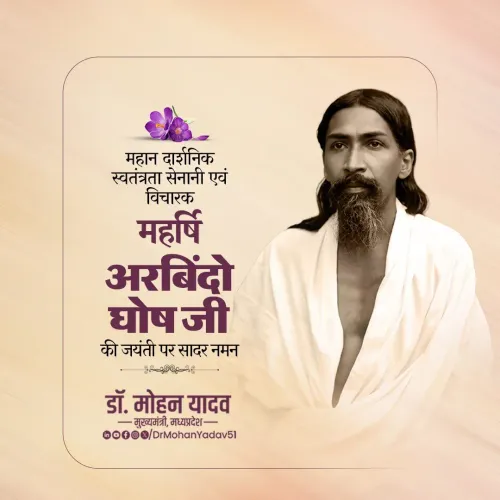
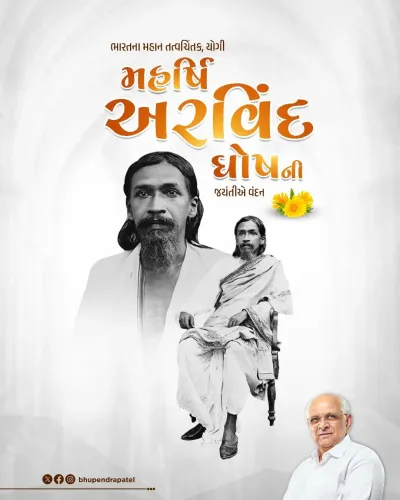
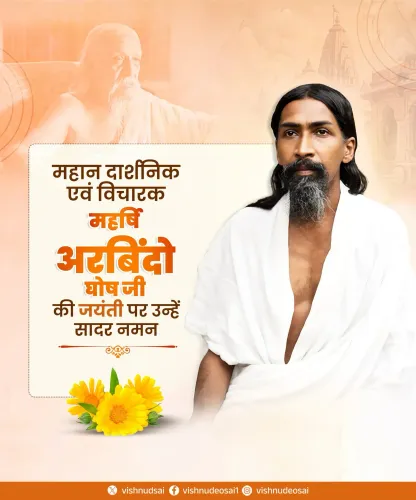
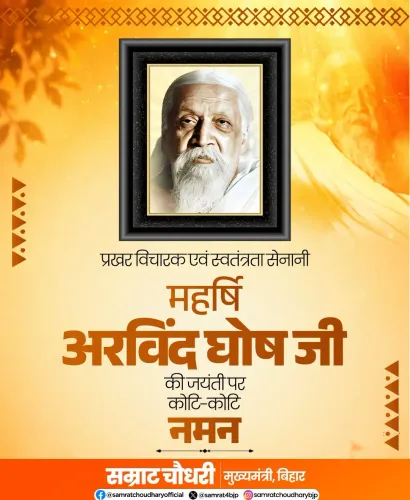
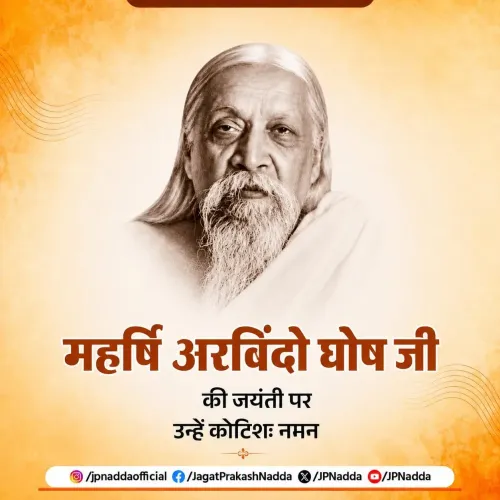
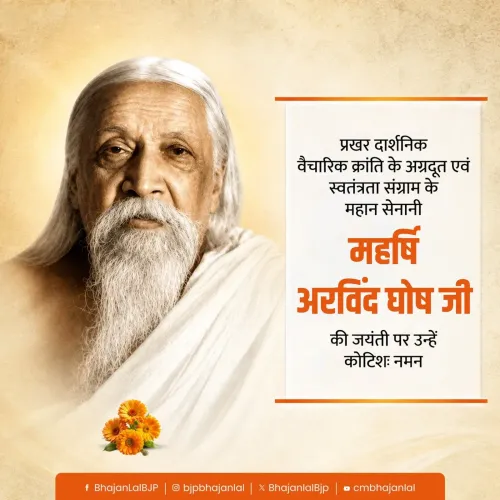
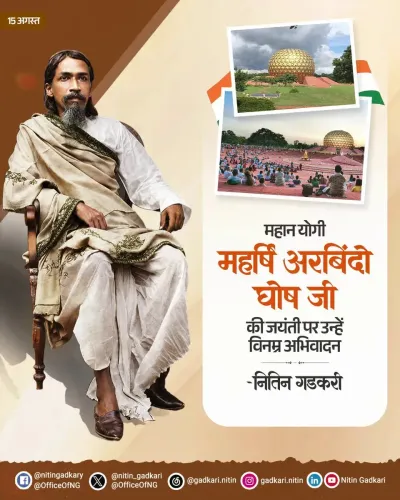
CM Rekha Gupta pays tribute to Maharishi Aurobindo on his birth anniversary
Synopsis
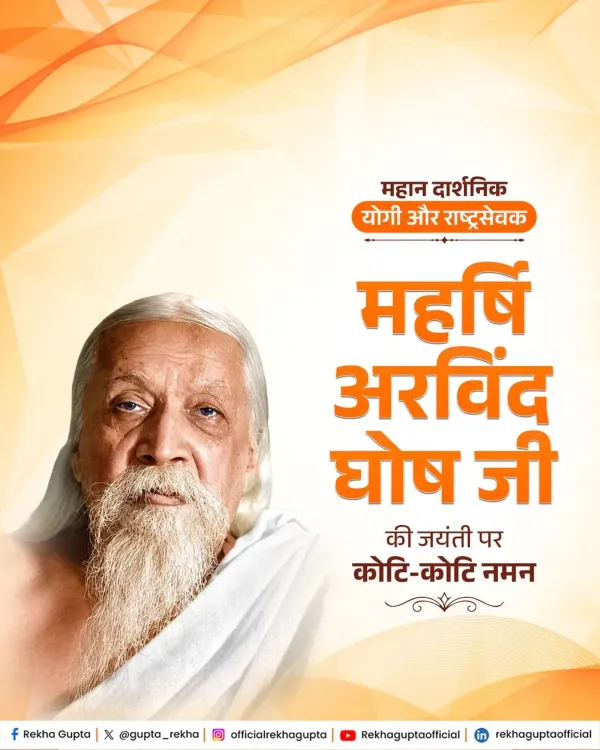
Delhi Chief Minister Rekha Gupta paid tribute to Maharishi Aurobindo Ghosh on his birth anniversary, 15 August 2026, honouring the philosopher-yogi as a fervent nationalist thinker whose vision of national renaissance and spiritual consciousness continues to inspire India.
Key Takeaways
Delhi CM Rekha Gupta posted a tribute to Maharishi Aurobindo Ghosh on 15 August 2026 , his birth anniversary and India's Independence Day.
She described Aurobindo as a 'fervent nationalist thinker, great yogi, philosopher and spiritual seeker.' Aurobindo Ghosh was born on 15 August 1872 in Calcutta and later settled in Pondicherry , where he developed the philosophy of Integral Yoga .
His birthday coinciding with India's Independence Day has long been considered symbolically significant.
The Sri Aurobindo Ashram in Pondicherry and Auroville hold annual commemorations on this date.
BJP leaders regularly mark anniversaries of nationalist-spiritual figures as part of the party's cultural-heritage public messaging.
On India's Independence Day, 15 August 2026 — a date that doubles as the birth anniversary of Maharishi Aurobindo Ghosh — Delhi Chief Minister Rekha Gupta offered a reverent tribute to the philosopher-yogi whose life bridged the fire of nationalist struggle and the stillness of spiritual inquiry.
Gupta's post, in Hindi, described Aurobindo as a 'prākhar rāṣṭravādī cintaka, mahān yogī, dārśanik evam ādhyātmik sādhak' — 'a fervent nationalist thinker, great yogi, philosopher and spiritual seeker' — and declared that his vision, steeped in national renaissance and spiritual consciousness, 'will continue to inspire forever.'
A life that moved from revolution to realisation
Maharishi Aurobindo Ghosh, born 15 August 1872 in Calcutta, began his public life as one of the most radical voices in India's early independence movement — a writer, organiser and agitator who rattled the colonial establishment. Then, almost without warning, he withdrew from active politics and moved to Pondicherry, where he spent the rest of his life developing the philosophy of Integral Yoga: a synthesis of action, knowledge, devotion and self-transcendence aimed not at personal escape but at the transformation of earthly life itself.
The coincidence of his birthday with Independence Day has always carried a certain charge — Aurobindo himself noted it as significant. It makes tributes on this date doubly layered: a salute to the man and to the nation he helped will into being.
BJP's cultural-heritage messaging on national occasions
Gupta's tribute follows a well-established pattern among BJP leaders of marking the anniversaries of 19th- and 20th-century thinkers who combined nationalist politics with Hindu spiritual and philosophical traditions. Aurobindo fits that frame precisely — activist turned sage, whose writings on civilisational consciousness resonate with the party's broader cultural messaging.
Every 15 August, the Sri Aurobindo Ashram in Pondicherry and the international township of Auroville hold commemorations that draw followers from across India and abroad, keeping his legacy active well beyond political tribute cycles.
One hundred and fifty-four years after his birth, Aurobindo's insistence that India's freedom was inseparable from a deeper spiritual awakening continues to find new readers — and, on mornings like this one, new voices paying their respects.
Point of View
Whose ideas on spiritual consciousness and national rebirth resonate with Hindu revivalist thought, is unlikely to be accidental. As Delhi heads into its next political cycle, such messaging helps the BJP anchor itself in a long historical arc rather than just immediate governance outcomes.
NationPress
29 Sept 2026
Frequently Asked Questions
When is Maharishi Aurobindo's birth anniversary?
Maharishi Aurobindo Ghosh was born on 15 August 1872 , which means his birth anniversary falls on the same date as India's Independence Day every year.
What is Integral Yoga, the philosophy of Aurobindo?
Integral Yoga is the spiritual philosophy developed by Aurobindo Ghosh in Pondicherry . It synthesises action, knowledge and devotion with the aim of transforming earthly life rather than seeking personal escape from the world.
Why did Rekha Gupta pay tribute to Aurobindo Ghosh?
Delhi Chief Minister Rekha Gupta paid tribute on 15 August 2026 , Aurobindo's birth anniversary, describing him as a nationalist thinker and spiritual sage whose vision of national renaissance continues to inspire India.
Where is the Sri Aurobindo Ashram located?
The Sri Aurobindo Ashram is located in Pondicherry (Puducherry) in southern India, where Aurobindo lived and taught from the early 20th century until his death.
What is Auroville and its connection to Aurobindo?
Auroville is an international township near Pondicherry inspired by the ideals of Maharishi Aurobindo Ghosh and his spiritual collaborator the Mother. It holds annual commemorations on his birth anniversary, 15 August , each year.