Is the Viksit Bharat–Guarantee for Rozgar and Ajeevika Mission (Gramin) Act, 2025 a Revolutionary Step for Rural Employment?
Synopsis
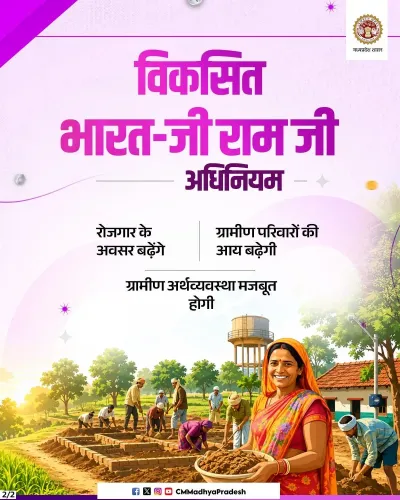
Madhya Pradesh's new employment law, praised by CM Dr. Mohan Yadav and BJP leader Hemant Khandelwal, aims to revolutionize rural employment opportunities. The Viksit Bharat Act promises enhanced job security and increased working days, despite opposition claims. Discover how this legislative change could impact the future of rural India.
Key Takeaways
New Act supersedes MGNREGA.
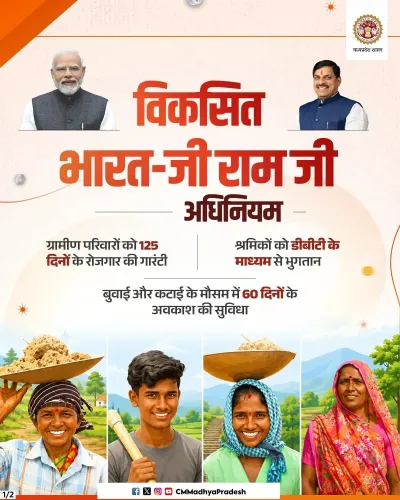
Guarantees 125 days of employment.
Empowers local governance through Gram Panchayats.
Addresses natural calamities and unique circumstances.
Focuses on vulnerable groups and community needs.
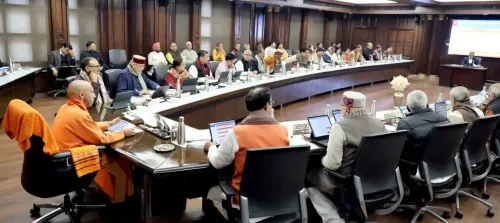
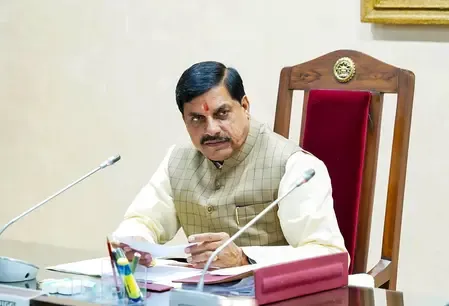
Bhopal, Jan 7 (NationPress) Madhya Pradesh Chief Minister Dr Mohan Yadav and state BJP president Hemant Khandelwal commended the recently passed Viksit Bharat–Guarantee for Rozgar and Ajeevika Mission (Gramin) Act, 2025, which supersedes the Mahatma Gandhi National Rural Employment Guarantee Act (MGNREGA).
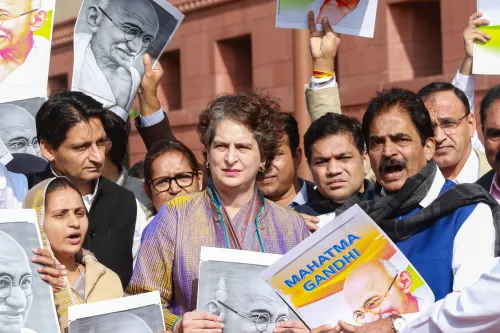
The officials characterized the new law, presented by Prime Minister Narendra Modi in Parliament, as a transformative initiative poised to reshape rural landscapes and dismissed the opposition from Congress leaders as unfounded and ineffective.
Chief Minister Yadav highlighted a crucial feature that permits states to declare a maximum of 60 days of suspension during peak sowing and harvesting periods within a fiscal year.
"This will alleviate challenges for farmers in sourcing labor," he stated.
Furthermore, he elaborated, "Workers can benefit from agricultural income during the season while utilizing this scheme for the remainder of the year, effectively doubling their earnings. The Act also addresses issues arising from natural disasters and unique situations, broadening its scope to activities like constructing cowsheds in tribal and aspirational districts, and it gives priority to marginalized groups such as women, SC/ST communities, and landless families. The Act strengthens the wage structure for skilled labor, with the Central government setting wage rates," he added, detailing the advantages for Madhya Pradesh, the second-largest state in India.
"This law offers enhanced flexibility, increased funding, and comprehensive provisions for ponds, water conservation, livestock management, and infrastructure development," he continued, mentioning that 15 departments will collaborate to generate employment through the scheme.
CM Yadav emphasized opportunities in tribal areas and aspirational districts, associating the initiative with agriculture, rainwater harvesting, and rural upliftment.
"It establishes legal employment rights and aims to genuinely enhance village structures based on local requirements," the Chief Minister remarked.
Khandelwal, also the state Kisan Morcha President, underscored essential attributes of the Act.
He pointed out that it guarantees 125 days of paid employment annually for each rural household, an increase from the prior 100 days under MGNREGA.
The Act includes provisions for wage slips, improved decentralization, and the empowerment of Gram Panchayats.
"The Gram Panchayat will have complete authority over family registration, employment guarantees, and project selection," Khandelwal explained.
"The Panchayat will determine projects with guidance from the state government, which will also share financial responsibilities," he continued.
Drawing on his rural experiences, Khandelwal emphasized that this provision ensures laborers will be accessible for agricultural work during critical times.
The leaders countered misconceptions propagated by the Opposition Congress, asserting that the Act enhances the power of local bodies rather than centralizing authority. They called on the public to recognize its beneficial effects on rural communities.
Point of View
The Viksit Bharat–Guarantee for Rozgar and Ajeevika Mission Act, 2025 represents a significant development in rural employment policy. While the government's stance emphasizes empowerment and flexibility, the opposition's concerns highlight the need for vigilance in ensuring that local governance remains robust. Ultimately, the effectiveness of this Act will depend on its implementation and the genuine engagement of rural communities.
NationPress
13 Oct 2026
Frequently Asked Questions
What is the Viksit Bharat–Guarantee for Rozgar and Ajeevika Mission Act, 2025?
It is a new employment law in Madhya Pradesh replacing MGNREGA, aimed at enhancing rural job opportunities.
How many days of work does the new Act guarantee?
The Act guarantees 125 days of wage employment per rural household annually.
What are the key features of the new employment law?
The Act includes provisions for wage slips, greater decentralization, and empowers Gram Panchayats.
How does this Act support farmers?
It allows for a pause in employment during peak agricultural seasons to ensure farmers can find workers.
What groups does the Act prioritize?
The Act prioritizes vulnerable groups including women, SC/ST communities, and landless families.