Has Punjab Assembly Passed a Resolution Against the New Employment Scheme?
Synopsis
The Punjab Assembly's recent resolution raises serious concerns over the Indian government's new rural employment scheme, which critics argue undermines the rights of laborers. This pivotal decision poses significant implications for employment security in the state.
Key Takeaways
Punjab Assembly passed a resolution against the new employment scheme.
MGNREGA guarantees wage employment for rural households.
The new scheme may increase financial strain on state governments.
Employment rights for marginalized communities could be compromised.
Minister Sond criticized political opposition as insincere.
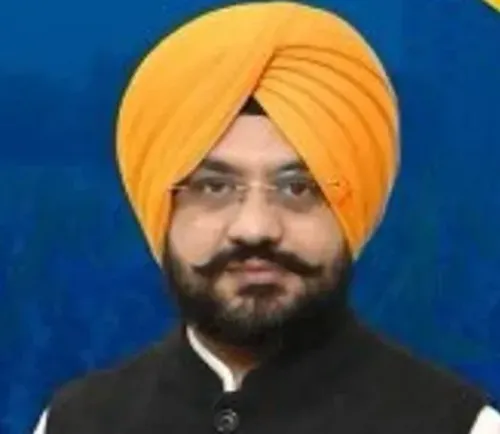
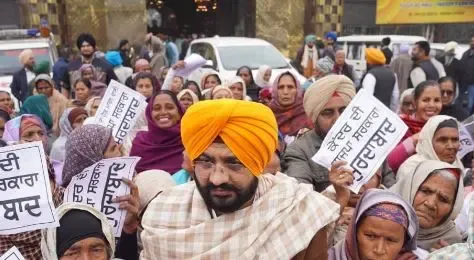
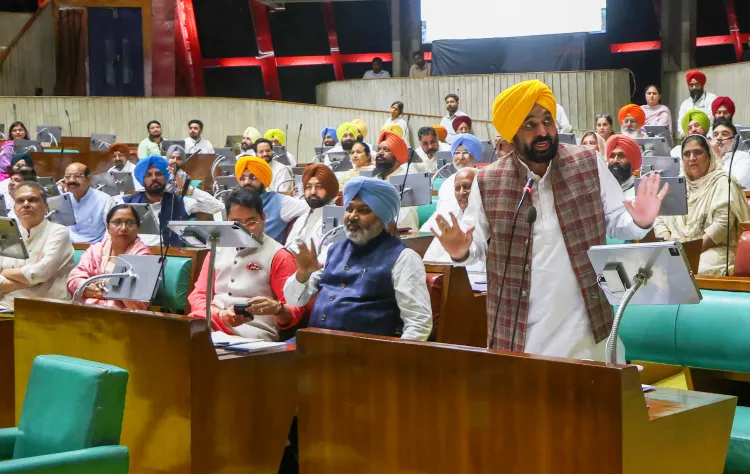
Chandigarh, Dec 30 (NationPress) – On Tuesday, the Punjab Vidhan Sabha unanimously adopted a resolution introduced by Rural Development and Panchayats Minister Tarunpreet Singh Sond, condemning the Indian government's initiative to replace the Mahatma Gandhi National Rural Employment Guarantee Act (MGNREGA) with the new legislation called Viksit Bharat – Guarantee for Rozgar and Ajeevika Mission (Gramin).
The new initiative strips away the right to guaranteed wages and employment from impoverished workers, women, and numerous job card-holding families across the state, while also imposing an increased financial burden on the states.
Minister Sond highlighted that the National Rural Development Guarantee Act was enacted by the Indian government in September 2005 and was implemented in all districts of Punjab from 2008-09.
In a subsequent rebranding effort on October 2, 2009, the act was renamed as MGNREGA. The primary aim of MGNREGA is to bolster livelihood security by mandating the provision of guaranteed wage employment for a minimum of 100 days each financial year to adult members of rural households willing to engage in unskilled manual labor.
According to Minister Sond, MGNREGA is a landmark law recognized globally within India’s framework for social welfare and rural economic security, establishing employment as a legal right for the underprivileged, landless, and marginalized communities, including SC/ST groups and women in rural settings.
This act is demand-driven, meaning that if a worker requests employment under MGNREGA, it is the legal obligation of both the state and the Indian government to provide work within a specified timeline, or to offer an unemployment allowance.
In contrast, the VB-G RAM G Act (Viksit Bharat- Guarantee for Rozgar And Ajeevika Mission (Gramin) Act) 2025 offers a guarantee of 125 days of employment; however, this commitment is constrained by normative budgeting and limited financial resources, rendering it largely ineffective.
Under this framework, the availability of employment will be contingent on government allocations rather than the laborers' demands, governed by predetermined plans and budget constraints.
Minister Sond articulated that while the VIKSIT BHARAT - Guarantee for Rozgar and Ajeevika Mission (Gramin) Act proposes a 60:40 wage distribution and weekly payments, these modifications may ultimately exacerbate the financial strain on state administrations rather than alleviate it.
The Indian government will establish a budget cap for the entire financial year in advance; however, it is crucial to note that under MGNREGA, workers possess the legal right to demand work, which will be adversely affected by this budget limitation.
In such a scenario, if employment is not provided within the designated timeframe, the state government bears the entire responsibility for the unemployment allowance. Furthermore, surpassing the central budget allocation limits complicates and financially burdens the provision of work for these laborers.
Meanwhile, Minister Sond remarked to the media that during a meeting of the Parliamentary Standing Committee on Rural Development and Panchayati Raj, led by Congress MP Saptagiri Sankar Ulaka, no member from Congress opposed the VB G RAM G scheme. Yet, in the Vidhan Sabha, they are merely shedding crocodile tears, he added.
Point of View
The Punjab Assembly's resolution showcases the state's commitment to protecting the rights of its labor force. The introduction of the new employment scheme raises important questions about the government's accountability and the potential consequences for rural communities, reflecting broader national issues of employment security and welfare.
NationPress
19 Sept 2026
Frequently Asked Questions
What is the Viksit Bharat – Guarantee for Rozgar and Ajeevika Mission?
This is a new employment initiative introduced by the Indian government, intended to replace MGNREGA but has faced criticism for potentially reducing employment guarantees.
Why did the Punjab Assembly pass a resolution against the new scheme?
The Punjab Assembly, led by Minister Tarunpreet Singh Sond, expressed concerns that the new scheme undermines the rights of laborers and increases financial burdens on state governments.
How does MGNREGA benefit rural communities?
MGNREGA provides a legal right to work, ensuring job security and helping to alleviate poverty in rural areas by guaranteeing wage employment.
What are the potential impacts of the new employment scheme?
Critics argue that the new scheme could lead to job insecurity for rural laborers and place additional financial responsibilities on state governments, affecting employment availability.