What is Priyanka Gandhi's Take on the Renaming of MGNREGA?
Synopsis
In a critical response to the government's proposal to rename MGNREGA, Priyanka Gandhi raises concerns about unnecessary expenses and potential risks to rural workers' rights. This contentious issue reflects broader political debates over rural employment in India. Discover the implications of the proposed changes and what they mean for the legacy of Mahatma Gandhi.
Key Takeaways
Priyanka Gandhi questions the government's fixation on renaming MGNREGA .
The proposed VB G RAM G Bill could dilute rights for rural workers.
Concerns have been raised about increased costs without wage increases.
Changes to decision-making authority could centralize control.
The initiative reflects ongoing political debates about rural employment.
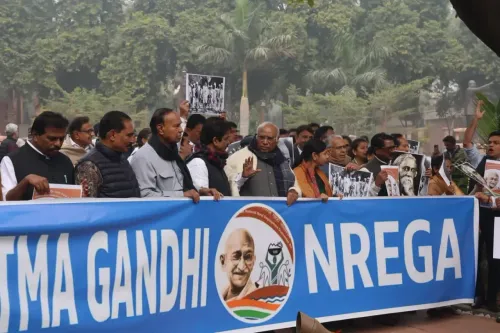
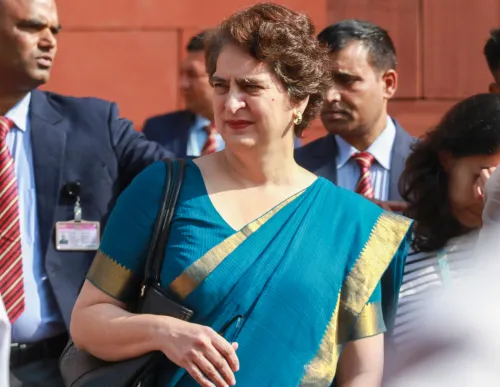
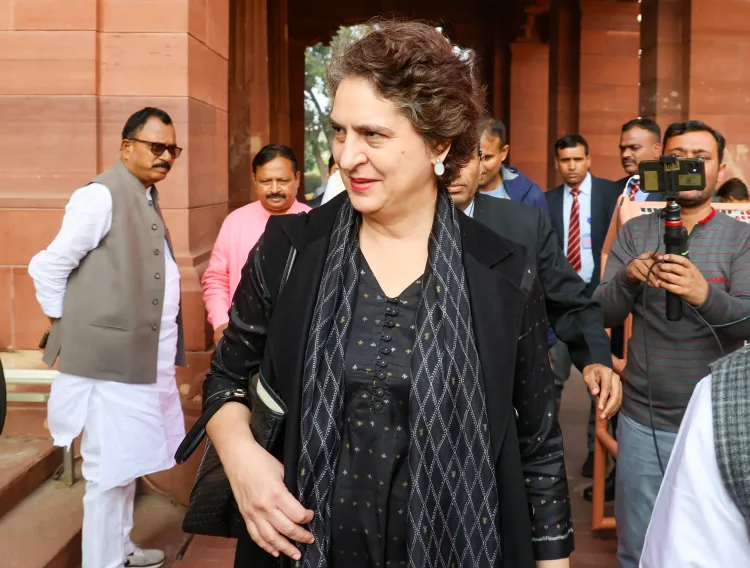
New Delhi, Dec 16 (NationPress) Congress MP Priyanka Gandhi Vadra expressed her disapproval of the Central Government's decision to rename the Mahatma Gandhi National Rural Employment Guarantee Act (MGNREGA) on Tuesday, questioning the government's fixation on altering the name of this key rural employment initiative.
In response to the suggestion of renaming MGNREGA to the Viksit Bharat Guarantee for Rozgar and Ajeevika Mission (Grameen) (VB G RAM G), Priyanka Gandhi pointed out that such a change could incur unnecessary costs and could potentially undermine the legal entitlements designated for rural workers.
Addressing the media outside Parliament, she stated: "I don’t grasp this fixation on renaming. It entails considerable expenses, and it's unclear why this is being pursued without purpose. Additionally, the MGNREGA established a legal right—100 days of employment for the nation's most impoverished. This new Bill could compromise that right."
Moreover, she challenged the government's assertions regarding the enhancement of the scheme.
"While this Bill suggests an increase in the number of employment days, have wages been raised? No, wages have actually been declining over time. Many MGNREGA workers today report that they have not yet received their payments," she remarked.
Priyanka Gandhi also expressed concerns over the shifts in decision-making authority proposed in the new legislation.
"Previously, local gram panchayats determined work sites and employment eligibility under the scheme. However, this new Bill stipulates that the Central government will control who is employed and who receives payments. This effectively strips gram panchayats of their rights," she further added.
The Congress leader's comments arise amidst a wider political discussion regarding the Central Government's initiative to substitute the current MGNREGA framework with a new rural employment law. Congress MP Shashi Tharoor characterized the controversy surrounding the proposed renaming as 'unfortunate' and cautioned against fostering an artificial ideological divide while diminishing the legacy of Mahatma Gandhi.
In response to the government's proposed G-RAM-G Bill, Tharoor noted that the principles being referenced are not at odds. "The debate over renaming MGNREGA in the government’s proposed G-RAM-G Bill is regrettable. The ideals of Gram Swaraj and Ram Rajya were never opposing forces; they were the dual foundations of Gandhiji’s vision," he stated in a post on X.
The Central Government has introduced a Bill aimed at replacing the Mahatma Gandhi National Rural Employment Guarantee scheme with the Viksit Bharat Guarantee for Rozgar and Ajeevika Mission (Grameen), abbreviated as VB G RAM G. A party directive has been issued, instructing BJP MPs to attend Parliament to facilitate the Bill’s approval. The government claims that the new legislation offers a revised framework that aligns with the vision of a Viksit Bharat by 2047.
Initially launched by the UPA government in 2005, MGNREGA guarantees 100 days of wage employment for rural households and has been recognized as a transformative initiative over the past twenty years. The proposed Bill aims to extend the employment guarantee from 100 to 125 days. It also introduces provisions that mandate payments within seven to fifteen days following the completion of work, along with an unemployment allowance in case of delayed payments.
The new Bill categorizes work into four areas—water security, rural infrastructure, livelihood infrastructure, and disaster resilience. Work will not be conducted during peak agricultural seasons. To improve transparency, biometric authentication and geotagging have been suggested, alongside multi-tier grievance redressal systems.
Point of View
It is crucial to approach this contentious issue with a balanced perspective. The proposed renaming of MGNREGA has generated significant discourse among political leaders, reflecting the complexity of rural employment policies in India. While concerns about name changes and their implications for workers' rights are valid, it is essential to examine the broader context of rural development and employment guarantees, prioritizing the welfare of marginalized communities.
NationPress
19 Sept 2026
Frequently Asked Questions
Why is Priyanka Gandhi against the renaming of MGNREGA?
Priyanka Gandhi criticizes the renaming as unnecessary expenditure that could weaken legal rights for rural workers.
What are the proposed changes in the new Bill?
The new Bill proposes to rename MGNREGA to VB G RAM G, increase employment days from 100 to 125, and implement biometric authentication for transparency.
What are the implications of the proposed Bill?
The proposed Bill could dilute the legal rights of rural workers and centralize decision-making, affecting local governance.
How has the government justified the changes?
The government claims that the new framework aligns with the vision of Viksit Bharat 2047 and aims to enhance employment guarantees.