Does the Bill to Repeal MGNREGA Align with the New Realities of Rural India and Introduce AI Fraud Checks?
Synopsis
A revolutionary Bill is set to replace MGNREGA, ensuring 125 days of employment for rural families while introducing advanced AI fraud detection. Learn how this legislation addresses the challenges of a rapidly evolving rural India.
Key Takeaways
Guaranteed employment.
The Bill guarantees 125 days of work for rural households.
Advanced technology will be used to monitor employment processes.
Increased transparency.
The Bill includes provisions for enhanced social audits.
Infrastructure improvement.
It aims to develop better agricultural and rural infrastructure.
Addressing corruption.
The new framework tackles existing issues of fraud and misappropriation.
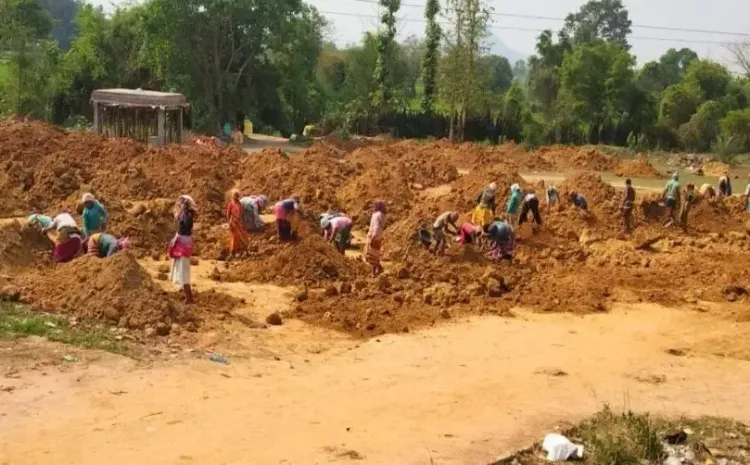
New Delhi, Dec 15 (NationPress) A guaranteed rise in employment days from 100 to 125 for rural families is one of the main features of a proposed Bill aimed at repealing the 20-year-old MGNREGA, which has struggled to meet the demands of a modernized rural India, an official stated on Monday.
The Viksit Bharat Guarantee for Rozgar and Ajeevika Mission (Gramin) (VB-G RAM G) Bill of 2025 is set to be introduced in the Lok Sabha, equipped with AI-driven fraud detection and provisions for more rigorous social audits—twice annually for each Gram Panchayat—promising increased transparency.
In addition to creating rural jobs, this proposed legislation may directly assist farmers by ensuring labor availability and improving agricultural infrastructure, according to the Rural Development Ministry official.
The VB-G RAM G Bill targets addressing structural deficiencies, boosting employment, and ensuring effective coordination in asset creation for national growth, as per a copy of the Bill listed in the supplementary business schedule issued on Monday.
This Bill signifies a significant enhancement over MGNREGA, rectifying structural flaws and establishing a modern statutory structure consistent with Viksit Bharat 2047, ensuring 125 days of wage employment for rural households whose adult members volunteer for unskilled manual work, the official noted.
The legislation aims to generate both employment and sustainable rural infrastructure through four key focus areas: water security through water-related projects; core rural infrastructure; livelihood-related infrastructure; and specialized initiatives to address extreme weather challenges.
While the number of Aadhaar-linked active workers under MNREGA has surged from 76 lakh in FY 2013-14 to 12.11 crore in FY 2025-26, the existing rural job scheme is plagued with structural issues, including fraud, digital attendance evasion, and mismatched asset expenditures, the official explained.
“The magnitude and ongoing nature of these challenges indicate that MNREGA’s framework has reached its limits, necessitating the new, modernized VB-G RAM G Bill,” the official stated.
Additionally, systemic failures in West Bengal and associated corruption highlighted the need for a change in the rural employment scheme.
Investigations across 19 districts in West Bengal uncovered non-existent projects, violations of rules, and misuse of funds, resulting in a temporary halt, according to a report.
Monitoring in 23 states during FY 2025-26 revealed projects were either “not found or not aligned with expenses,” misuse of machinery in situations requiring labor, and widespread bypassing of the MGNREGA Mobile Monitoring System for attendance.
In 2024-25, misappropriation reached Rs 193.67 crore across various states. Only 7.61% of households achieved the 100-day target in the post-pandemic era.
Officials indicated that these persistent issues, such as leakages, inadequate verification, and poor compliance, necessitated a new framework rather than minor adjustments.
Since MGNREGA was enacted in 2005, rural India has undergone significant transformations. Poverty has plummeted from 25.7% (2011-12) to 4.86% (2023-24), backed by increased consumption, income, and financial access as indicated by MPCE and NABARD RECSS surveys.
With improved social protection, enhanced connectivity, greater digital access, and a wider array of rural livelihoods, the outdated framework can no longer adequately support today’s rural economy, an official concluded.
Point of View
I recognize the importance of aligning legislation with the evolving needs of rural India. The proposed VB-G RAM G Bill represents a significant step forward in not just enhancing employment opportunities but also in ensuring transparency and accountability, essential for sustainable development.
NationPress
4 Oct 2026
Frequently Asked Questions
What does the VB-G RAM G Bill entail?
The VB-G RAM G Bill aims to repeal MGNREGA, increasing guaranteed employment days from 100 to 125, introducing AI fraud detection, and enhancing social audits.
How will this Bill benefit rural households?
It guarantees more employment days and aims to improve infrastructure and labor availability for farmers.
What issues does the Bill address?
It addresses structural flaws of MGNREGA, such as fraud, digital attendance evasion, and mismatched expenditures.
When was MGNREGA enacted?
MGNREGA was enacted in 2005, and the new Bill reflects the changes in rural India over the past two decades.
Why is there a need for a new Bill?
The old MGNREGA framework no longer aligns with the current economic realities of rural India, necessitating a comprehensive legislative upgrade.