CM Majhi Launches Rural Jobs Mission Under Viksit Bharat
Synopsis
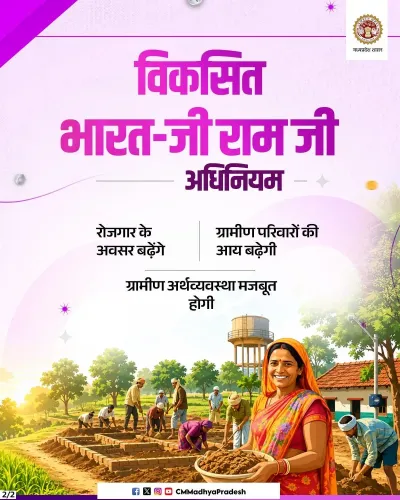
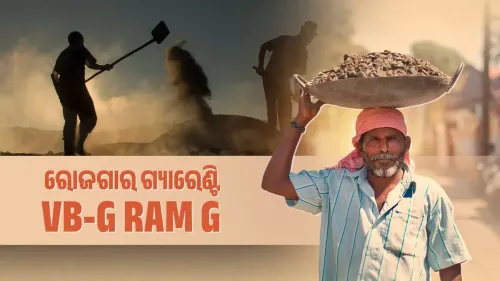
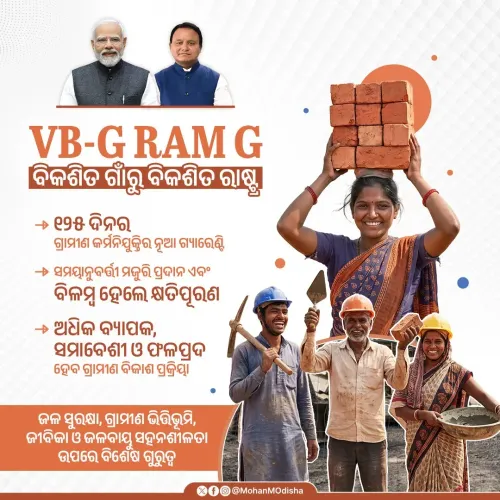
Odisha Chief Minister Mohan Charan Majhi has announced the operationalisation of the 'Viksit Bharat Rojgar Guarantee and Aajivika Mission', a joint central-state initiative to create rural employment and sustainable livelihoods, framing it as a cornerstone of his government's double-engine governance agenda.
Key Takeaways
Odisha CM Mohan Charan Majhi announced the launch of the Viksit Bharat Rojgar Guarantee and Aajivika Mission on 13 July 2026 .
The mission is a joint initiative of the central and Odisha state governments , designed to expand rural employment and sustainable livelihoods.
Majhi framed the scheme as a priority of his 'double-engine government' , citing coordinated BJP rule at both the Centre and state level.
The mission builds on the policy lineage of MGNREGA (2005) and DAY-NRLM (2011), aiming to combine employment guarantees with livelihood diversification.
The initiative aligns with the Viksit Bharat 2047 vision of making India a prosperous, self-reliant developed nation.
Specific funding patterns, district rollout timelines, and operational guidelines are yet to be publicly detailed.
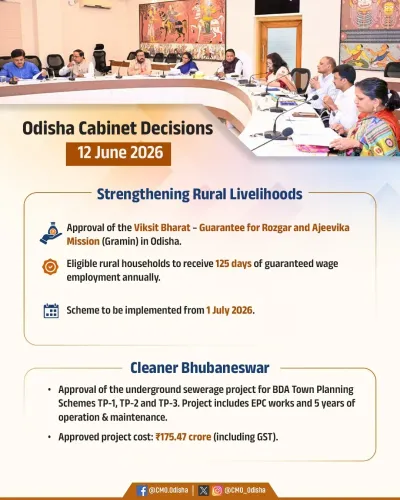
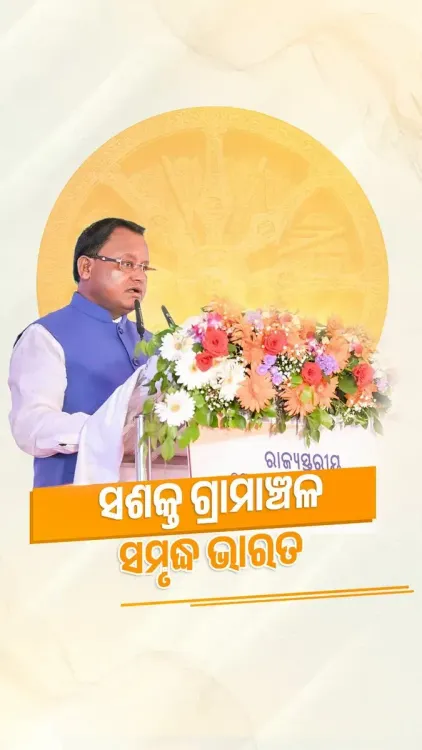
Odisha Chief Minister Mohan Charan Majhi announced on Monday, 13 July 2026 that the 'Viksit Bharat Rojgar Guarantee and Aajivika Mission' has been operationalised in the state, framing it as a central priority of his government to expand rural employment and sustainable livelihoods through coordinated central-state action.
Context
Posting in Odia, Chief Minister Majhi wrote: 'ଡବଲ ଇଞ୍ଜିନ ସରକାରରେ ଗ୍ରାମାଞ୍ଚଳରେ ରୋଜଗାର ସୃଷ୍ଟି ଓ ସ୍ଥାୟୀ ଜୀବିକାର ସୁଯୋଗ ବୃଦ୍ଧି କରିବା ଆମ ସରକାରଙ୍କ ପ୍ରାଥମିକତା' — translated: 'Creating employment and increasing opportunities for sustainable livelihoods in rural areas under the double-engine government is our government's priority.' He described the mission as a 'significant step' toward building a prosperous, self-reliant, and developed India.
The announcement comes from Bhubaneswar, the state capital, where the BJP government under Majhi has been in office since June 2024, when the party ended over two decades of Biju Janata Dal rule in Odisha.
Policy Backdrop
The new mission sits within a long arc of central rural employment policy. The Mahatma Gandhi National Rural Employment Guarantee Act (MGNREGA), enacted in 2005, guarantees 100 days of wage employment annually to rural households. The Deendayal Antyodaya Yojana–National Rural Livelihoods Mission (DAY-NRLM), launched in 2011, added a self-employment and skill-based livelihood layer for the rural poor.
The Viksit Bharat vision, articulated between 2023 and 2024, set the broader roadmap to position India as a developed nation by 2047, with rural employment and self-reliance as explicit pillars. The new mission appears to build on both MGNREGA and DAY-NRLM, combining employment guarantees with livelihood diversification under a single convergent framework.
Odisha has a large rural population with significant dependence on agriculture and wage labour, making it a critical testing ground for such integrated schemes. The 'double-engine government' framing — BJP simultaneously governing the state and the Centre — is intended to signal faster, friction-free scheme delivery.
Stakeholders and Impact
The primary beneficiaries are rural households across Odisha's villages, particularly those dependent on seasonal agriculture or daily wage work. By combining employment guarantees with structured livelihood pathways, the mission aims to address both immediate income needs and longer-term economic stability for rural families.
State departments of rural development and panchayati raj, along with central ministries, are expected to be the key implementation arms. Self-help groups and village-level institutions already active under DAY-NRLM are likely to serve as delivery channels for the livelihood components.
What's Next
Attention will now turn to Odisha's state annual plan for operational details — including budget allocations, district-level rollout timelines, and convergence guidelines with existing MGNREGA and NRLM infrastructure. The mission's design and funding pattern are expected to clarify how the central and state governments will share responsibilities and costs. Parliamentary and assembly-level scrutiny on these specifics is anticipated as the scheme moves from announcement to implementation.
If the mission delivers measurable outcomes in rural income and employment, it could serve as a model for other BJP-governed states pursuing the Viksit Bharat 2047 target through similar central-state convergence.
Point of View
Reinforcing the BJP's 'double-engine' brand ahead of future electoral cycles. By explicitly merging employment guarantees with livelihood missions, the scheme attempts to address a persistent criticism of MGNREGA — that it provides temporary wage work without building durable income pathways. The move follows a recognisable pattern in BJP-governed states of layering new, branded missions atop existing central schemes to signal fresh momentum. How effectively the mission translates into verifiable rural income gains in Odisha will determine whether it becomes a replicable model or remains a political signalling exercise.
NationPress
12 Oct 2026
Frequently Asked Questions
What is the Viksit Bharat Rojgar Guarantee and Aajivika Mission?
It is a joint central-state initiative announced by Odisha Chief Minister Mohan Charan Majhi to expand rural employment opportunities and create sustainable livelihood pathways for village households in Odisha, aligned with the Viksit Bharat 2047 vision.
Who will benefit from this rural employment mission in Odisha?
Rural families and village households across Odisha are the primary beneficiaries, particularly those dependent on seasonal agriculture or daily wage labour seeking more stable and diversified income sources.
How is this mission different from MGNREGA?
While MGNREGA guarantees 100 days of wage employment, the new mission appears to combine that employment guarantee with structured livelihood and self-employment components, similar to DAY-NRLM, to address longer-term income stability rather than only short-term wage support.
What is the 'double-engine government' that CM Majhi refers to?
'Double-engine government' is a BJP term describing the advantage of the same party governing both the central government and a state government simultaneously, enabling faster and more coordinated implementation of welfare and development schemes.
When did Mohan Charan Majhi become Chief Minister of Odisha?
Mohan Charan Majhi became Chief Minister of Odisha in June 2024 , after the BJP won the state assembly elections, ending more than two decades of Biju Janata Dal rule in the state.