CM Majhi launches VB-GRAM G for 125-day rural jobs in Odisha
Synopsis
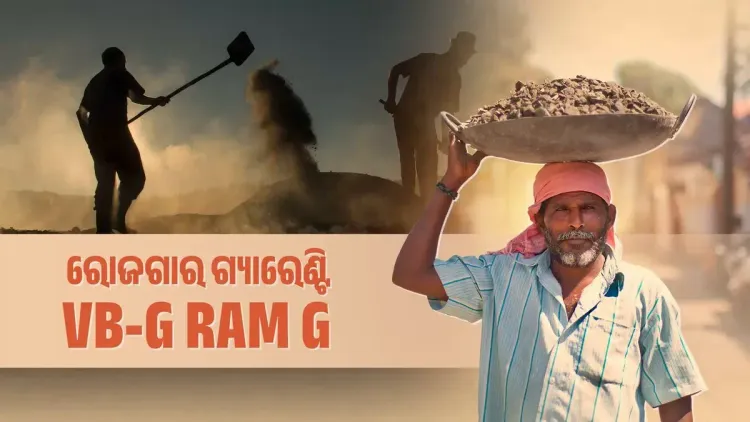
Odisha Chief Minister Mohan Charan Majhi announced VB-GRAM G on 3 July 2026, a state scheme offering rural workers 125 days of guaranteed employment — 25 more than the central MGNREGA floor — backed by timely wages, digital tools and social audits, aligned with the Viksit Bharat 2047 vision.
Key Takeaways
VB-GRAM G is Odisha's new state rural employment scheme announced by CM Mohan Charan Majhi on 3 July 2026 .
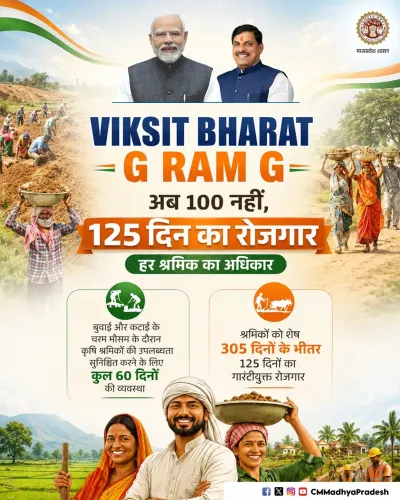
The scheme guarantees 125 days of employment, extending the central MGNREGA floor of 100 days by 25 days .
Key features include timely wage payments, digital integration and transparent social audits .
Primary beneficiaries are rural labourers and gram panchayats across Odisha.
The initiative is explicitly linked to the national Viksit Bharat 2047 development goal.
Budget allocations and district-level rollout timelines are yet to be publicly detailed.
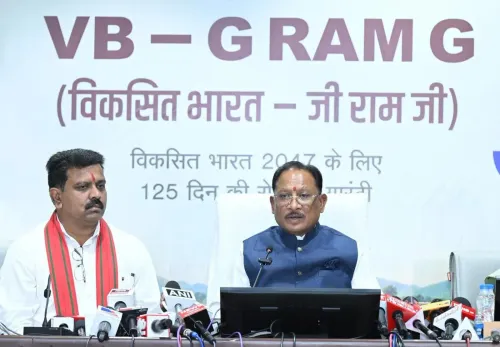
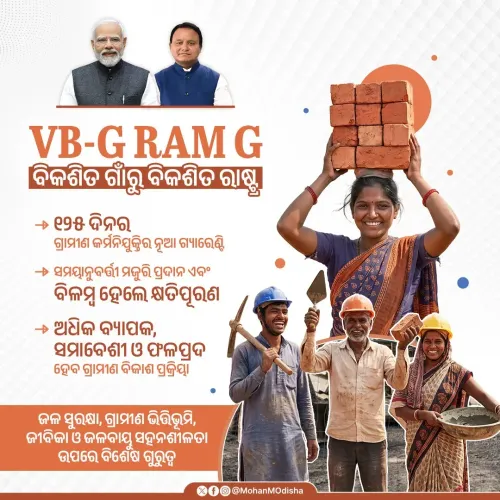
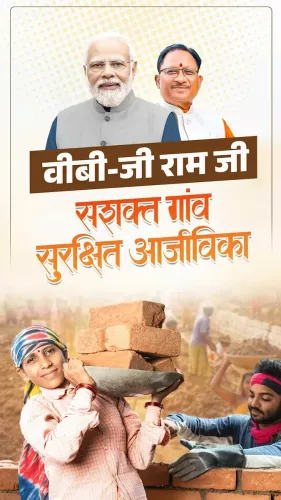
Odisha Chief Minister Mohan Charan Majhi on 3 July 2026 announced the VB-GRAM G scheme, a state rural employment initiative promising 125 days of guaranteed work, timely wage payments, digital integration and transparent social audits for rural labourers across Odisha.
Context
Posting in Odia on X, CM Majhi described the scheme as a step that will 'bring big change in the lives of rural workers' (ଗ୍ରାମାଞ୍ଚଳର ଶ୍ରମିକଙ୍କ ଜୀବନରେ ଆଣିବ ବଡ଼ ପରିବର୍ତ୍ତନ). He framed VB-GRAM G as a mission to strengthen the rural economy through assured employment, timely wages, digital linkage and clean social audits. The post carried the hashtag #VBGRAMG, signalling a coordinated public outreach campaign around the launch.
The announcement comes roughly two years after the BJP ended prolonged BJD rule in Odisha in the June 2024 assembly elections, bringing Majhi to the Chief Minister's office. Rural welfare delivery has been a central plank of the new administration's political messaging.
Policy Backdrop
The central government's Mahatma Gandhi National Rural Employment Guarantee Act (MGNREGA), enacted in 2005, guarantees at least 100 days of wage employment per year to rural households. VB-GRAM G extends that floor by 25 additional days, a move consistent with a broader pattern of BJP-governed states supplementing the central framework with enhanced state-specific guarantees.
The scheme's emphasis on digital integration aligns with platforms such as NREGA Soft, while the social audit component mirrors accountability mechanisms that civil society groups have long advocated for under MGNREGA. CM Majhi explicitly linked VB-GRAM G to the national Viksit Bharat 2047 vision — the Union government's goal of a fully developed India by the centenary of independence — framing the state initiative as a building block of that larger ambition.
Stakeholders and Impact
The primary beneficiaries are rural labourers and their households across Odisha's gram panchayats, who stand to gain an additional 25 days of assured income beyond the national guarantee. Timely wage disbursement — a persistent grievance under MGNREGA nationally — is listed as a specific commitment, which could meaningfully reduce distress migration from the state's agrarian districts.
Gram panchayats will be central to implementation, responsible for work allocation and the social audit process. Digital linkage is expected to reduce leakage and ghost-worker fraud, issues that have historically undermined rural employment schemes in Odisha and elsewhere.
What's Next
Observers will watch for district-level rollout timelines and budget allocations in the next Odisha legislative assembly session, which will determine whether the 25-day top-up is fully state-funded or partly supported by central transfers. Integration with national digital infrastructure will be a key operational test. The scheme's social audit design and grievance-redressal mechanism will also be scrutinised by rural welfare advocates as implementation begins.
If VB-GRAM G delivers on its commitments, it could position Odisha as a model for state-level MGNREGA augmentation ahead of the 2029 assembly elections, reinforcing the BJP's rural outreach narrative in a state it won for the first time in two decades.
Point of View
Using the 25-day top-up over MGNREGA as a tangible, communicable benchmark. By anchoring the scheme to the Viksit Bharat 2047 narrative, CM Majhi aligns Odisha's state welfare agenda with the Union government's long-term branding, reinforcing BJP's centre-state coordination story. The emphasis on digital linkage and social audits signals awareness of the credibility deficit that has historically plagued rural employment schemes, though the real test will be in funding commitments and on-ground execution. If implemented effectively, the scheme could consolidate the BJP's hold on Odisha's rural constituencies ahead of the next assembly cycle.
NationPress
2 Oct 2026
Frequently Asked Questions
What is VB-GRAM G scheme in Odisha?
VB-GRAM G is an Odisha state rural employment scheme announced by Chief Minister Mohan Charan Majhi that promises 125 days of guaranteed work to rural labourers, along with timely wages, digital integration and social audits — going beyond the central MGNREGA's 100-day guarantee.
How is VB-GRAM G different from MGNREGA?
While MGNREGA guarantees at least 100 days of wage employment per rural household annually, VB-GRAM G offers 125 days — an additional 25 days funded at the state level — along with enhanced digital tracking and social audit mechanisms.
Who will benefit from VB-GRAM G in Odisha?
Rural labourers and their households across Odisha's gram panchayats are the primary beneficiaries, with gram panchayats responsible for work allocation and the social audit process.
What is Viksit Bharat 2047 and how does VB-GRAM G relate to it?
Viksit Bharat 2047 is the central government's vision for a fully developed India by the centenary of independence in 2047. CM Majhi has framed VB-GRAM G as a state-level contribution to this national goal, linking rural employment to long-term economic development.
When was VB-GRAM G announced?
Odisha Chief Minister Mohan Charan Majhi announced VB-GRAM G on 3 July 2026 via a post on X, describing it as a historic initiative for rural workers and the rural economy.