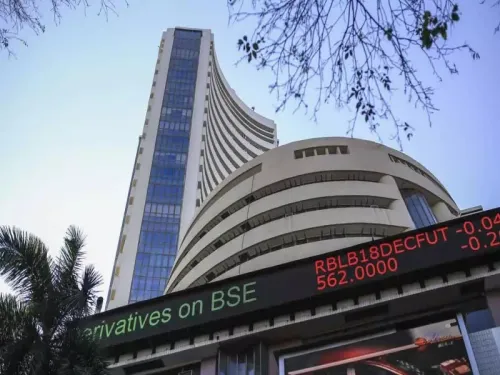
BSE Total Market Index launched, covers 98% of AllCap market cap

Synopsis
BSE has launched one of India's broadest equity benchmarks — the Total Market Index — covering 98% of the AllCap universe with a minimum of 1,000 stocks and no fixed constituent cap. Unlike the Sensex or Nifty50, it is built to grow with the market, opening a new frontier for passive investment products in India.
Key Takeaways
BSE Index Services Pvt.
Ltd. launched the BSE Total Market Index (TMI) on 23 July 2025 .
The index covers at least 98% of the BSE AllCap Index by market capitalisation, with a minimum of 1,000 constituent stocks .
Base value is set at 1,000 , with 16 September 2005 as the first value date; reconstituted semi-annually in June and December.
Applicable for ETFs , index funds , PMS , mutual fund schemes , and institutional portfolios .
BSE Index Services had earlier launched the Derivative Stocks Index in January 2025 , tracking derivative-linked constituents of the BSE 500.
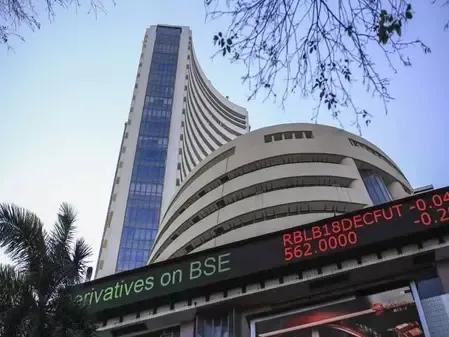
BSE Index Services Pvt. Ltd., a wholly-owned subsidiary of the Bombay Stock Exchange (BSE), on Thursday, 23 July unveiled the BSE Total Market Index (TMI) — a broad-market benchmark engineered to track companies accounting for 98 per cent of the BSE AllCap Index by total market capitalisation. The launch marks one of the most expansive equity benchmarks introduced in India's capital markets in recent years.
What the Index Covers
The BSE Total Market Index is designed to maintain coverage of at least 98 per cent of the BSE AllCap universe, subject to a minimum of 1,000 constituent stocks. The index carries a base value of 1,000, with 16 September 2005 as its first value date. It will be reconstituted semi-annually — in June and December each year — to ensure its composition stays current with market developments.
What the Exchange Said
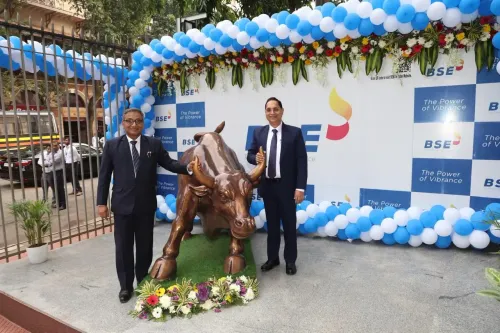
Ashutosh Singh, Managing Director and CEO of BSE Index Services Pvt. Ltd., described the TMI as a 'future-ready' benchmark built to expand alongside India's capital markets rather than being constrained by a fixed constituent count. 'The BSE Total Market Index is designed to grow as India's capital market grows, ensuring broad and relevant representation of the listed market capitalisation universe while reflecting how the market continues to evolve,' Singh said.
How It Can Be Used
According to the exchange, the new benchmark is suited for a range of passive and institutional investment products, including exchange-traded funds (ETFs), index funds, portfolio management services (PMS), mutual fund schemes, and institutional portfolios. The flexibility in application positions the TMI as a potential go-to reference for fund managers seeking comprehensive market exposure beyond narrower large-cap or mid-cap indices.
Context and Earlier Launches
This is not BSE Index Services' first product move this year. In January, the subsidiary had launched the Derivative Stocks Index, which tracks derivative-linked constituents of the BSE 500 Index and similarly targets passive strategies through ETFs, index funds, PMS, and mutual fund schemes. The TMI, however, is significantly broader in scope, covering a far larger slice of the listed market. Notably, the absence of a fixed constituent ceiling distinguishes the TMI from conventional benchmarks like the Sensex or Nifty50, which are capped at 30 and 50 stocks respectively — making the new index a structural departure in benchmark design for Indian equities.
What Comes Next
With the index now live, market participants will watch whether asset management companies move quickly to launch TMI-linked passive products. A broad-market ETF anchored to a 1,000-plus stock universe could attract institutional and retail investors seeking diversified, low-cost market exposure. The next reconstitution is due in December 2025.
Point of View
Not just another headline index. India's ETF and index fund market has grown rapidly but remains dominated by Nifty50 and Sensex trackers; a 1,000-plus-stock benchmark could finally give retail and institutional investors a credible whole-market vehicle. The real test will be whether fund houses move fast enough to launch products, and whether the semi-annual reconstitution cadence is nimble enough to reflect India's fast-evolving listed universe.
NationPress
21 Oct 2026
Frequently Asked Questions
What is the BSE Total Market Index?
The BSE Total Market Index (TMI) is a broad-market equity benchmark launched by BSE Index Services Pvt. Ltd. on 23 July 2025, designed to track companies representing at least 98% of the BSE AllCap Index by total market capitalisation, with a minimum of 1,000 constituent stocks.
How is the BSE Total Market Index different from the Sensex or Nifty50?
Unlike the Sensex (30 stocks) or Nifty50 (50 stocks), the TMI has no fixed upper limit on constituents — it is designed to expand as India's listed market grows. This makes it one of the broadest equity benchmarks in the Indian market.
When was the BSE Total Market Index base value set?
The index has a base value of 1,000, with 16 September 2005 as its first value date. It will be reconstituted semi-annually in June and December each year.
What products can use the BSE Total Market Index as a benchmark?
The TMI can serve as a benchmark for exchange-traded funds (ETFs), index funds, portfolio management services (PMS), mutual fund schemes, and institutional portfolios, according to BSE.
What other index did BSE Index Services launch recently?
BSE Index Services launched the Derivative Stocks Index in January 2025, which tracks derivative-linked constituents of the BSE 500 Index and is also intended to support passive investment strategies through ETFs, index funds, and PMS.