Is the Budget 2026-27 Indicating a Shift to Long-Term Vision?
Synopsis
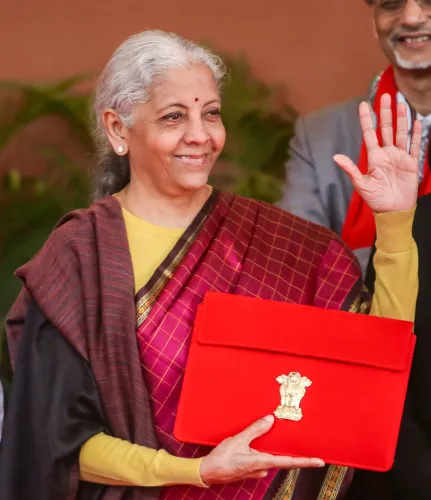
The Union Budget 2026-27 marks a pivotal change towards a long-term vision by enhancing capital expenditure and prioritizing sustainable growth. This shift aims to bolster India's economic stability and foster resilience, paving the way for future development.
Key Takeaways
Long-term vision emphasized in Budget 2026-27.
Capital expenditure increased to Rs 12.2 lakh crore.
Real GDP growth projected at 7.4 percent.
Focus on inclusive growth and welfare programs.
Fiscal deficit target set at 4.3 percent for FY27.
New Delhi, Feb 2 (NationPress) The Union Budget 2026–27 has placed a long-term vision at the forefront by enhancing capital expenditure and optimizing the expenditure mix, according to a report released on Monday. The analysis from Crisil Intelligence indicates a significant pivot towards long-term strategies, emphasizing reforms, enhancing the ease of doing business, and promoting inclusive growth.
In the aftermath of the Covid-19 pandemic, the initial focus was on accelerating infrastructure investment and alleviating pandemic repercussions on growth and welfare. As the domestic economy regained strength and stability, the necessity for immediate short-term growth support diminished, prompting a shift towards fostering long-term growth.
The government's intent is to fortify resilience by further developing the manufacturing and services sectors, thus laying the groundwork for the next phase of growth. The report also underscored progress in fiscal consolidation and the establishment of a medium-term debt target, which allows for a broader outlook beyond immediate concerns.
India’s real GDP growth is projected to exceed expectations this fiscal year at 7.4 percent, compared to 6.5 percent last fiscal year, largely driven by fiscal provisions for consumption and tax reliefs that bolster private spending.
The budget continues to support consumption through central welfare initiatives aimed at lower-income households while maintaining a heightened focus on employment and asset-generating schemes, despite a moderation in subsidies. The report highlights an enhancement in the quality of spending, with the Centre's capital expenditure share in GDP sustained at 3.1 percent and grants to states elevating effective capital expenditure to approximately 4.4 percent of GDP.
Recent years have witnessed a marked shift in revenue expenditure towards capital expenditure. However, the rising proportion of interest payments may restrict further substantial reductions in revenue expenditure, the report noted.
Capital expenditure has surged by 9 percent to reach Rs 12.2 lakh crore in 2026-27, representing one of the largest allocations in recent history and equating to 4.4 percent of GDP.
The central government has set a fiscal deficit target of 4.3 percent of GDP for FY27, following a 4.4 percent estimate for FY26, with nominal GDP growth anticipated at 10 percent.
aar/
Point of View
I believe this budget reflects a strategic pivot towards long-term economic stability. By prioritizing capital expenditure and sustainable growth, the government is laying a foundation that benefits all citizens and ensures a resilient economy for future generations.
NationPress
30 Sept 2026
Frequently Asked Questions
What is the main focus of the Budget 2026-27?
The Budget 2026-27 emphasizes a long-term vision through increased capital expenditure and improved expenditure mix.
How does the budget affect GDP growth?
The budget supports a projected real GDP growth of 7.4 percent this fiscal year, boosted by fiscal measures for consumption.
What are the implications for welfare support?
While maintaining support for lower-income households, the budget emphasizes employment and asset-generating schemes.
What is the fiscal deficit target for FY27?
The fiscal deficit target for FY27 is set at 4.3 percent of GDP.
How has capital expenditure changed?
Capital expenditure rose by 9 percent to reach Rs 12.2 lakh crore, marking a significant allocation.