Can the Budget 2026-27 Sustain India's Growth Momentum?
Synopsis
The Union Budget 2026-27 aims to maintain India's growth trajectory through strategic investments and fiscal responsibility. With a focus on enhancing manufacturing and supporting key sectors, this budget lays the groundwork for sustainable economic development.
Key Takeaways
Investment-led growth remains a priority.
Focus on strategic manufacturing sectors.
Increased funding for semiconductor initiatives.
Targeted support for mineral-rich states.
Three-pronged strategy for MSME development.
New Delhi, Feb 6 (NationPress) The Union Budget for 2026–27 focuses on continuity in policies, fiscal responsibility, and investment-driven growth.
India's macroeconomic indicators remain robust, with growth metrics strong and fiscal goals met with ease.
According to the Economic Survey 2025–26, the GDP growth for 2025–26 is projected at 7.4 percent, while growth for 2026–27 is estimated between 6.8 and 7.2 percent.
In light of this, the Budget aims to maintain the current growth trajectory while bolstering the groundwork for both medium- and long-term expansion.
Among the six crucial sectors identified for accelerating and sustaining growth, enhancing manufacturing in strategic industries holds a key position. This strategy is a continuation of earlier efforts to fortify domestic production and enhance India's involvement in global value chains, as per an article by Durgesh Rai on news portal PRF.
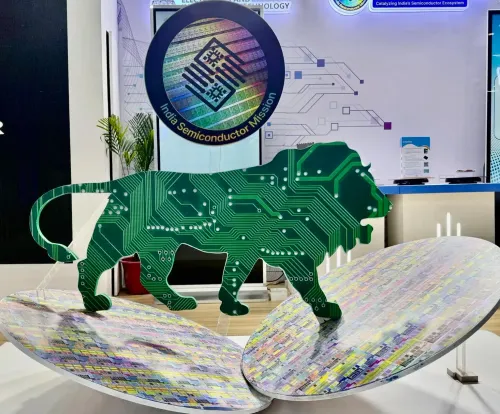
The introduction of the India Semiconductor Mission (ISM) 2.0 represents a pivotal advancement in this direction.
Building upon ISM 1.0, the updated mission emphasizes the development of domestic capacities in semiconductor equipment and materials, the creation of full-stack Indian intellectual property, and the fortification of supply-chain resilience.
The mission also anticipates industry-led research and training centers to cultivate technological proficiency and nurture a skilled workforce.
In support of this initiative, funding for the Electronics Components Manufacturing Scheme, launched in April 2025, has been raised to Rs 40,000 crore, indicating the government's commitment to advancing electronics manufacturing ecosystems in the nation, as stated in the article.
The Budget further champions India's agenda on strategic minerals. Continuing the Scheme for Rare Earth Permanent Magnets initiated in November 2025, it proposes targeted assistance for mineral-rich states like Odisha, Kerala, Andhra Pradesh, and Tamil Nadu to establish dedicated Rare Earth Corridors. These corridors aim to foster integrated development in mining, processing, research, and manufacturing, thus reducing import reliance and strengthening downstream industries.
The article also underscores that beyond high-tech manufacturing, the Budget outlines a comprehensive set of measures to maintain growth. These encompass revitalizing traditional industrial sectors, nurturing 'Champion MSMEs', enhancing infrastructure development, ensuring long-term energy security and stability, and developing City Economic Regions to leverage urban agglomeration economies.
Additionally, the Budget proposes compelling incentives to lure global business and investment into India. For instance, a tax holiday will be available until 2047 for any foreign firm that offers cloud services globally through data center facilities in India.
Moreover, to bolster manufacturing within the country, there is a proposal for a 5-year tax exemption for any non-resident who supplies capital goods, equipment, or tooling to any toll manufacturer in a bonded zone.
Several labor-intensive sectors have been given special attention due to their employment potential. The Budget adopts a three-pronged approach to support MSMEs through equity, liquidity, and professional assistance. An integrated initiative will also be launched for the textile sector.
On a macroeconomic scale, fiscal prudence remains a hallmark of Budget 2026–27, as the government continues to manage the fiscal deficit judiciously, balancing growth-supportive spending with medium-term fiscal consolidation goals.
In summary, the Union Budget 2026–27 reaffirms a strategy focused on sustaining growth through investment-led expansion, enhancing manufacturing competitiveness, and implementing incremental reforms, all while maintaining macroeconomic stability, the article concludes.
Point of View
The Union Budget 2026-27 is a balanced approach aimed at sustaining growth while ensuring fiscal prudence. The strategies laid out reflect a commitment to long-term economic stability, making it essential for India to remain competitive globally.
NationPress
19 Sept 2026
Frequently Asked Questions
What are the major highlights of Budget 2026-27?
The major highlights include a focus on investment-led growth, support for strategic manufacturing sectors, and increased funding for semiconductor initiatives.
How does the budget aim to sustain growth?
By emphasizing fiscal responsibility and enhancing domestic production capabilities, the budget aims to maintain India’s growth momentum.