How Does the Union Budget Aim to Empower MSMEs for Expansion and Global Competitiveness?
Synopsis
The Union Budget 2026–27 introduces a powerful strategy to empower MSMEs, aiming to enhance their global presence and competitiveness. With significant funding and support, this initiative targets the heart of India's economic growth, promising a brighter future for small enterprises.
Key Takeaways
MSMEs are critical to India's economic growth.
The budget allocates significant funds for MSME development.
Improving liquidity is a key focus of the budget.
TReDS will enhance credit access for MSMEs.
Job creation is a priority through MSME support.
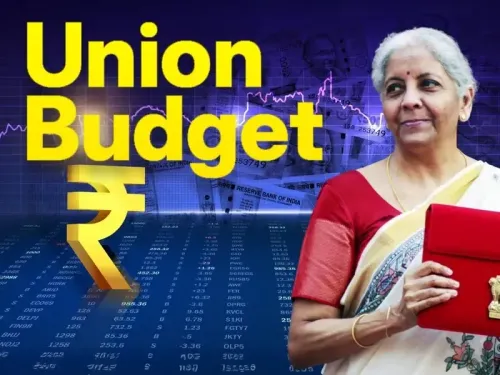
New Delhi, Feb 15 (NationPress) By positioning Micro, Small, and Medium Enterprises at the core of India's economic agenda, the Union Budget for 2026–27 has introduced a robust framework designed to assist MSMEs in their growth journey, enhance their global competitiveness, and facilitate deeper integration into both domestic and international markets through various financial, policy, and professional backing, as stated in the official announcement made on Sunday.
The Union Budget for 2026–27 emphasizes the government’s dedication to fortifying Micro, Small, and Medium Enterprises as essential catalysts for economic advancement and employment opportunities.
Currently, MSMEs contribute approximately 35.4% of India’s manufacturing output, nearly 48.58% of exports, and 31.1% of the nation's GDP.
With over 7.47 crore enterprises employing more than 32.82 crore individuals, this sector stands as the second-largest employer after agriculture.
The Budget delineates three critical “Kartavyas” aimed at propelling growth, realizing citizen aspirations, and enhancing capacities across various regions and communities.
The first Kartavya proposes a targeted three-pronged strategy to elevate MSMEs as champions by offering equity support, improving liquidity, and bolstering access to professional guidance.
To enhance equity support, the government has introduced a dedicated Rs 10,000 crore SME Growth Fund.
The goal is to cultivate future champions by incentivizing eligible enterprises and facilitating their expansion.
Moreover, the Self-Reliant India Fund, initiated in 2021, will receive an additional Rs 2,000 crore to persist in supporting micro enterprises with risk capital.
As of November 30, 2025, the fund has assisted 682 MSMEs with investments totaling Rs 15,442 crore.
Regarding liquidity, the government noted that over ₹7 lakh crore has already been made available for MSMEs through the Trade Receivables Discounting System (TReDS).
To further enhance this framework, it will be mandatory for Central Public Sector Enterprises to utilize TReDS for settling payments to MSMEs.
Credit guarantee support through CGTMSE will also be expanded for invoice discounting on the platform.
The integration of GeM with TReDS is anticipated to foster better information sharing with financiers, thereby ensuring quicker and more affordable access to credit.
Additionally, the government plans to introduce TReDS receivables as asset-backed securities to broaden the secondary market and improve liquidity.
Point of View
It's crucial to recognize the transformative potential of the Union Budget in empowering MSMEs. This initiative not only strengthens economic foundations but also fosters job creation and innovation, aligning with our nation's growth trajectory. Our commitment to supporting businesses and communities remains unwavering.
NationPress
10 Oct 2026
Frequently Asked Questions
How much does the Union Budget allocate for MSME support?
The Union Budget 2026–27 allocates a dedicated Rs 10,000 crore SME Growth Fund and an additional Rs 2,000 crore for the Self-Reliant India Fund.
What is the Trade Receivables Discounting System (TReDS)?
TReDS is a platform that facilitates the financing of trade receivables of MSMEs, providing liquidity and easier credit access.
How does the government plan to support MSMEs further?
The government aims to enhance equity support, improve liquidity, and strengthen access to professional expertise for MSMEs.
What impact will the budget have on job creation?
By strengthening MSMEs, the budget is expected to create more employment opportunities, as these enterprises are significant job providers in India.