Did the Government Increase the Component Manufacturing Budget to Rs 40,000 Crore and Announce India Semiconductor Mission 2.0?
Synopsis
The government has made a significant commitment by launching the India Semiconductor Mission 2.0 and increasing funding for electronics manufacturing. This strategic initiative aims to enhance local production and innovation, ultimately fostering a robust manufacturing ecosystem in India.
Key Takeaways
Launch of India Semiconductor Mission 2.0 to boost local semiconductor production.
Increase in electronics manufacturing budget to Rs 40,000 crore.
Creation of Rs 10,000 crore SME growth fund to promote job creation.
Comprehensive program for the textile sector with multiple key components.
Support for mineral-rich states to establish rare earth corridors.
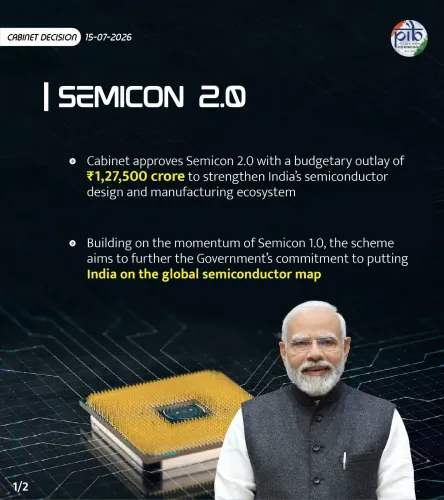
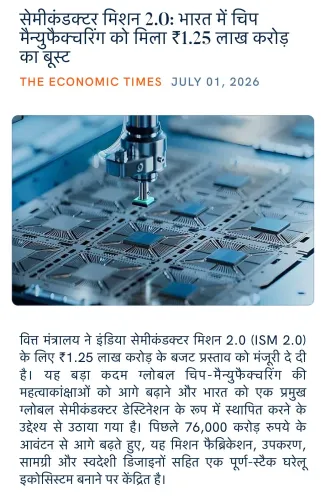
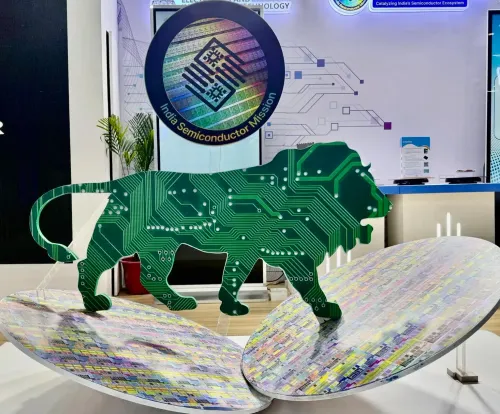
New Delhi, Feb 1 (NationPress) In a significant move to bolster ‘Make in India’ and promote domestic manufacturing, Finance Minister Nirmala Sitharaman unveiled the India Semiconductor Mission (ISM) 2.0 on Sunday, while also raising the budget for electronics component production to Rs 40,000 crore to enhance local production and foster innovation.
Building on the success of India’s Semiconductor Mission 1.0, the government is set to launch ISM 2.0, aimed at producing essential equipment and materials, developing a complete range of Indian intellectual property, and reinforcing supply chains, as stated during the Budget presentation for 2026-27.
“Our focus will also include establishing industry-led research and training centers to cultivate technology and a proficient workforce. The Electronics Components Manufacturing Scheme, introduced in April 2025 with a budget of Rs 22,999 crore, has already garnered investment commitments that exceed the initial targets,” the Finance Minister informed the assembly.
The Union Budget 2026-27 additionally proposed the creation of a dedicated Rs 10,000 crore SME growth fund to stimulate future employment, incentivizing enterprises based on specific criteria.
For the textile sector, which relies heavily on labor, the Finance Minister proposed a comprehensive program consisting of five main components. The first is the National Fibre Scheme, aimed at achieving self-sufficiency in natural fibers such as silk, wool, and jute, along with synthetic and innovative industrial-age fibers.
The second component is the Textile Expansion and Employment Scheme, designed to modernize traditional clusters by offering financial support for machinery, technology upgrades, and establishing common testing and certification centers.
The third initiative is the National Handloom and Handicraft Programme (NHHP), intended to integrate and enhance existing schemes while ensuring focused assistance for weavers and artisans.
Additionally, a government initiative for rare-earth permanent magnets was launched in November 2025.
“We now aim to support the mineral-rich states of Odisha, Kerala, Andhra Pradesh, and Tamil Nadu in establishing dedicated rare earth corridors,” Finance Minister Sitharaman announced during her Budget address.
Point of View
It is crucial to recognize the government's initiative as a step towards self-reliance in technology and manufacturing. By emphasizing localized production and research, these measures not only strengthen India's economic position but also align with global trends in technology and sustainability, ensuring that the nation remains competitive on the world stage.
NationPress
2 Oct 2026
Frequently Asked Questions
What is the India Semiconductor Mission 2.0?
The India Semiconductor Mission 2.0 aims to enhance India's semiconductor capabilities by producing necessary equipment, developing local intellectual property, and strengthening supply chains.
How much has the government allocated for electronics component manufacturing?
The government has increased the budget for electronics component manufacturing to Rs 40,000 crore.
What is the purpose of the SME growth fund?
The dedicated Rs 10,000 crore SME growth fund is designed to create future jobs by incentivizing enterprises based on specific criteria.
What is the National Fibre Scheme?
The National Fibre Scheme aims to achieve self-reliance in natural and synthetic fibers, promoting sustainability in the textile sector.
Which states will benefit from the rare earth corridors initiative?
The initiative will support the mineral-rich states of Odisha, Kerala, Andhra Pradesh, and Tamil Nadu.