Is Electronic Component Manufacturing on the Fast Track with 46 Approvals Granted?
Synopsis
The rapid growth of electronic component manufacturing in India is underscored by 46 approvals, with Karnataka receiving substantial investments. Union Minister Ashwini Vaishnaw highlights ambitious goals for the sector and the emergence of advanced chip designs, setting the stage for a transformative decade in electronics.
Key Takeaways
Rapid growth in electronic component manufacturing 46 approvals granted to enhance industry Karnataka to receive investments > Rs 10,000 crore Target of $500 billion production by 2030-31 ' Semicon 2.0 ' initiative to focus on sustainable growth
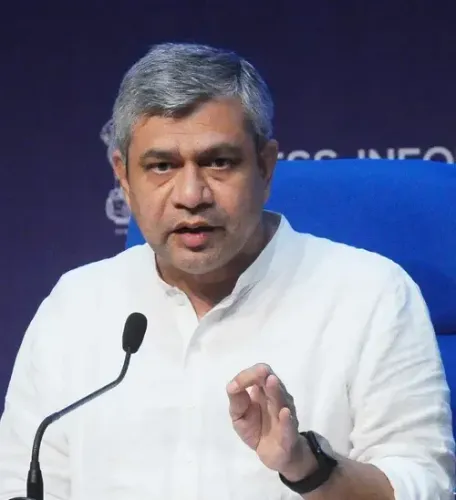
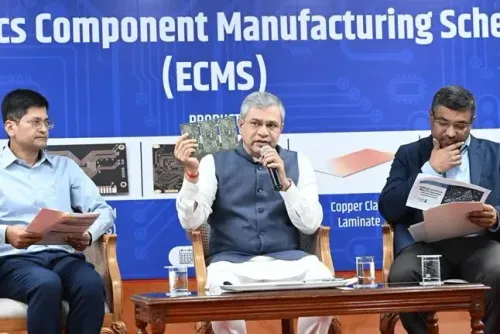
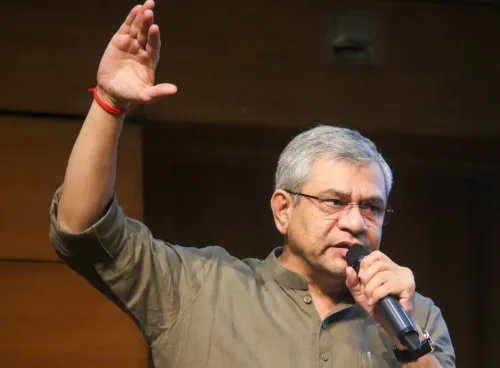
New Delhi, Feb 8 (NationPress) The production of electronic components is witnessing a significant surge, with 46 approvals granted. Karnataka is poised to attract investments exceeding Rs 10,000 crore, as stated by Union Minister Ashwini Vaishnaw.
In the 2026-27 Budget, Finance Minister Nirmala Sitharaman has raised the budget for the electronic component manufacturing initiative from Rs 22,000 crore to Rs 40,000 crore.
This increase is expected to greatly propel the electronics manufacturing sector forward.
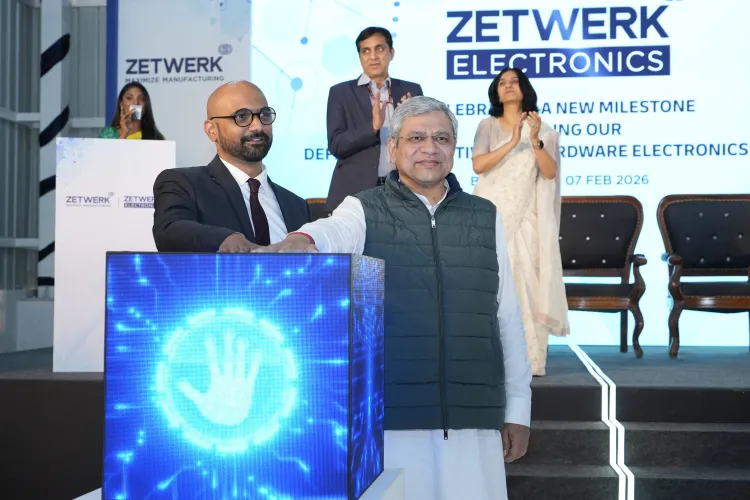
“Our Prime Minister has established a production goal of $500 billion by the end of the 2030-2031 financial year. Hence, we must act quickly to achieve this,” Vaishnaw remarked during the inauguration of Zetwerk Electronics’ state-of-the-art manufacturing facility for defence, automotive, and IT hardware electronics in Bengaluru.
“Today, India is capable of designing complete '2-nanometer' chips, which signifies a major milestone for the nation, and equipment manufacturers have begun to establish a presence in India,” added the Union IT Minister.
He noted that Applied Materials and Lam Research have already set up operations in India, with aspirations to attract ASML next.
The minister also indicated that commercial production is set to commence this year, with the first commercially produced chip from a semiconductor plant expected soon.
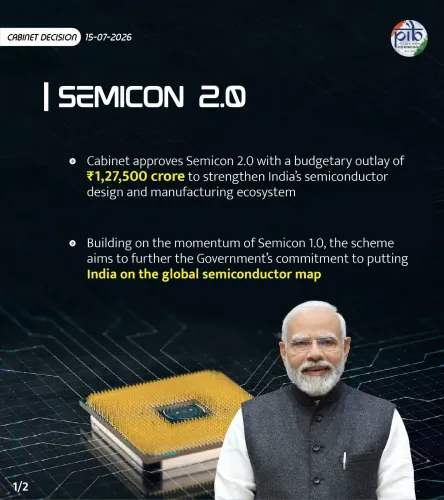
'Semicon 2.0' will be pivotal, emphasizing design, manufacturing equipment, chemicals, gases, validation, and yield enhancement—all essential for a sustainable semiconductor journey.
“We plan to produce 85,000 silicon engineers over the next decade, and we have already trained 67,000 in just four years. Therefore, a significant portion of chip design will practically occur in India, marking a notable shift in future years,” Vaishnaw stated.
He added that with the arrival of the 'fab', we have successfully charted a course from 28-nanometer to 7-nanometer, which will be part of Silicon 2.0.
“We believe in a collaborative approach, where the growth of the nation is dependent on the progress of all states,” he concluded.
Vishal Chaudhary, Co-founder and Managing Director (Aerospace and Defence) of Zetwerk, mentioned that today's electronics manufacturing necessitates deep integration across design, engineering, suppliers, and scaled production.
"This facility is designed to cohesively unite these capabilities, facilitating quicker validation, enhanced quality control, and reliable execution throughout the product lifecycle," he added.
Point of View
I see this development as a remarkable leap forward for India's electronics manufacturing sector. The government's commitment to substantial investments and skill development presents a tremendous opportunity for economic growth and technological advancement. The collaborative approach among states is crucial for national progress, ensuring that all regions benefit from this burgeoning industry.
NationPress
28 Sept 2026
Frequently Asked Questions
What is the significance of the 46 approvals granted?
The 46 approvals signify a robust growth trajectory for electronic component manufacturing in India, facilitating investments and advancements in technology.
How much investment is Karnataka expected to receive?
Karnataka is projected to receive investments exceeding Rs 10,000 crore, bolstering its position as a key player in the electronics manufacturing sector.
What are the goals for India's electronics production?
India aims for a production target of $500 billion by the 2030-2031 financial year, showcasing its commitment to becoming a global electronics manufacturing hub.
What is 'Semicon 2.0'?
'Semicon 2.0' refers to an initiative focusing on various aspects of semiconductor manufacturing, including design, equipment, and yield improvement.
How many engineers are being trained in India?
India plans to train 85,000 silicon engineers over the next decade, with 67,000 already trained in just four years.