Mumbai-Ahmedabad Bullet Train on track for late 2027 launch: Vaishnaw
Synopsis
India's bullet train isn't a distant promise anymore — Railway Minister Vaishnaw says 456 km of pier work and 371 km of viaduct are already done, eight stations have their civil shells up, and India's first undersea rail tunnel is being bored under Thane Creek. The 508-km Mumbai-Ahmedabad corridor is now targeting commercial operations in late 2027.
Key Takeaways
Railway Minister Ashwini Vaishnaw confirmed the Mumbai-Ahmedabad bullet train is targeting its first service in the last quarter of 2027 .
As of September 2026 , pier work is complete over 456 km and viaduct construction over 371 km of the 508-km corridor.
Over six lakh noise barriers installed; civil construction finished at eight stations .
Four mountain tunnels excavated; the 21-km Maharashtra tunnel is 5 km complete; India's first undersea rail tunnel under Thane Creek is included.
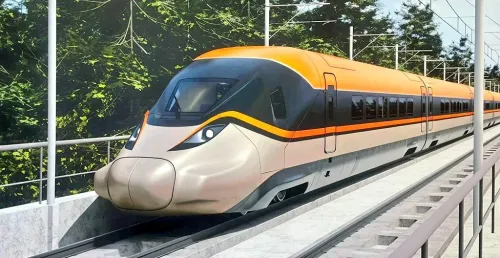
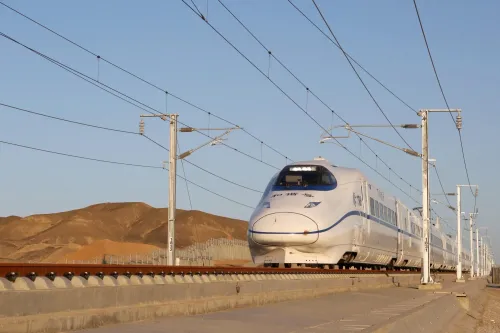
Trains designed for 350 kmph , to operate at 320 kmph , cutting Mumbai-Ahmedabad travel time to under two hours from the current 8-9 hours by road.
Japan's Shinkansen technology — with over six decades of zero passenger fatalities — underpins the project, which broke ground in September 2017 .
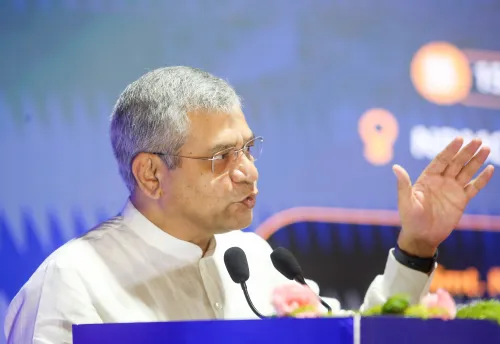
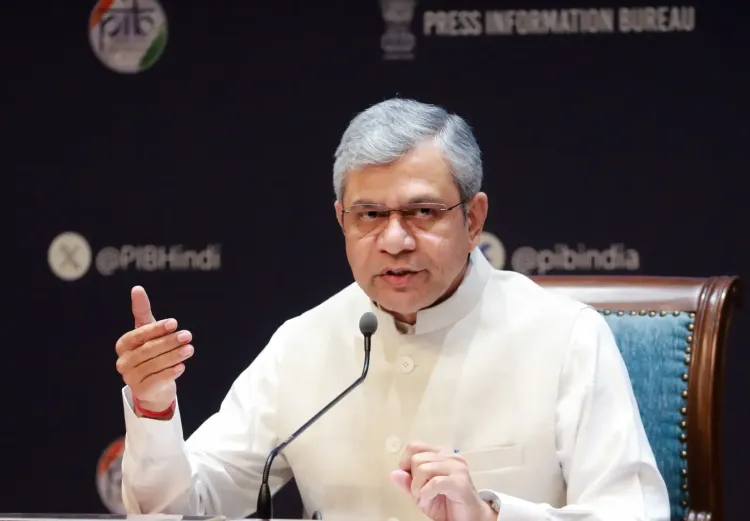
Union Railway Minister Ashwini Vaishnaw on Friday, 20 November 2026 confirmed that India's first bullet train project — the 508-km Mumbai-Ahmedabad High-Speed Rail (HSR) corridor — has moved well past the planning stage, with ground-level construction advancing rapidly and the first commercial service targeted for the last quarter of 2027. The announcement marks a significant milestone for one of the country's most closely watched infrastructure undertakings.
Scale and Ambition of the Corridor
Spanning 508 km between two of India's largest economic centres, the HSR corridor is designed to cut the Mumbai–Ahmedabad journey to under two hours — a dramatic reduction from the current road travel time of eight to nine hours. Beyond passenger convenience, the minister underscored that the project is a strategic economic initiative, binding fast-growing hubs including Mumbai, Thane, Vapi, Surat, Vadodara, Anand and Ahmedabad into a single high-growth corridor that facilitates the faster movement of people, businesses and investment.
'India's first bullet train is no longer an announcement. It is 508 km of construction, moving at full pace. The first service begins in the last quarter of 2027!' Vaishnaw said.
Construction Progress as of September 2026
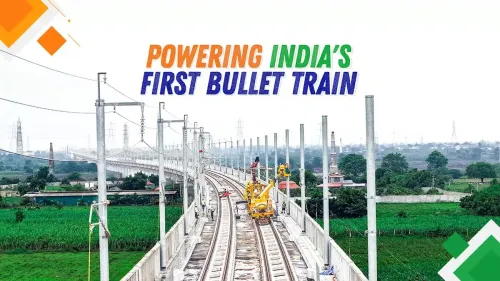
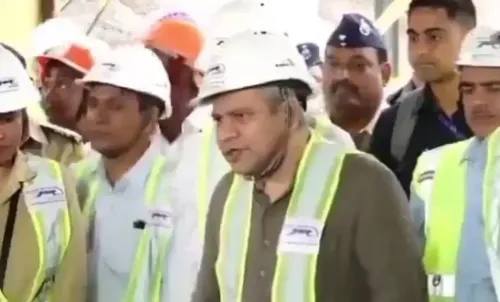
Vaishnaw provided a detailed update on work completed as of September 2026: pier construction has been finished over 456 km, while viaduct work spans 371 km. More than six lakh noise barriers have been installed along a 299-km stretch, and 9,300 overhead equipment masts have been erected across 206 km of viaduct. Civil construction at eight stations is complete, with architectural finishing currently underway. Rolling stock depots at Sabarmati, Surat and Thane are also under active construction.
Approximately 465 km of the total route is being built on elevated viaducts — eliminating level crossings, reducing trespass and cattle-on-track risks, and allowing roads and agricultural activity to continue beneath the structure undisturbed.
Engineering Firsts and Tunnel Work
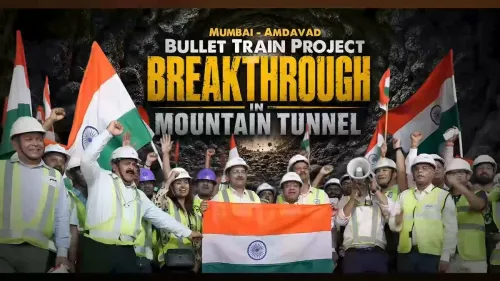
The corridor will introduce several firsts to Indian rail infrastructure. Four mountain tunnels have already been excavated, while work is progressing on the critical 21-km tunnel in Maharashtra, of which roughly 5 km has been completed through mountain-tunnelling methods. The project also includes India's first undersea rail tunnel, running beneath Thane Creek — a feat that sets it apart from any previous domestic rail project.
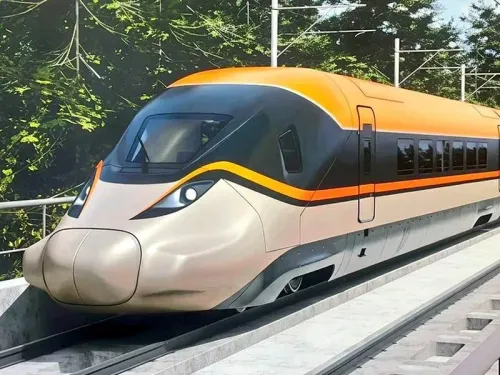
The corridor has been engineered for speeds of up to 350 kmph, with trains expected to operate commercially at 320 kmph. Such velocities demand advanced systems for traction, braking, aerodynamics and passenger safety — a step-change from conventional Indian Railways infrastructure.
Japan's Role and Early Delays
The project received its formal launch when Prime Minister Narendra Modi and the Government of Japan laid its foundation stone in September 2017. Japan has contributed its Shinkansen high-speed rail technology, which has operated for over six decades without recording a single passenger fatality. However, land acquisition delays in Maharashtra and disruptions from the Covid-19 pandemic slowed early execution, with full-scale construction gathering momentum only from 2021 onwards.
What Comes Next
With the construction clock ticking toward the late-2027 target, attention will now shift to the remaining tunnel work in Maharashtra, final station fit-outs, and integration testing of rolling stock. The project's ability to meet its commercial launch deadline will be a key indicator of India's capacity to deliver complex, technology-intensive infrastructure within committed timelines.
Point of View
But the late-2027 deadline carries significant political weight given the project's history of slippage — from land acquisition battles in Maharashtra to the Covid freeze. The real test is not the viaducts that are up, but the Maharashtra tunnel, undersea section, and rolling stock integration that remain. India has repeatedly set ambitious rail deadlines and missed them; this corridor's credibility depends on whether the final 20 percent of work — always the hardest — can be delivered on schedule. A successful launch would redefine what India can do in infrastructure; another delay would invite harder questions about project governance.
NationPress
20 Nov 2026
Frequently Asked Questions
When will India's first bullet train start operations?
Railway Minister Ashwini Vaishnaw has confirmed that the first Mumbai-Ahmedabad bullet train service is targeted for the last quarter of 2027. The 508-km corridor is currently under rapid construction with significant milestones already achieved.
What is the current construction status of the Mumbai-Ahmedabad bullet train?
As of September 2026, pier work has been completed over 456 km and viaduct construction over 371 km of the 508-km route. Civil construction at eight stations is finished, over six lakh noise barriers have been installed, and rolling stock depots at Sabarmati, Surat and Thane are under construction.
How fast will the Mumbai-Ahmedabad bullet train travel?
The corridor is engineered for a maximum speed of 350 kmph, with commercial operations expected at 320 kmph. At that speed, the journey between Mumbai and Ahmedabad will take under two hours, compared to roughly eight to nine hours by road.
What technology is being used in India's bullet train project?
The project uses Japan's Shinkansen high-speed rail technology, which has operated for more than six decades without a single passenger fatality. Japan partnered with India when Prime Minister Modi and the Japanese government laid the foundation stone in September 2017.
Why was the bullet train project delayed earlier?
Land acquisition difficulties in Maharashtra and disruptions caused by the Covid-19 pandemic slowed early execution. Full-scale construction gained momentum only from 2021 onwards, after the land issues were largely resolved and pandemic restrictions lifted.