Vaishnaw: Bullet Train Electrification Advances on 508 km Corridor
Synopsis
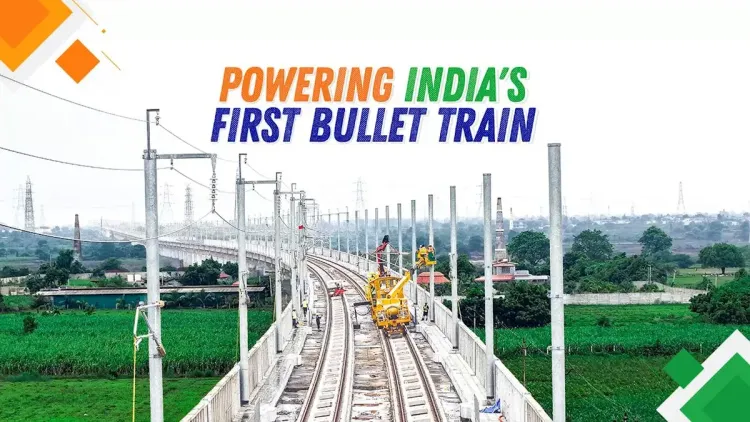
Union Minister Ashwini Vaishnaw announced on August 11, 2026, that electrification works are advancing across the full 508 km Mumbai–Ahmedabad High-Speed Rail Corridor — India's first bullet train project — built on Japanese Shinkansen technology and a decade-old India-Japan partnership.
Key Takeaways
Electrification works are actively progressing across the 508 km Mumbai–Ahmedabad High-Speed Rail Corridor , as confirmed by Union Minister Ashwini Vaishnaw on August 11, 2026 .
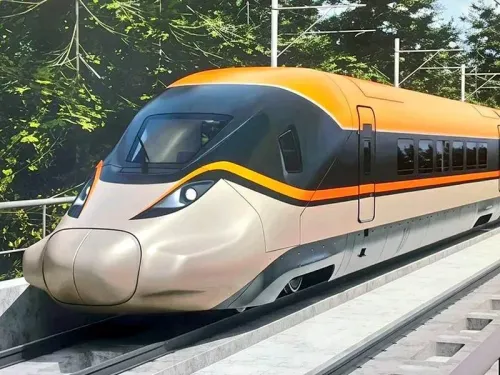
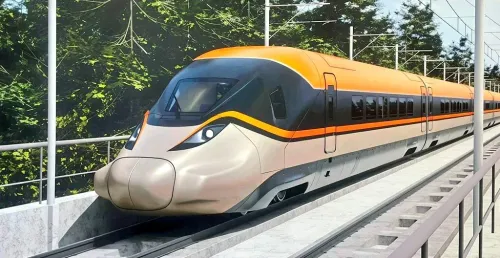
The corridor is India's first bullet train project, using Japanese Shinkansen technology with concessional funding from JICA .
The India-Japan agreement for the project was signed in 2015 ; the foundation stone was laid in 2017 .
NHSRCL (National High Speed Rail Corporation Limited) is the government-designated body executing the project.
Electrification is a gateway milestone, indicating civil construction on significant sections has advanced sufficiently for traction infrastructure to follow.
Mumbai–Ahmedabad remains the only high-speed corridor in active construction in India, with several others under survey.
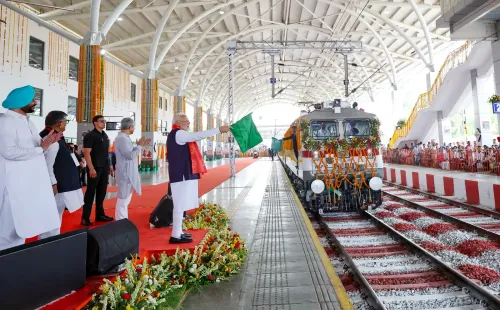
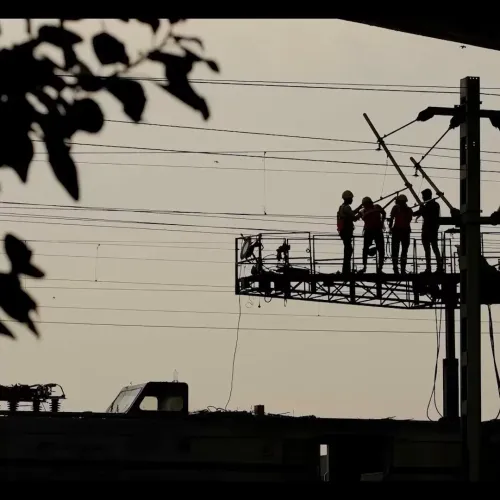
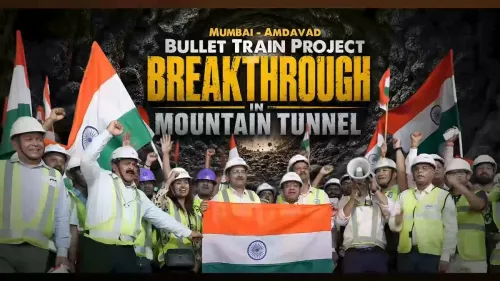
India's first bullet train is no longer a blueprint — it is a live construction site, and the wires are going up. Union Minister Ashwini Vaishnaw announced on Tuesday, August 11, 2026, that electrification works are actively progressing across the full 508 km Mumbai–Ahmedabad High-Speed Rail Corridor, calling it 'another major step' in the project.
A decade in the making: from Tokyo handshake to live wires
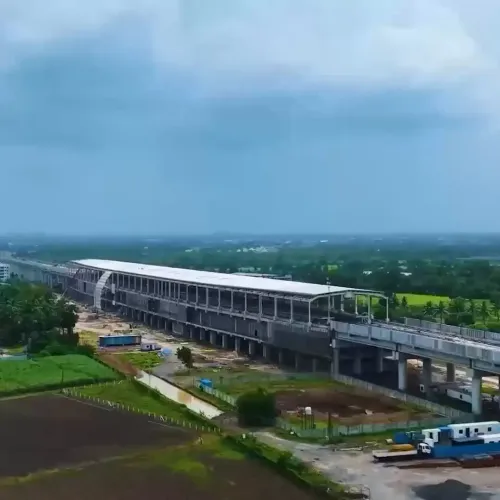
The roots of this moment stretch back to 2015, when India and Japan signed the foundational agreement for the corridor during Prime Minister Narendra Modi's visit to Tokyo. The foundation stone followed in 2017, and the project has since been executed by National High Speed Rail Corporation Limited (NHSRCL), the dedicated special-purpose vehicle created by the Government of India. Japan's role goes beyond diplomacy — the corridor runs on Japanese Shinkansen technology, with concessional funding routed through JICA, making it a flagship of the India-Japan strategic partnership. Electrification is a critical gateway milestone. High-speed rail systems demand dedicated overhead traction infrastructure entirely separate from conventional rail networks, and completing it across a 508 km stretch signals that civil construction on significant sections has reached a stage where electrification crews can follow. It is the kind of progress that turns a corridor from concrete and steel into something that can actually carry a train.Where the bullet train fits India's rail modernisation arc
The Mumbai–Ahmedabad corridor does not stand alone. It sits at the leading edge of India's National Rail Plan, which envisions higher-speed passenger services on select high-density routes as the country simultaneously completes its Dedicated Freight Corridors — freeing up existing tracks for faster passenger movement. Several additional high-speed corridors are under survey or announcement, but Mumbai–Ahmedabad remains the only one in active construction. Vaishnaw, who holds the Railways portfolio alongside Information & Broadcasting and Electronics & IT, has made the bullet train a visible marker of the government's infrastructure ambitions. Progress updates on the corridor — civil works, viaduct completions, station designs — have been a recurring feature of his public communication. The next concrete milestones to watch: completion of civil works on priority sections, rolling stock procurement decisions, and any revised cost or timeline disclosures before Parliament. The wires going up today are the prelude to a test run that India has been waiting a decade to see.Point of View
The bullet train is a flagship infrastructure promise tied directly to the Modi-era India-Japan partnership, and visible construction milestones help sustain public confidence in a project whose timelines have been long. The update also fits a broader pattern of the government using social media to build a cumulative narrative of railway modernisation — freight corridors done, Vande Bharat scaled, bullet train underway — framing infrastructure as a continuum rather than isolated events. The real test will come when rolling stock procurement and a firm commissioning date are announced publicly.
NationPress
25 Sept 2026
Frequently Asked Questions
What is the current status of India's bullet train project?
As of August 2026 , electrification works are progressing across the full 508 km Mumbai–Ahmedabad High-Speed Rail Corridor , according to Union Minister Ashwini Vaishnaw. Civil construction on significant sections has advanced to the stage where overhead traction infrastructure is being installed.
Which technology is used in India's bullet train?
India's Mumbai–Ahmedabad High-Speed Rail Corridor uses Japanese Shinkansen technology , transferred under the India-Japan agreement signed in 2015 . Concessional funding for the project is provided through JICA .
Who is building India's bullet train?
The project is being executed by National High Speed Rail Corporation Limited (NHSRCL) , a special-purpose vehicle set up by the Government of India specifically to implement high-speed rail projects.
How long is the Mumbai–Ahmedabad bullet train corridor?
The corridor spans 508 km , connecting Mumbai and Ahmedabad . It is India's first and currently only high-speed rail corridor in active construction.
When was the bullet train project started in India?
The India-Japan agreement for the project was signed in 2015 , and the foundation stone was laid by Prime Minister Narendra Modi in 2017 . Construction has been underway since then under NHSRCL.