Mumbai-Ahmedabad bullet train: 349 km viaduct done, 9 years on
Synopsis
Nine years after its foundation stone was laid, India's bullet train corridor is no longer just a promise on a rendering — 349 km of viaduct stands complete, India's largest tunnel boring machine is in the ground at Vikhroli, and indigenous trains are under contract. The Mumbai-Ahmedabad High Speed Rail project has moved from political symbolism to verifiable steel and concrete.
Key Takeaways
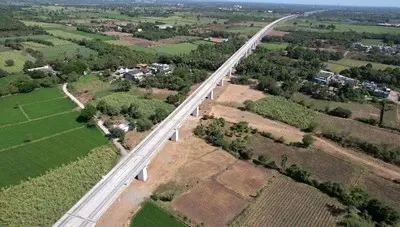
349 km of viaduct structure completed along the 508-km Mumbai-Ahmedabad High Speed Rail corridor as of May 2025 .
443 km of concrete support piers erected; 7,700+ overhead equipment masts installed across 179 km .
India's largest tunnel boring machine — 350 tonnes , 13.6 m diameter — deployed at Vikhroli , Mumbai, for the 21-km underground tunnel.
BEML awarded ₹867-crore contract in late 2024 to manufacture indigenous high-speed trains targeting 250–280 kmph operational speeds.
Faster express service to cut Mumbai-Ahmedabad journey to just over two hours , versus roughly seven hours by conventional rail today.
The corridor will serve 12 stations across Maharashtra , Gujarat , and Dadra and Nagar Haveli .
India's first bullet train project, the Mumbai-Ahmedabad High Speed Rail (MAHSR) corridor, has crossed several critical construction milestones nearly nine years after Prime Minister Narendra Modi and former Japanese Prime Minister Shinzo Abe laid its foundation stone in September 2017. With 349 km of viaduct structure completed along the 508-km route, the project is visibly accelerating — even as questions over costs, timelines, and final execution persist.
Construction Progress on the Ground
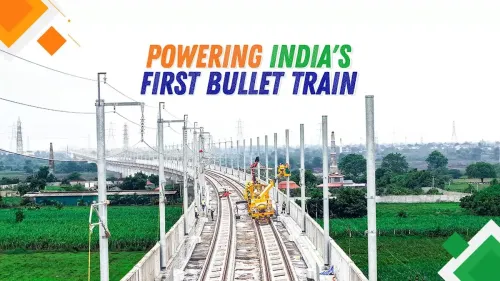
Union Railway Minister Ashwini Vaishnaw shared the latest construction update earlier this month. According to the minister, 443 km of concrete support piers have been erected, and more than 7,700 overhead equipment masts have been installed across 179 km of the alignment. The viaduct, which carries nearly 90 per cent of the corridor above ground level, is among the most expensive components of the project.
The National High Speed Rail Corporation Limited (NHSRCL), the agency implementing the project, has also progressed on track-bed construction over 374 track-km — equivalent to roughly 187 route-km. More than 5.7 lakh noise barriers have been installed across 288 km of the route to reduce sound impact in densely populated areas.
Maharashtra Tunnel: India's Largest TBM Deployed
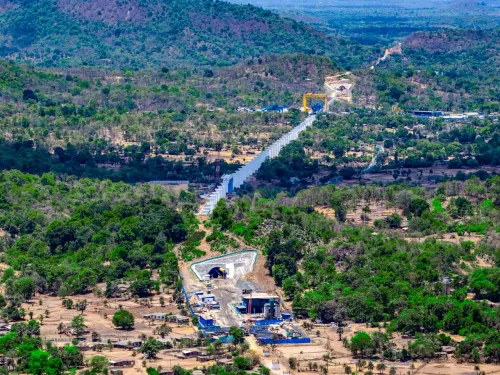
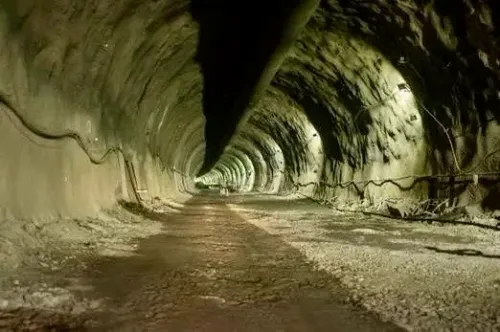
One of the most technically demanding stretches lies in Maharashtra, where land acquisition hurdles and political opposition had stalled progress for years. Officials say 5 km of the 21-km underground tunnel between Mumbai's Bandra-Kurla Complex (BKC) and Shilphata has been excavated.
The NHSRCL recently announced that the cutter head of India's largest tunnel boring machine (TBM) — weighing approximately 350 tonnes and measuring 13.6 metres in diameter — has been lowered into a launch shaft at Vikhroli in Mumbai. Minister Vaishnaw described it as the largest cutter head ever used in any railway project in India. The underground segment also includes India's first undersea rail tunnel, with approximately 7 km of tunnelling planned beneath Thane Creek.
Stations and Route Coverage
The corridor will connect 12 stations across Maharashtra, Gujarat, and a small stretch through the Union Territory of Dadra and Nagar Haveli. Maharashtra stations include Mumbai, Thane, Virar, and Boisar. Gujarat stations span Vapi, Bilimora, Surat, Bharuch, Vadodara, Anand/Nadiad, Ahmedabad, and Sabarmati.
Station construction in Gujarat is at an advanced stage, with contracts for station plazas at Surat, Bilimora, Vapi, Bharuch, Anand, and Vadodara already awarded. In Maharashtra, work has begun on all three elevated stations, while foundation work is underway at the underground BKC terminal in Mumbai.
Indigenous Trains and Speed Targets
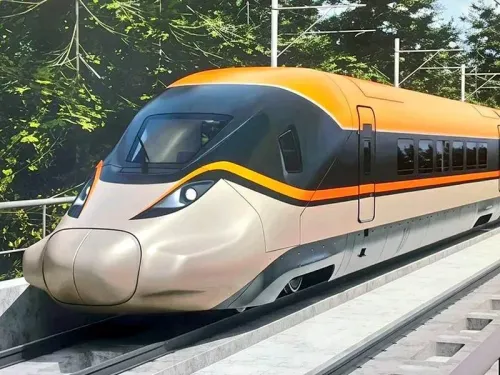
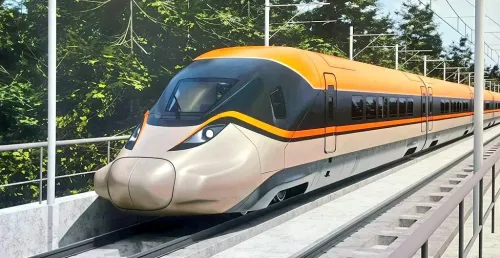
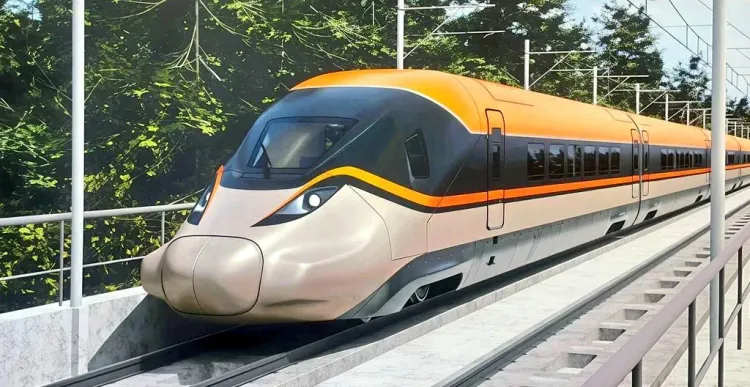
The project has moved beyond dependence on imported Japanese rolling stock. In late 2024, the Integral Coach Factory awarded an ₹867-crore contract to Bengaluru-based BEML to design and manufacture India's first indigenous high-speed trains for the corridor. These trains are expected to operate at around 250 kmph, with a maximum speed of 280 kmph, while the infrastructure itself is designed for up to 320 kmph — leaving room for faster trainsets. Each coach is estimated to cost approximately ₹28 crore.
Travel Time and What It Means for Passengers
Two categories of service are planned. A faster express stopping only at Surat and Vadodara could reduce the Mumbai-Ahmedabad journey to just over two hours. An all-stop service is expected to complete the trip in under three hours. By comparison, conventional rail currently takes roughly seven hours, while the Ahmedabad-Mumbai Central Vande Bharat Express covers the distance in about five-and-a-half hours at a top operational speed of 130 kmph. When operational, the bullet train will represent a transformational shift in inter-city connectivity between India's financial capital and one of its fastest-growing commercial hubs.
Point of View
A deadline that has quietly disappeared from official communication. The Maharashtra tunnel remains the critical unknown: 5 km excavated of 21 km is progress, but the undersea Thane Creek stretch has no comparable precedent in Indian rail engineering. The shift to indigenous rolling stock via BEML is strategically sound, yet the ₹867-crore contract was awarded only in late 2024 — meaning trains and tracks may not be ready simultaneously. The government has every incentive to accelerate ahead of electoral cycles; the harder question is whether the execution machinery can match the ambition.
NationPress
21 Oct 2026
Frequently Asked Questions
What is the current status of the Mumbai-Ahmedabad bullet train project?
As of May 2025, 349 km of viaduct has been completed along the 508-km corridor, with 443 km of piers erected and track-bed construction progressing over 374 track-km . India's largest tunnel boring machine has been deployed at Vikhroli for the critical underground Mumbai segment.
When was the Mumbai-Ahmedabad High Speed Rail project launched?
Prime Minister Narendra Modi and former Japanese Prime Minister Shinzo Abe laid the foundation stone in September 2017 . The project is now in its ninth year of development.
What is the undersea tunnel in the bullet train project?
The corridor includes India's first undersea rail tunnel, with approximately 7 km of tunnelling planned beneath Thane Creek as part of the 21-km underground section between Mumbai's BKC and Shilphata. The tunnel boring machine deployed for this stretch weighs around 350 tonnes and measures 13.6 metres in diameter.
How fast will the Mumbai-Ahmedabad bullet train travel?
Indigenous trains being developed by BEML are designed for an operational speed of around 250 kmph and a maximum speed of 280 kmph . The infrastructure is built for up to 320 kmph to accommodate faster trainsets in the future.
How much will the bullet train reduce travel time between Mumbai and Ahmedabad?
The faster express service, stopping only at Surat and Vadodara, is expected to complete the journey in just over two hours . The all-stop service should take under three hours , compared to roughly seven hours by conventional rail and about five-and-a-half hours by the Vande Bharat Express.