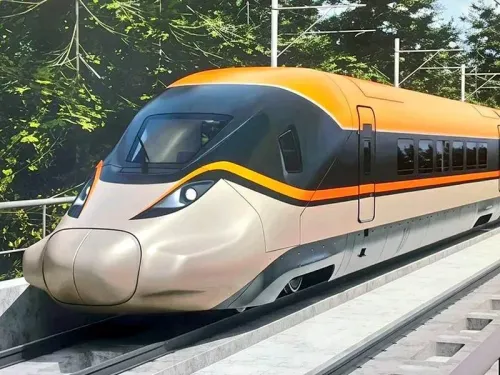
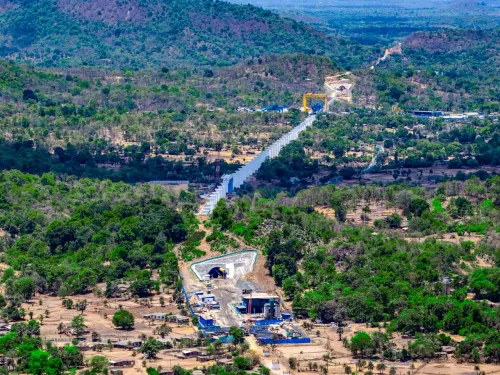
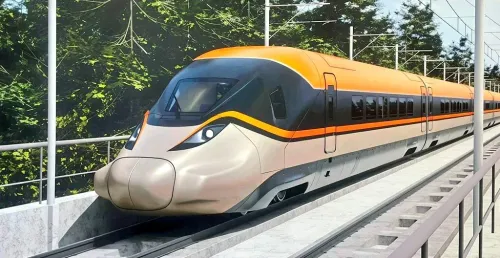
Mumbai–Ahmedabad bullet train corridor nears completion, sets template for India's rail future
Synopsis
India's first bullet train corridor is nearly ready — and the government is already using it as the master template for seven more corridors spanning 4,000 km and ₹16 lakh crore in investment. The Surat–Vapi section is set to open in August 2027, making it the most consequential infrastructure debut in Indian rail history.
Key Takeaways
The Mumbai–Ahmedabad High-Speed Rail (MAHSR) corridor is nearing completion and will be India's first operational bullet train line.
The corridor spans 508 km with 12 stations , a design speed of 350 kmph , and an operational speed of 320 kmph .
First service is expected in August 2027 , launching on the Surat–Vapi section.
Travel time between Mumbai and Ahmedabad will be approximately 1 hour 58 minutes .
India has identified 7 high-speed rail corridors covering nearly 4,000 km , expected to attract ₹16 lakh crore in investment.
The MAHSR's standardised engineering template — covering piers, viaducts, tracks, electrification, and signalling — will be replicated across all future corridors.
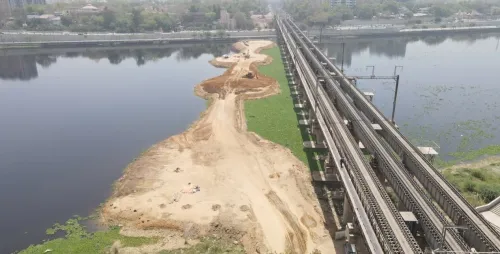
India is on the verge of completing its first bullet train corridor — the Mumbai–Ahmedabad High-Speed Rail (MAHSR) project — which the government says will serve as a standardised blueprint for all future high-speed rail corridors across the country, according to an official statement released on Friday, 3 July.
Key Corridor Details
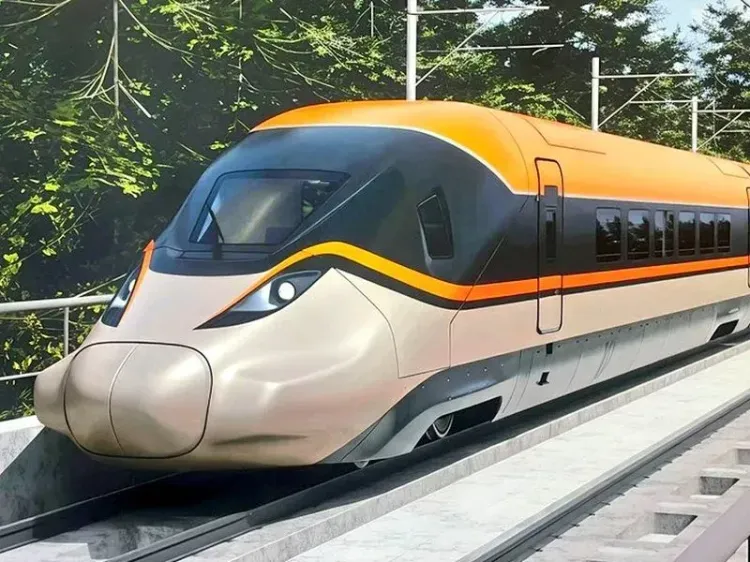
The MAHSR corridor spans approximately 508 kilometres and will link Mumbai to Ahmedabad in roughly 1 hour 58 minutes. The line is engineered for a design speed of 350 kmph and an operational speed of 320 kmph, supported by advanced rolling stock, signalling, and train control systems. The corridor will serve 12 planned stations in total.
The first commercial service is expected to launch in August 2027, with the inaugural section opening between Surat and Vapi — marking a historic milestone in Indian rail infrastructure.
What the Government Said
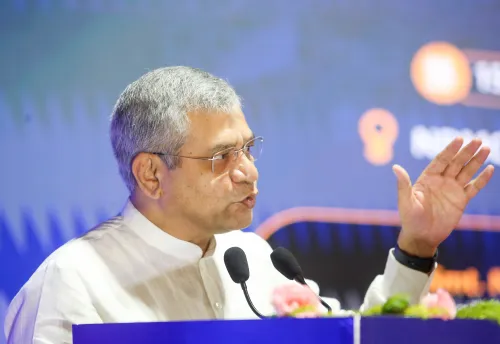
The official statement positioned the MAHSR not merely as a standalone project but as the foundation for a nationwide high-speed rail ecosystem. 'It is establishing a scalable approach for future high-speed rail expansion. As new corridors are developed, this foundation will help enhance connectivity. It will also help reduce travel times and contribute to long-term economic growth,' the statement noted.
Officials added that the project is building the knowledge base, industrial capabilities, and engineering ecosystem required to execute future corridors faster and at lower cost.
The Standardised Template Approach
Central to the government's strategy is replicating proven engineering designs, construction methods, and operational practices from the MAHSR across all upcoming corridors. Unified components, maintenance procedures, and spare-part management are expected to simplify procurement and training at scale.
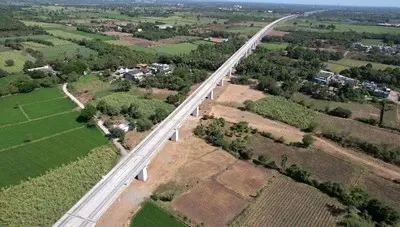
According to the statement, common engineering standards will govern critical subsystems — including piers, viaducts, tracks, station structures, overhead electrification, and signalling systems — while foundations will be individually calibrated to the soil characteristics of each specific site. 'This approach will support faster construction across future corridors and will improve quality and reduce costs,' the statement said.
The Broader High-Speed Rail Network
India has identified seven high-speed rail corridors covering nearly 4,000 kilometres for future development. The proposed network is expected to attract investments of approximately ₹16 lakh crore. The MAHSR's standardised template is designed to accelerate execution across these corridors by eliminating the need to reinvent engineering solutions from scratch for each new project.
This comes amid a broader push by the Centre to modernise rail infrastructure and reduce dependence on conventional rail for inter-city travel. Notably, the MAHSR is India's first project using Japanese Shinkansen technology, developed in collaboration with Japan International Cooperation Agency (JICA), and its successful execution is seen as critical to unlocking further bilateral and multilateral rail investment.
What Comes Next
With the Surat–Vapi section targeted for the August 2027 launch, attention will now turn to construction progress on the remaining stretch, particularly the complex undersea tunnel section near Mumbai. The government's ability to deliver on the August 2027 timeline will be closely watched as a signal of India's readiness to scale the high-speed rail model nationally.
Point of View
But the August 2027 Surat–Vapi deadline is the first real accountability moment. If that timeline slips, it will cast a long shadow over the entire national high-speed rail programme. The undersea tunnel near Mumbai remains the single biggest engineering risk the government has not yet fully addressed in public communications.
NationPress
2 Oct 2026
Frequently Asked Questions
When will India's first bullet train service begin?
The first bullet train service on the Mumbai–Ahmedabad High-Speed Rail corridor is expected to launch in August 2027, with the inaugural section running between Surat and Vapi. The full corridor connecting Mumbai to Ahmedabad is slated to follow thereafter.
What is the speed of India's bullet train on the MAHSR corridor?
The MAHSR corridor has a design speed of 350 kmph and an operational speed of 320 kmph. It will reduce the Mumbai–Ahmedabad travel time to approximately 1 hour 58 minutes.
How many bullet train corridors are planned in India?
India has identified seven high-speed rail corridors covering nearly 4,000 kilometres for future development. The proposed network is expected to attract investments of around ₹16 lakh crore.
What is the standardised template approach for India's high-speed rail?
The government plans to replicate the engineering designs, construction methods, and operational practices developed for the MAHSR across all future corridors. Common standards will govern subsystems such as piers, viaducts, tracks, electrification, and signalling, while foundations will be calibrated to local soil conditions.
How long is the Mumbai–Ahmedabad bullet train corridor?
The MAHSR corridor covers approximately 508 kilometres and includes 12 planned stations between Mumbai and Ahmedabad.