Kashmir at 75: Integration and growth on India's side, repression in PoK
Synopsis
Seventy-five years after partition drew the Line of Control, the two Kashmirs have never looked more different. India's side has seen AIIMS campuses, IIT and IIM campuses, rail links, and 5G — while PoK, officially 'liberated', has no operational railway, a violent crackdown on protesters, and an autonomy that critics say exists only in name.
Key Takeaways
Article 370 was abrogated seven years ago , reorganising J&K into two Union Territories — Jammu and Kashmir and Ladakh .
J&K received two AIIMS campuses , seven new medical colleges , over 400 health projects , and universal health cover of up to ₹5 lakh per family under Ayushman Bharat Sehat.
Government colleges in J&K expanded from 94 to 147 ; new IIT and IIM campuses were established in the region.
The 13th Amendment of 2018 to PoK's constitution substantially weakened the regional council, transferring key powers to Islamabad .
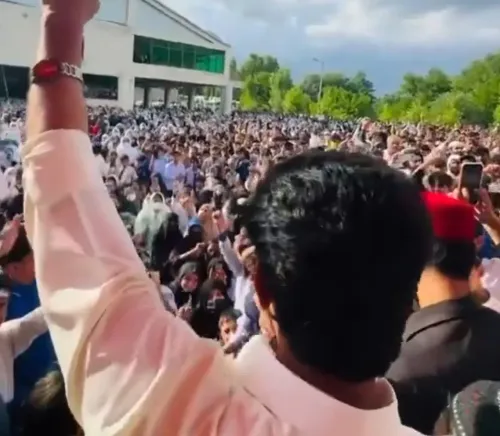
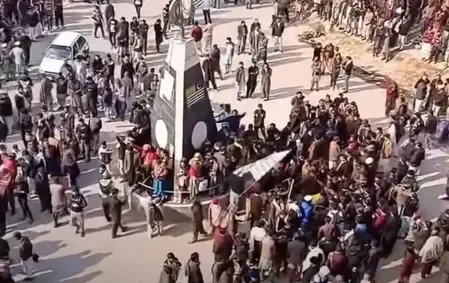
Recent protests in PoK over disputed elections were met with violent suppression; rights groups report dozens killed, internet shutdowns, and mass arbitrary detentions.
PoK has no operational railway and lacks functional civil aviation infrastructure, deepening its regional isolation under Pakistan's administration.
Seven years after the abrogation of Article 370 and 75 years since the first Indo-Pak war, the two halves of Kashmir — separated by the Line of Control — present a study in stark contrasts. On the Indian side, Jammu and Kashmir (J&K) and Ladakh have undergone sweeping constitutional integration and infrastructure expansion; on the other side, Pakistan-occupied Kashmir (PoK) remains trapped in political ambiguity, economic neglect, and, according to rights observers, systematic repression.
Seven Years of Integration: What Changed in J&K
The revocation of Article 370 in August 2019 dissolved the special constitutional status of the former state and reorganised it into two Union Territories. The change brought J&K under a uniform constitutional framework, enabling the direct application of central government schemes — from welfare transfers to judicial protections — that had previously been restricted.
Grassroots political representation deepened, reflected in notably high voter turnout during the 2024 assembly elections. Youth and women participation in civic and political spaces has reportedly grown, a development officials attribute to the dismantling of earlier institutional barriers.
Infrastructure and Economic Transformation
The post-revocation period saw a significant surge in infrastructure investment. In healthcare, the region received approvals for two AIIMS campuses — one each in Jammu and Kashmir — alongside seven new government medical colleges, expansion of medical degree seats, and over 400 health infrastructure projects. The Ayushman Bharat Sehat scheme extended universal health insurance of up to ₹5 lakh per family to poor households across the Union Territory.
In education, government colleges expanded from 94 to 147, with new IIT and IIM campuses established in the region. High-speed 5G connectivity and direct benefit transfers via the DBT platform improved service delivery and supported a growing startup ecosystem.
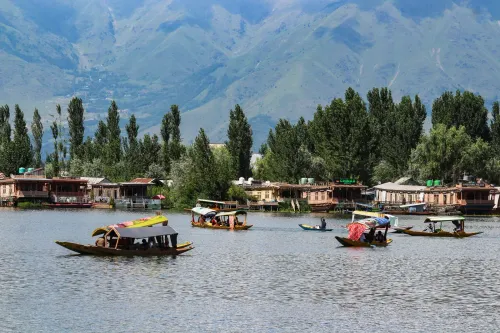
On the connectivity front, the Udhampur-Srinagar-Baramulla Rail Link is set to connect J&K directly with the rest of India, while the Vande Bharat service links Srinagar with New Delhi. Major tunnel projects — including Zojila and Z-Morh — alongside upgradation of the NH-44 corridor and expansion of Srinagar airport have collectively boosted tourism and private investment. Hydropower projects including Pakal Dul, Ratle, Kiru, Kwar, and Sawalkot, among others, are advancing power reliability, with complete household electrification already achieved.
The Other Kashmir: PoK's Deepening Crisis
Pakistan-occupied Kashmir, officially named Azad Jammu and Kashmir by Islamabad, is neither a sovereign province nor a fully autonomous region, according to constitutional analysts. Under the 1974 Interim Constitution and the 13th Amendment of 2018, the regional council's administrative authority was substantially curtailed, with key powers transferred to the federal capital. Critics argue that the autonomy granted to PoK exists largely on paper.
Infrastructure development under the China-Pakistan Economic Corridor (CPEC) has drawn controversy, with local communities reportedly raising concerns over land acquisition, loss of resource control, and inadequate compensation. Long-term systemic neglect has left PoK without an operational railway network, making it entirely dependent on roads that remain poorly maintained. The absence of functional civil aviation facilities has deepened regional isolation.
Protests, Suppression, and Human Rights Concerns
A chronic energy crisis, mounting debt, high inflation, and rampant unemployment have fuelled youth exodus from PoK. Dissent — rooted in decades of political and economic marginalisation — has intensified in recent months. The latest wave of protests, triggered by disputes over reserved political seats and allegations of electoral manipulation, was met with heavy security force deployment. According to reports, dozens were killed during the crackdown, drawing condemnation from rights groups.
Critics and human rights observers have documented internet shutdowns, communication blackouts, large-scale arbitrary detentions under sedition charges, enforced disappearances, use of lethal force, and media censorship in the region — a pattern they argue contradicts Islamabad's stated position of championing Kashmiri rights.
Two Augusts, Two Narratives
Every August, the divergence sharpens. India marks the anniversary of Article 370's abrogation as a milestone of constitutional integration and accelerated development. Pakistan observes the same date as 'Youm-e-Istehsal' — a day it frames as one of exploitation — even as conditions in the territory under its own control draw sustained international scrutiny. The contrasting trajectories of the two Kashmirs, 75 years after partition, continue to define one of South Asia's most consequential unresolved disputes.
Point of View
And the near-total absence of rail and air connectivity after 75 years, are not talking points — they are governance failures that Islamabad's 'Youm-e-Istehsal' framing cannot credibly paper over. The world's attention on Kashmir has historically focused on the Indian side; the democratic deficit on the Pakistani side deserves equal scrutiny.
NationPress
2 Oct 2026
Frequently Asked Questions
What is the current status of Jammu and Kashmir after Article 370 was abrogated?
Jammu and Kashmir was reorganised into two Union Territories — J&K and Ladakh — after Article 370 was abrogated in August 2019. The region is now fully integrated under India's constitutional framework, with central government schemes, judicial protections, and welfare transfers applied uniformly.
What development projects have been implemented in J&K after Article 370's removal?
Key projects include two AIIMS campuses, seven new government medical colleges, over 400 health infrastructure projects, expansion of government colleges from 94 to 147, new IIT and IIM campuses, the Udhampur-Srinagar-Baramulla Rail Link, Zojila and Z-Morh tunnel projects, and multiple hydropower schemes. The Ayushman Bharat Sehat scheme extended health insurance of up to ₹5 lakh per family to poor households.
Why is Pakistan-occupied Kashmir considered neither sovereign nor autonomous?
PoK operates under constitutional arrangements — including the 1974 Interim Constitution and the 13th Amendment of 2018 — that transferred significant administrative powers from the regional council to Islamabad. Constitutional analysts and critics argue that its autonomy is largely formal, with real authority concentrated in the Pakistani federal government.
What triggered the recent protests in Pakistan-occupied Kashmir?
The latest wave of protests in PoK was triggered by disputes over reserved political seats and allegations of a rigged election. The demonstrations, rooted in broader grievances over political marginalisation and economic neglect, were met with heavy security force deployment; reports indicate dozens were killed during the crackdown.
What is 'Youm-e-Istehsal' and why does India contest it?
'Youm-e-Istehsal', or Day of Exploitation, is the term Pakistan uses to mark the anniversary of Article 370's abrogation on 5 August. India contests this framing, arguing that the revocation enabled constitutional integration, accelerated development, and stronger democratic participation in J&K — developments it says contradict the 'exploitation' narrative.