Kashmir at 6: Record tourism and rail bridges vs PoJK's unrest
Synopsis
Six years on from Article 370's abrogation, the two Kashmirs have never looked more different. On the Indian side, a ₹6,809-crore tunnel, the world's highest rail bridge, and 2.3 crore tourists in a single year signal a structural economic shift. Across the LoC, more than two dozen people have reportedly died in protests over political representation — a contrast that is now as much an infrastructure story as a political one.
Key Takeaways
Jammu and Kashmir recorded more than 2.3 crore tourist arrivals in 2024 , a historic high for the Union Territory.
The Zojila Tunnel ( 13.153 km , cost ₹6,809.69 crore ) will provide all-weather connectivity between J&K and Ladakh.
The Chenab Rail Bridge — the world's highest railway arch bridge — and the Anji Khad Bridge — India's first cable-stayed railway bridge — mark major connectivity milestones.
Indian Railways expanded the Vande Bharat service to 20 coaches and extended it to Jammu Tawi this year.
In PoJK , more than two dozen deaths have been reported amid protests linked to the JAAC and a dispute over 12 Assembly seats .
The sixth anniversary of Article 370's abrogation on 5 August 2025 has thrown this divergence into sharp relief.
Six years after the abrogation of Article 370 on 5 August 2019, Jammu and Kashmir and Pakistan-occupied Jammu and Kashmir (PoJK) — separated by the Line of Control (LoC) — present starkly divergent trajectories: one defined by infrastructure expansion and record tourist footfall, the other by street protests, shutdowns, and reported fatalities.
Infrastructure Reshaping Indian Kashmir
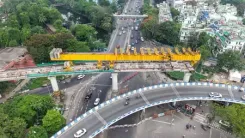
The pace of physical transformation on the Indian side of the LoC has accelerated visibly. The Zojila Tunnel, stretching 13.153 kilometres and built at an estimated cost of ₹6,809.69 crore, is set to provide all-weather connectivity between Jammu and Kashmir and Ladakh through one of the Himalayas' most demanding corridors — replacing a pass that remains shut for months each winter.
Complementing it are two landmark railway achievements: the Chenab Rail Bridge, recognised as the world's highest railway arch bridge, and the Anji Khad Bridge, India's first cable-stayed railway bridge. Indian Railways this year extended the Jammu–Srinagar Vande Bharat service to Jammu Tawi and expanded the train from 8 to 20 coaches. Detailed project reports have also been prepared for doubling the 118-km Qazigund–Srinagar–Budgam section and for a new 40-km Baramulla–Uri railway line.
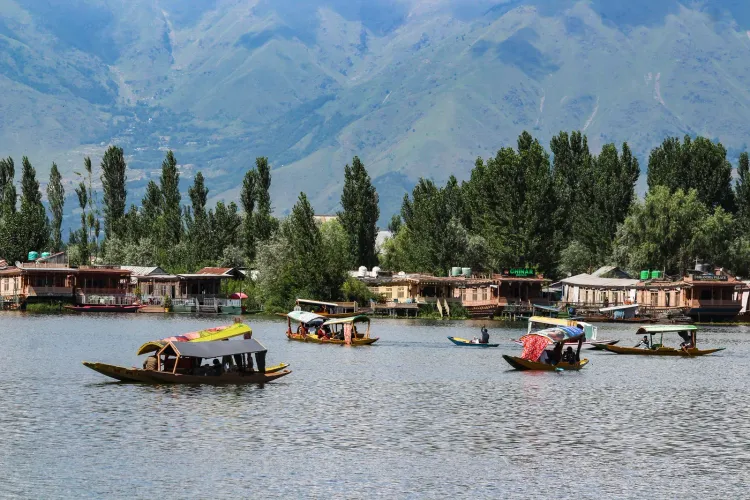
According to the Union Tourism Ministry, the region recorded more than 2.3 crore tourist arrivals in 2024 alone, including over 20 million domestic visits to the Jammu region. Official records confirm this as a historic high for the Union Territory.
Turmoil Across the LoC
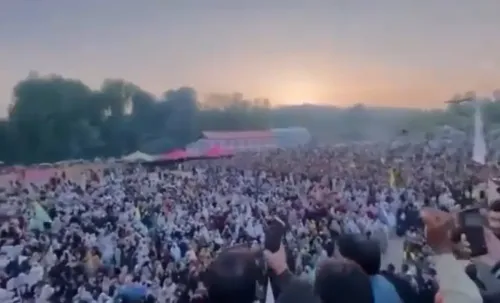
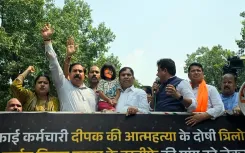
The picture on the Pakistani-administered side is considerably grimmer. PoJK has been gripped by recurring protests, public-police clashes, and shutdowns, primarily centred on demands for political representation. The unrest intensified around the Joint Awami Action Committee (JAAC) and a controversy over 12 Assembly seats reserved for refugees living outside the territory.
According to reports from a global news agency, more than two dozen deaths have been recorded in connection with the unrest so far. Observers note that political mobilisation — rather than infrastructure investment — continues to dominate public life in PoJK.
A Deepening Contrast
The divergence has drawn analytical attention. News portal Asian Lite observed: 'On the Indian side, infrastructure is creating a new economic geography while on the other side, political mobilisation continues to dominate public life.' It added that the Zojila Tunnel alone would fundamentally alter the region's economic connectivity once operational.
The same analysis noted: 'The mountains have not changed. The LoC has not moved. But the development story around it is changing. And perhaps the most important feature of the present moment is that Kashmir is increasingly being judged not only by the politics of its past, but also by infrastructure, connectivity, economic activity and opportunities being built for its future.'
What the Anniversary Signals
The sixth anniversary of Article 370's abrogation has become an occasion to take stock of this divergence. On the Indian side, the region is being integrated into national highway networks, equipped with modern institutions, and — according to the government — strengthening democratic processes. On the other side of the LoC, the territory continues to witness periodic unrest and, critics argue, state apathy toward civic demands.
As connectivity projects move toward completion and tourism numbers climb, the development gap between the two sides of the LoC is likely to widen further in the coming years.
Point of View
But they do not settle the political questions that the abrogation raised — questions about statehood restoration, electoral timelines, and civil liberties that remain unresolved. The contrast with PoJK is legitimate and stark, yet framing it primarily as a development story risks using one side's dysfunction to paper over accountability gaps on the other. The more durable test of August 2019's legacy is not tourist footfall or tunnel lengths alone, but whether the residents of J&K have a proportionate political voice in shaping the institutions now being built around them.
NationPress
20 Sept 2026
Frequently Asked Questions
What is the significance of 5 August 2025 for Jammu and Kashmir?
5 August 2025 marks the sixth anniversary of the abrogation of Article 370 in 2019, which ended Jammu and Kashmir's special constitutional status and reorganised it into two Union Territories. The anniversary has become an annual occasion to assess the region's development progress and political situation.
What major infrastructure projects have been completed in Jammu and Kashmir recently?
Key projects include the 13.153-km Zojila Tunnel (estimated cost ₹6,809.69 crore) for all-weather Ladakh connectivity, the Chenab Rail Bridge — the world's highest railway arch bridge — and the Anji Khad Bridge, India's first cable-stayed railway bridge. Indian Railways also expanded the Vande Bharat service to 20 coaches this year.
How many tourists visited Jammu and Kashmir in 2024?
Jammu and Kashmir recorded more than 2.3 crore tourist arrivals in 2024, including over 20 million domestic visits to the Jammu region alone, according to figures cited by the Union Tourism Ministry. This is a historic high for the Union Territory.
What is the situation in Pakistan-occupied Jammu and Kashmir (PoJK)?
PoJK has been experiencing recurring protests, shutdowns, and public-police clashes, primarily driven by the Joint Awami Action Committee (JAAC) and a dispute over 12 Assembly seats reserved for refugees outside the territory. More than two dozen deaths have been reported in connection with the unrest, according to a global news agency.
How does development in Indian Kashmir compare to PoJK?
Indian Kashmir is seeing rapid infrastructure expansion — tunnels, rail bridges, and record tourism — while PoJK remains mired in political unrest and reported state repression. Analysts note that infrastructure investment is reshaping economic geography on the Indian side, whereas political mobilisation continues to dominate public life in PoJK.