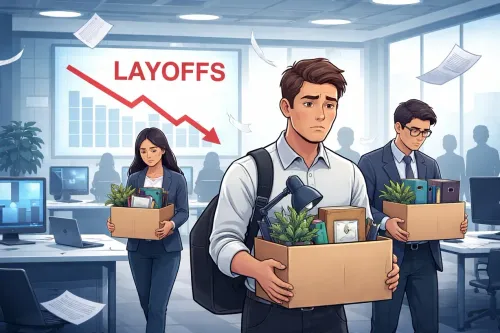
Canva cuts 1,271 jobs, 22% of workforce, as CEO cites slowing growth

Synopsis
Canva is cutting 1,271 jobs — 22% of its staff — in what CEO Melanie Perkins calls the hardest moment in the company's 13-year history. With growth slowing for the first time in a decade and AI reshaping the design industry, Canva is consolidating teams, centralising around Sydney, and reinventing its structure. The move signals a sharp pivot from the hypergrowth playbook that made it one of the world's most valuable startups.
Key Takeaways
Canva will cut 1,271 jobs , or approximately 22 per cent of its global workforce, announced on 4 November 2026 .
CEO Melanie Perkins called it the hardest moment in the company's 13-year history , citing slowing growth for the first time in a decade .
Canva will merge its product, growth, and platform divisions into a single product organisation and reduce management layers.
Sydney becomes the primary product hub; most hybrid staff must work in-office two to three days a week from January .
Departing employees receive at least six months' salary , healthcare coverage, and access to a $10,000 grant via the new Canva Collective Fund .
Graphic design platform Canva will eliminate 1,271 jobs — roughly 22 per cent of its global workforce — as part of a sweeping organisational overhaul, Chief Executive Officer and Co-founder Melanie Perkins announced on Wednesday, 4 November 2026. In a note published on Canva's official website, Perkins described the restructuring as the hardest moment in the company's 13-year history, saying it was necessary to position Canva for long-term competitiveness.
What the Restructuring Involves
The overhaul will affect 1,271 employees across role changes, relocations to centralised hubs, and outright job eliminations. Canva will merge its product, growth, and platform functions into a single unified product organisation, while reducing specialised roles and flattening management layers. Some teams will be consolidated; others will absorb broader responsibilities as the company works to cut organisational complexity.
Perkins said that incremental adjustments would not be sufficient and that Canva needed to 'refound itself around smaller, more empowered teams'. The restructuring follows months of internal deliberation over the company's structure, team locations, and future skill requirements.
Why Canva Is Making the Move
According to Perkins, Canva's growth slowed for the first time in a decade, even as rapid technological change reshaped customer expectations and product development. The CEO argued that the pace of change in the industry — particularly in AI-driven design tools — demanded a structural response rather than a tactical one. This comes amid a broader wave of layoffs across the global technology sector, where multiple mid-to-large platforms have trimmed headcount in response to tightening growth curves and investor pressure on profitability.
Hub Strategy and Office Mandate
Sydney will serve as the primary hub for more product teams going forward. Most hybrid employees will be required to spend two to three days a week in the office starting from January, signalling a broader pull-back from the remote-first model Canva had embraced post-pandemic. The centralisation is designed to increase in-person collaboration, according to the company.
Support for Departing Employees
Canva said it would offer departing staff a package that includes at least six months' salary, continued healthcare coverage where applicable, career transition assistance, and extended employee support services. Additionally, eligible departing employees will have access to a $10,000 grant through a newly launched Canva Collective Fund. Perkins acknowledged the personal impact on those leaving, while maintaining that the changes were essential for the decade ahead.
Point of View
And now faces a reckoning as AI-native competitors erode the ease-of-use moat that Canva built its brand on. The centralisation around Sydney and the push back to in-office work also quietly reverses a remote-first culture that was central to its employer brand. The real question is whether a leaner, hub-centric Canva can out-innovate AI-first challengers — or whether this restructuring is merely the first of several.
NationPress
4 Nov 2026
Frequently Asked Questions
How many jobs is Canva cutting and why?
Canva is eliminating 1,271 jobs, representing about 22 per cent of its global workforce. CEO Melanie Perkins cited slowing growth for the first time in a decade and rapid technological change as the key reasons for the restructuring.
Who is leading the Canva restructuring?
CEO and Co-founder Melanie Perkins is leading the overhaul. She announced the changes in a note to employees published on Canva's official website on 4 November 2026.
What changes will Canva make to its team structure?
Canva will merge its product, growth, and platform functions into a single product organisation, reduce specialised roles and management layers, and consolidate certain teams. Sydney will serve as the primary hub for more product teams.
What severance will affected Canva employees receive?
Departing employees will receive at least six months' salary, continued healthcare coverage where applicable, career transition assistance, extended employee support services, and a $10,000 grant opportunity through the newly created Canva Collective Fund.
When will Canva's new office attendance policy take effect?
Most hybrid Canva employees will be expected to spend two to three days a week in the office starting from January, as part of the company's move toward greater in-person collaboration.