Will the Centre's Proposal for 7 High-Speed Rail Corridors Transform Growth Cities?
Synopsis
The Central government has unveiled plans to establish seven high-speed rail corridors aimed at connecting India's major cities. This initiative is part of a broader strategy to enhance regional development, reduce emissions, and cut down travel times significantly. As India evolves economically, these corridors could redefine connectivity and urban growth.
Key Takeaways
Seven high-speed rail corridors proposed by the Central government.
Routes connect major cities like Mumbai , Pune , and Bengaluru .
Focus on reducing travel time and emissions.
Initiative aims to foster regional economic development.
National Fibre Scheme introduced for the textile sector.
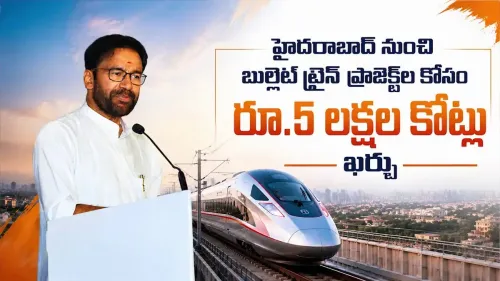
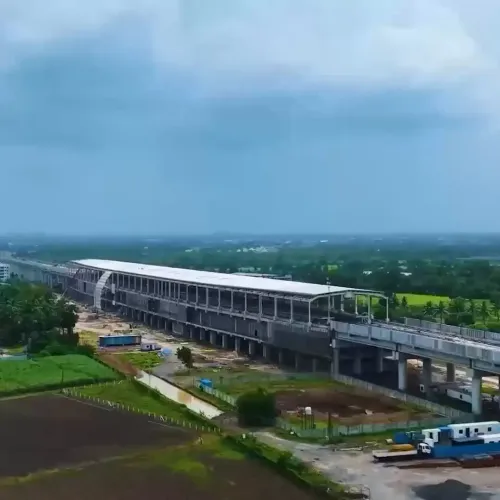
New Delhi, Feb 1 (NationPress) On Sunday, the Central government unveiled plans to establish seven high-speed rail corridors connecting prominent urban and economic hubs.
These corridors are expected to serve as vital growth links, significantly reducing travel time, lowering emissions, and fostering regional development, as outlined by Finance Minister Nirmala Sitharaman during her Union Budget 2026-27 address.
The proposed corridors include routes from Mumbai to Pune, Pune to Hyderabad, Hyderabad to Bengaluru, Hyderabad to Chennai, Chennai to Bengaluru, Delhi to Varanasi, and Varanasi to Siliguri.
These initiatives aim to link India’s financial centres, tech hubs, manufacturing zones, and up-and-coming cities, providing faster and environmentally-friendly transportation options, according to the Union Minister.
“To support a sustainable passenger transport system, we will create seven high-speed rail corridors between cities, specifically from Mumbai to Pune, Pune to Hyderabad, Hyderabad to Bengaluru, Hyderabad to Chennai, Chennai to Bengaluru, Delhi to Varanasi, and Varanasi to Siliguri,” she stated.
The Finance Minister also announced the formation of a high-level banking committee aimed at Viksit Bharat, tasked with reviewing the banking landscape and proposing changes to bolster India’s economic expansion. This committee will also prioritize financial stability, inclusion, and consumer protection.
She emphasized the resilience and promising future of India’s financial sector, noting that Indian banks are currently well-positioned, with robust balance sheets, substantial profits, and improved management of non-performing loans.
Moreover, the government plans to reevaluate regulations on non-debt foreign investments to ensure they are more contemporary and user-friendly, reflecting India’s evolving economic landscape.
For the textile sector, which is notably labor-intensive, FM Sitharaman introduced a comprehensive program comprising five essential components. The foremost is the National Fibre Scheme, designed to achieve self-sufficiency in natural fibers such as silk, wool, and jute, along with synthetic and innovative industrial fibers.
Point of View
It's crucial to recognize the government's initiative in expanding India's transportation infrastructure. While seven high-speed rail corridors promise to enhance connectivity among urban centers, it's essential to scrutinize the execution and sustainability of such projects. The nation's approach should remain balanced, focusing on environmental impact and regional development.
NationPress
29 Sept 2026
Frequently Asked Questions
What are the proposed routes for the high-speed rail corridors?
The proposed routes include Mumbai-Pune, Pune-Hyderabad, Hyderabad-Bengaluru, Hyderabad-Chennai, Chennai-Bengaluru, Delhi-Varanasi, and Varanasi-Siliguri.
Who announced the high-speed rail corridor plans?
The announcement was made by Finance Minister Nirmala Sitharaman during the Union Budget 2026-27 speech.
What is the main goal of these high-speed rail corridors?
The primary aim is to connect key urban and economic centres, reduce travel time, and support regional development while promoting environmentally sustainable travel.