Air India backs Modi's hub-and-spoke model, plans Varanasi international routes
Synopsis
Air India's backing of the hub-and-spoke model signals industry confidence in Modi's aviation ambition. With 35% of India's international passengers currently transiting through Dubai, London, and Singapore, the government's push to create six Indian hubs — Delhi, Mumbai, Bengaluru, Hyderabad, Kolkata, Chennai — represents a structural play to capture higher-margin connecting traffic and reduce foreign exchange leakage. Varanasi's inclusion signals intent to extend the model beyond metros.
Key Takeaways
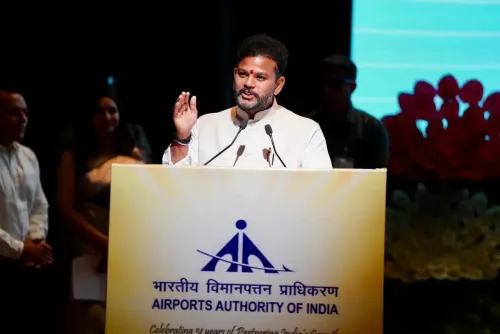
Air India CEO Campbell Wilson called the hub-and-spoke model a 'transformative step' for Indian aviation on Wednesday, 29 April .
The airline plans to launch international routes from Varanasi under the framework, expanding access from tier-II and tier-III cities.
Nearly 35 per cent of India's international passengers currently transit through Dubai , London , and Singapore .
Six major Indian hubs targeted: Delhi , Mumbai , Bengaluru , Hyderabad , Kolkata , and Chennai .
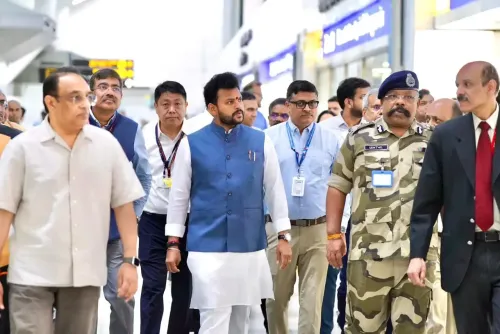
Civil Aviation Minister Ram Mohan Naidu chaired a high-level meeting to review Delhi Airport's hub-and-spoke readiness.
Air India on Wednesday endorsed Prime Minister Narendra Modi's 'hub-and-spoke' aviation framework as a transformative policy shift, announcing plans to launch international connectivity from Varanasi under the proposed model. The Tata Group-owned carrier's CEO and Managing Director Campbell Wilson described the government's initiative as pivotal to strengthening India's position as a global aviation hub.
What the hub-and-spoke model entails
The framework aims to convert India from a predominantly end-destination market into a global transit ecosystem, leveraging tier-II and tier-III airports developed under the UDAN scheme to feed international routes through major hubs. Civil Aviation Minister Ram Mohan Naidu noted that nearly 35 per cent of India's international passengers currently transit through foreign hubs such as Dubai, London, and Singapore. The government seeks to reverse this by developing six globally competitive Indian hubs: Delhi, Mumbai, Bengaluru, Hyderabad, Kolkata, and Chennai.
Air India's expansion strategy
Wilson credited the Prime Minister's vision for driving ecosystem development and acknowledged the Civil Aviation Ministry's role in coordinating with stakeholders. Air India's move to introduce international routes from Varanasi is aligned with this strategy, aiming to improve access for travellers from eastern Uttar Pradesh and neighbouring regions. P. Balaji, Group Head for Governance, Risk, Compliance and Corporate Affairs at Air India, said the expansion would help make international travel more accessible for passengers from tier-II and tier-III cities, broadening India's aviation footprint beyond metros.
The structural shift
This marks a fundamental departure from India's fragmented regional aviation model, where secondary airports historically served only domestic routes. By creating seamless connectivity between regional and international destinations, the hub-and-spoke framework is designed to optimise airport infrastructure utilization and reduce passenger dependence on foreign transit hubs.
Government readiness efforts
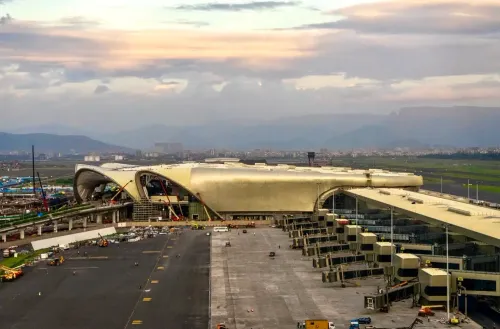
Minister Naidu recently chaired a high-level meeting to review Delhi Airport's readiness for hub-and-spoke operations. Officials indicated that the framework would enable tier-II and tier-III airports to feed traffic into major hubs, creating a layered network structure. This coordination with airport operators, airlines, and customs authorities is critical to ensuring operational efficiency and passenger convenience.
Broader implications
The model aligns with India's broader infrastructure ambitions under initiatives like Atmanirbhar Bharat, reducing foreign exchange outflow tied to international transit fees and positioning Indian carriers to capture higher-margin connecting traffic. Industry observers note that success depends on coordinated investment in ground infrastructure, slot allocation, and bilateral air service agreements.
Point of View
But execution risk remains high. India's regional airports, despite UDAN investment, still lack the ground infrastructure, ground-handling capacity, and bilateral air service agreements needed to function as true international hubs. The 35% transit leakage through Dubai and Singapore is real, but reversing it requires not just policy intent but coordinated capex across six cities simultaneously — a logistical challenge India's aviation sector has historically struggled with. Air India's Varanasi move is symbolically important but operationally modest; watch whether it scales to secondary metros like Ahmedabad, Pune, or Jaipur.
NationPress
30 Sept 2026
Frequently Asked Questions
What is the hub-and-spoke model for Indian aviation?
The hub-and-spoke model is a framework to convert India from a predominantly end-destination aviation market into a global transit ecosystem. It leverages tier-II and tier-III airports developed under the UDAN scheme to feed international routes through six major hubs — Delhi, Mumbai, Bengaluru, Hyderabad, Kolkata, and Chennai — reducing dependence on foreign transit hubs.
Why is Air India launching international routes from Varanasi?
Air India is introducing international connectivity from Varanasi as part of its expansion aligned with the hub-and-spoke model. The move aims to improve access for travellers from eastern Uttar Pradesh and neighbouring regions, making international travel more accessible for passengers from tier-II and tier-III cities.
What percentage of India's international passengers currently use foreign hubs?
Nearly 35 per cent of India's international passengers currently transit through foreign hubs such as Dubai, London, and Singapore. The government's hub-and-spoke framework aims to redirect this traffic to Indian hubs, reducing foreign exchange outflow and boosting domestic carriers.
Which cities are targeted as major aviation hubs under the model?
Six cities are targeted: Delhi, Mumbai, Bengaluru, Hyderabad, Kolkata, and Chennai. These will serve as globally competitive hubs to capture connecting traffic and reduce passenger reliance on foreign transit points.
What role does the UDAN scheme play in the hub-and-spoke model?
The UDAN scheme has developed tier-II and tier-III airports across India. The hub-and-spoke model leverages these airports to feed traffic into the six major hubs, creating seamless connectivity between regional and international destinations.