Is India Becoming the Key Aviation Hub Between the Global South and the World?
Synopsis
India is rapidly establishing itself as a pivotal aviation gateway for the Global South, offering diverse opportunities for investors. With significant growth in domestic air travel and infrastructure, PM Modi’s vision aims to revolutionize the aviation landscape, fostering connectivity and economic growth. Discover how India is set to reshape its aviation future.
Key Takeaways
India is becoming a major aviation gateway for the Global South.
Significant growth in passenger traffic and airline fleets.
Over 160 airports operational, with plans to exceed 400 by 2047.
UDAN scheme has facilitated affordable air travel for millions.
Focus on aircraft manufacturing and air cargo efficiency.
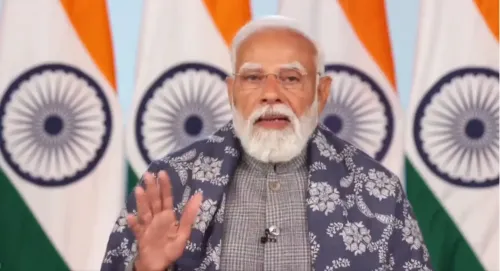
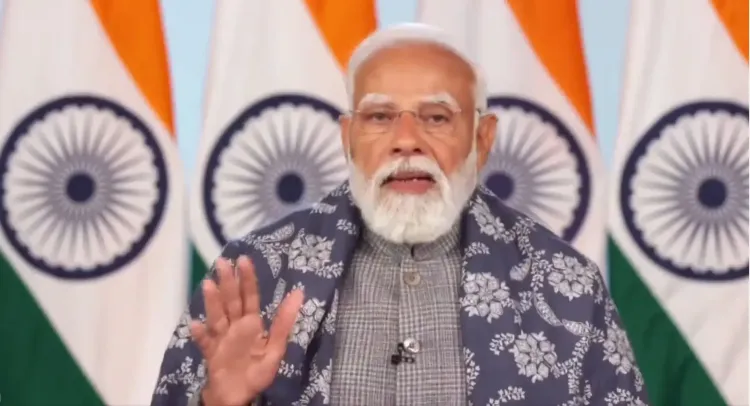
New Delhi, Jan 28 (NationPress) Prime Minister Narendra Modi stated on Wednesday that India is positioning itself as a significant aviation hub linking the Global South with the rest of the globe, creating substantial prospects for investors and manufacturers in the aviation sector.
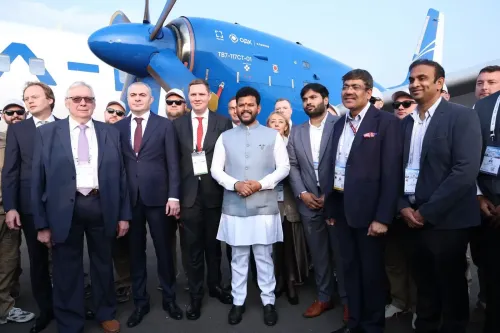
During his address to the Wings India 2026 conference held in Hyderabad via video link, the Prime Minister welcomed key figures from the industry, noting that the upcoming phase of the aviation sector is filled with promise and that India is becoming a pivotal player.
He pointed out the extensive opportunities available in India within aircraft production, advanced air mobility, aircraft leasing, and pilot training.
PM Modi remarked that in the last ten years, India's aviation landscape has transformed dramatically, evolving from a select few to now being the world's third-largest domestic aviation market. He highlighted the rapid growth in passenger traffic and the expansion of Indian airline fleets, with over 1,500 aircraft ordered recently.
The Prime Minister emphasized that this remarkable growth is attributed to the government's long-term strategy, aimed at making air travel accessible to all, ensuring that every citizen can fly with ease. He noted the connection of Tier-2 and Tier-3 cities to airports, mentioning that in 2014, India had only 70 airports, while today, that number has exceeded 160, signifying that the country has constructed more than double the airports in just a decade.
Over 100 aerodromes have been made operational, and the government has launched the UDAN scheme to facilitate affordable air travel. As a result of this initiative, 15 million passengers have utilized routes that previously did not exist.
As India moves closer to its goal of becoming a developed nation, the Prime Minister assured that the expansion of air connectivity will multiply exponentially, paving the way for increased investment opportunities.
He projected that by 2047, India could boast over 400 airports, creating an expansive network. He mentioned that the government is actively working on the next phase of the UDAN scheme, which will enhance regional and affordable air connectivity, alongside the growth of seaplane operations, all aimed at improving access across all parts of the country. Moreover, tourist spots are being enhanced nationwide, and air travel is rapidly becoming the favored mode of transportation for many.
The Prime Minister further noted that India is prioritizing aircraft design, manufacturing, and the aircraft MRO ecosystem. The country is already a significant producer and supplier of aircraft components and has started manufacturing military and transport aircraft domestically. There are also advancements in civil aircraft production.
He stressed that India's aviation vision includes a strong focus on air cargo, with the government implementing necessary regulatory reforms to facilitate quicker and more efficient cargo movement. Underlining that India is poised to become a major competitive transshipment hub, PM Modi encouraged investors to explore opportunities in warehousing, freight forwarding, express logistics, and the e-commerce sector.
Point of View
It is evident that India's ambitious aviation initiatives under PM Modi's leadership reflect a commitment to inclusive growth and connectivity. This strategic focus on expanding air travel infrastructure not only enhances national connectivity but also positions India as a significant player in the global aviation market, fostering economic opportunities across regions.
NationPress
1 Oct 2026
Frequently Asked Questions
What initiatives is India taking to enhance its aviation sector?
India is expanding its aviation sector by increasing the number of airports, launching the UDAN scheme for affordable air travel, and focusing on aircraft manufacturing and MRO ecosystems.
How has passenger traffic in India changed recently?
Passenger traffic in India has seen rapid growth, contributing to India's status as the world's third-largest domestic aviation market.
What is the future outlook for India's aviation industry?
India aims to have over 400 airports by 2047 and is working on regulatory reforms to enhance air cargo efficiency, positioning itself as a competitive transshipment hub.