Are China’s Interests in Venezuela Now Influenced by Trump?
Click to start listening
Synopsis
The US's recent actions in Venezuela could spell trouble for China's oil ambitions as Trump’s administration reasserts control over the country’s resources. With significant reserves and new investments at stake, this geopolitical shift could reshape energy markets.
Key Takeaways
- The US has taken a dominant role in Venezuela's oil industry.
- China's long-standing investments are now under threat.
- Trump is promoting US investment in Venezuela.
- Venezuela's oil reserves are among the largest in the world.
- Changes in US policy can impact global energy markets.
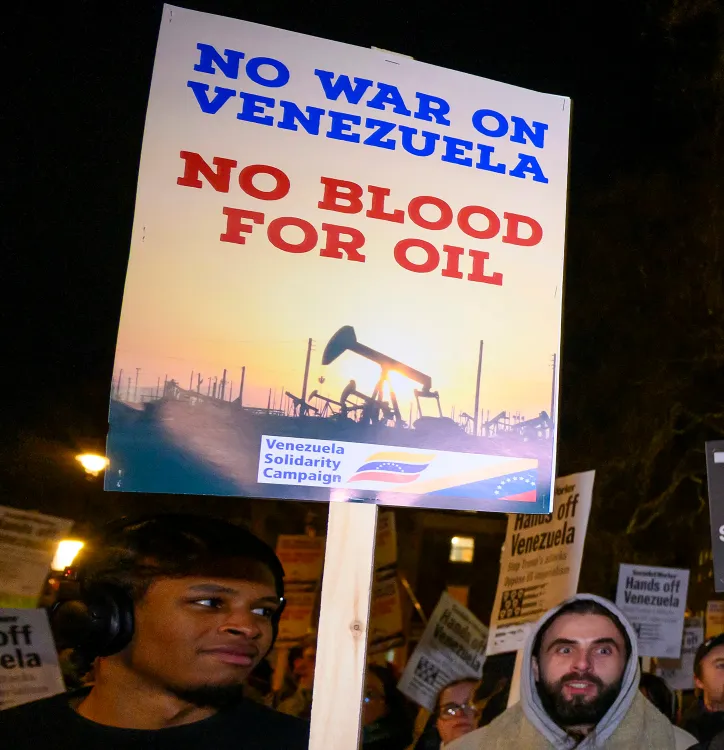
New Delhi, Jan 25 (NationPress) The recent ousting of Venezuela’s Nicolas Maduro and the subsequent takeover of the country’s oil sector by the US could potentially undermine China’s ambitions in Venezuela, as indicated by various reports.
According to the Wall Street Journal, the US is now exerting new authority over Venezuela’s oil resources, casting doubt on Beijing’s established foothold.
“Beijing’s extensive production agreements, oil rigs, and debt-backed supply contracts have historically granted it significant influence in Venezuela — but all these arrangements are now vulnerable to the preferences of the Trump administration,” the report noted.
Chinese state-owned oil companies have claims to over 4 billion barrels of Venezuelan oil, a volume nearly five times larger than that of Chevron, the only major US company currently operating in Venezuela.
The affordable oil from Venezuela, with expectations of up to 50 million barrels being shipped to the US, may assist Washington in strengthening its own refining capabilities.
Meanwhile, President Trump is advocating for US companies to reinvest in Venezuela, aiming for a $100 billion investment. Over the past two decades, Chinese companies have invested approximately $4.8 billion in the South American nation, according to the Rhodium Group, a US-based research firm.
This month, Trump referenced Venezuela while detailing his energy, economic, and security strategies, asserting that recent US actions regarding Venezuela have contributed to decreasing fuel prices and fostering economic growth. He emphasized the importance of the country’s oil reserves in this initiative.
Trump stated that the oil is being imported into the US for refining, which would further aid in reducing gasoline prices. He noted that energy policy plays a crucial role in managing inflation and rebuilding economic confidence.
Despite possessing some of the largest proven oil reserves globally, Venezuela’s production has been hindered for years due to sanctions, infrastructure issues, and political unrest. Shifts in US policy towards Venezuelan oil often have significant repercussions on global energy markets.
Point of View
It is crucial to analyze the unfolding dynamics between the US and Venezuela. The shift in power has significant implications not only for regional politics but also for global energy markets. The nation's resources are at the center of a geopolitical struggle, which warrants close attention from both policymakers and investors alike.
NationPress
25/01/2026
Frequently Asked Questions
What is the current situation in Venezuela regarding oil?
The US has recently taken control over Venezuela's oil industry, which could disrupt China's established interests in the region.
How much oil does China have claims to in Venezuela?
Chinese state-owned oil companies have claims to over 4 billion barrels of oil in Venezuela.
What influence does the Trump administration have on Venezuela's oil?
The Trump administration's preferences now impact China's long-standing production deals and arrangements in Venezuela.
What are the potential implications of US actions in Venezuela?
US actions may lead to decreased fuel prices and economic growth, significantly affecting global energy markets.
Why is Venezuela's oil important to the US?
Venezuela's oil reserves are crucial for the US to enhance its refining capabilities and stabilize fuel prices.