Commerce Secretary calls for rigorous legal thinking to shape global trade law

Synopsis
At CTIL's 9th anniversary, India's Commerce Secretary and a Supreme Court judge jointly called for stronger legal institutions to shape — not just follow — global trade law, as digital trade rules and sustainability-linked measures rewrite the international economic order. With over 4,000 legal opinions and nearly 10 FTA negotiations to its name, CTIL is being positioned as a strategic pillar of India's trade diplomacy.
Key Takeaways
Commerce Secretary Rajesh Agrawal called for rigorous legal thinking to address challenges posed by sustainability-linked trade measures and digital trade at CTIL's 9th Anniversary on 9 October 2026 .
Narasimha of the Supreme Court of India said India needs institutions that actively shape international economic law, not merely follow it.
CTIL has delivered over 4,000 legal opinions and participated in negotiations on nearly 10 free trade agreements .
The centre has contributed to WTO negotiations, submissions, dispute settlement, and India's engagements at G20 and BRICS .
International investment law is shifting toward recognising states' regulatory freedom, according to Justice Narasimha, making a durable legal framework increasingly urgent.
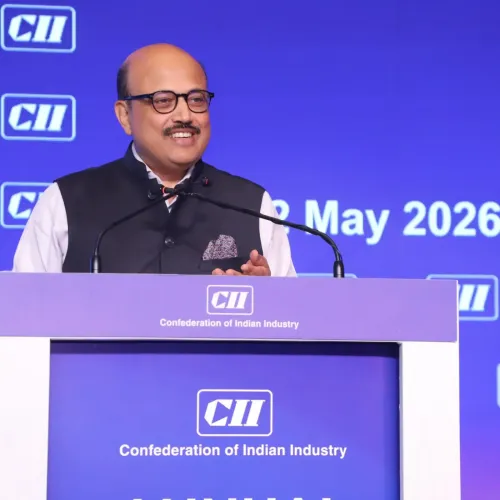
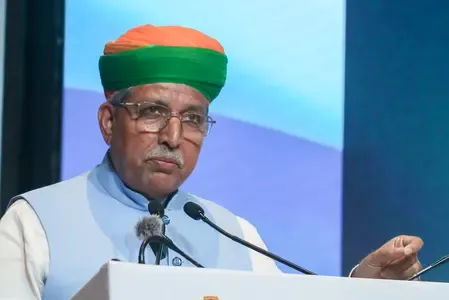
Commerce Secretary Rajesh Agrawal on Friday, 9 October 2026, said that established rules of international trade are under mounting pressure as sustainability-linked trade measures and digital trade redefine the global agenda, and stressed the urgent need for rigorous legal thinking to keep pace with these shifts. He was speaking at the 9th Anniversary Celebration of the Centre for Trade and Investment Law (CTIL) in New Delhi, according to an official statement from the Ministry of Commerce and Industry.
Agrawal's Case for Legal Institutions
The Commerce Secretary congratulated CTIL for earning the trust of government, industry, and the broader trade law community over nearly a decade. He recalled the centre's concrete contributions to the Department of Commerce — spanning legal analysis, specialised support in free trade agreement negotiations, dispute settlement, and the building of institutional memory. His remarks signal that India views legal infrastructure as a strategic asset in international economic negotiations, not merely an administrative function.
Supreme Court Judge Underscores Investment Law Shift
Justice P. S. Narasimha, Judge of the Supreme Court of India, addressed the gathering and argued that India requires institutions like CTIL that are not passive observers of international economic law but active shapers of it. He traced the evolution of international investment law from its original preoccupation with protecting foreign capital to an emerging recognition of the regulatory freedom of states. Justice Narasimha noted that the field has now entered a phase in which questions of institutionalisation, legitimacy, and the long-term balance between investment protection and public regulatory power have assumed far greater significance. He underscored the necessity of a durable international investment law framework that holds both imperatives in balance.
CTIL's Decade of Legal Contributions
The Ministry cited experts who noted that CTIL has delivered over 4,000 legal opinions, participated in negotiations on nearly 10 free trade agreements, and contributed to WTO negotiations, submissions, notifications, and dispute settlement. These figures place the centre among the most active trade-law institutions in Asia.
Additional Secretary Highlights Broader Diplomatic Role
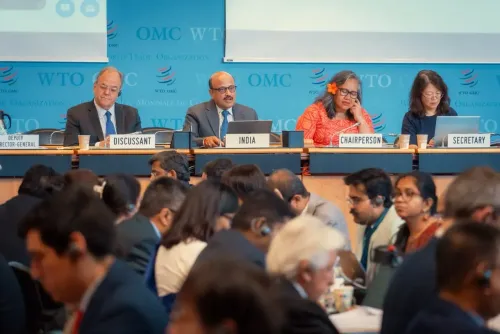
Additional Secretary Yashvir Singh of the Ministry of Commerce and Industry highlighted CTIL's support for major trade engagements including contributions to the G20 and BRICS over recent years. He also drew attention to CTIL's role in WTO negotiations and dispute settlement, its support for India's economic diplomacy, and its work in developing human capital in international economic law — areas that will only grow in importance as India deepens its trade footprint globally.
Why This Matters Now
This comes amid an accelerating global shift in trade governance, where digital trade rules and climate-linked border measures — such as the European Union's Carbon Border Adjustment Mechanism — are redrawing the boundaries of what is permissible under multilateral trade law. India, as a major exporting economy with active FTA negotiations underway with multiple partners, has a direct stake in how these norms are written. The calls from both the Commerce Secretary and a sitting Supreme Court judge at a single forum signal that legal capacity in trade is being treated as a national priority at the highest levels.
Point of View
But 4,000 legal opinions mean little if the foundational norms they interpret are set elsewhere. The real challenge is whether India can move from reactive dispute settlement to proactively influencing the architecture of digital trade rules and sustainability standards before those norms harden into binding obligations. That requires sustained political will and long-term institutional funding, neither of which was announced at this event.
NationPress
9 Oct 2026
Frequently Asked Questions
What is the Centre for Trade and Investment Law (CTIL)?
CTIL is an Indian institution that provides legal analysis, dispute settlement support, and expertise on free trade agreements and WTO matters to the Department of Commerce. It has delivered over 4,000 legal opinions and participated in negotiations on nearly 10 free trade agreements since its founding.
What did Commerce Secretary Rajesh Agrawal say at CTIL's 9th anniversary?
Agrawal said that established international trade rules are being questioned as sustainability-linked trade measures and digital trade reshape the global agenda, and called for rigorous legal thinking to address these challenges. He also praised CTIL for earning the trust of government, industry, and the trade law community.
What did Justice P. S. Narasimha say about international investment law?
Justice Narasimha said international investment law has evolved from a focus on protecting foreign investment to greater recognition of states' regulatory freedom. He stressed the need for a durable legal framework that balances investment protection with the regulatory authority of states, and said India needs institutions like CTIL that shape international economic law rather than merely follow it.
Why is this CTIL anniversary significant for India's trade policy?
It comes at a moment when new trade challenges — including digital trade governance and climate-linked border measures such as the EU's Carbon Border Adjustment Mechanism — are redrawing the boundaries of permissible trade practices. India, with active FTA negotiations underway, has a direct stake in how these norms evolve, making legal institutions like CTIL strategically important.
What has CTIL contributed to India's international trade engagements?
According to the Ministry of Commerce and Industry, CTIL has provided over 4,000 legal opinions, participated in negotiations on nearly 10 free trade agreements, and contributed to WTO negotiations, notifications, and dispute settlement. It has also supported India's economic diplomacy at G20 and BRICS forums.