India mobile network traffic to grow 17% annually by 2030: KPMG report
Synopsis
India's mobile data traffic is racing ahead at 17% a year, but telecom operator revenues are growing at barely 2.7% — a widening gap that a new KPMG report flags as the central challenge for Indian telecoms. With the equipment market set to double to $50 billion by FY32 and AI-telecom convergence reshaping the industry, the report argues India must now move up the value chain into semiconductors, software and intellectual property — or risk building infrastructure that others monetise.
Key Takeaways
India's mobile network traffic is forecast to grow at 17% annually between 2025 and 2030 , while operator revenues grow at only 2.7% per year , per KPMG in India .
The domestic telecom equipment market is projected to nearly double from $25 billion in FY25 to $50 billion by FY32 .
Handset production in India reached ₹6,270 billion in FY26 ; telecom equipment import substitution stands at approximately 60 per cent .
The report calls for deeper domestic participation in semiconductors, software, radio systems, optical technologies and intellectual property.
KPMG's Akhilesh Tuteja said India has 'a unique opportunity to emerge as a creator of globally relevant technologies, platforms and intellectual property.'
Mobile network traffic in India is set to expand at roughly 17 per cent per year between 2025 and 2030, even as telecom operator revenues are forecast to rise at a far more modest 2.7 per cent annually over the same period, according to a new report by KPMG in India released on 9 October 2026. The divergence underscores a widening structural gap between surging demand for connectivity and the ability of network operators to translate that demand into revenue.
Telecom Equipment Market on Track to Double
The domestic telecom equipment market is projected to nearly double — from $25 billion in FY25 to $50 billion by FY32 — growing at almost twice the pace of the global market, the KPMG report noted. This trajectory reflects both India's expanding digital infrastructure base and accelerating policy support for domestic manufacturing.
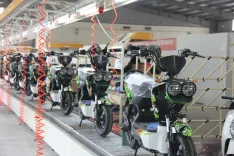
On the manufacturing front, handset production in India reached ₹6,270 billion in FY26, while telecom equipment import substitution has climbed to approximately 60 per cent, signalling meaningful progress in building home-grown industrial capability.
AI, Semiconductors and Cloud Converging With Telecom
The report argues that telecom is entering a fundamentally new era, one in which connectivity, artificial intelligence infrastructure and industrial capability are becoming increasingly interdependent. Akhilesh Tuteja, Partner and National Leader — Clients and Markets and Technology, Media and Telecommunications at KPMG in India, said the convergence was reshaping where value is created across the global technology ecosystem.
'The convergence of telecommunications, AI, semiconductors, cloud and digital infrastructure is redefining how value is created in the global technology ecosystem. As the foundation of the digital economy evolves from connectivity to intelligence, India has a unique opportunity to emerge as a creator of globally relevant technologies, platforms and intellectual property,' Tuteja said.
He added that realising this potential would require 'sustained investments in innovation, advanced manufacturing and ecosystem collaboration' to cement India's standing as a technology leader.
High-Value Segments: The Next Frontier
While India has demonstrated the ability to build scale in digital infrastructure and manufacturing, the KPMG report cautioned that the next phase of growth would demand deeper participation in high-value segments — specifically semiconductors, software, radio systems, optical technologies and intellectual property. These are areas where India currently contributes relatively little to global supply chains, yet where margins and strategic leverage are concentrated.
This comes amid a broader global race among nations to anchor semiconductor and advanced telecom technology supply chains domestically, with the United States, the European Union, China and Japan all deploying large-scale industrial incentives. India's India Semiconductor Mission and expanded production-linked incentive frameworks are positioned as early responses to this competition.
What the Revenue Gap Signals
The 17 per cent traffic growth versus 2.7 per cent revenue growth divergence is not a new phenomenon in Indian telecom, but the KPMG data suggests it is widening rather than closing. Analysts have long noted that data monetisation in India remains constrained by aggressive tariff competition and consumer price sensitivity, even as average revenue per user has crept upward following recent tariff revisions by major operators.
Notably, this report arrives as the Indian government pushes 5G rollout and eyes 6G development — both capital-intensive bets that require operators to invest heavily even before revenue models are proven. The ability to shift from a 'dumb pipe' connectivity model to an intelligent, AI-integrated infrastructure provider will likely determine which operators — and which countries — capture the most value from the next technology cycle.
Point of View
But the structural problem — low average revenue per user relative to infrastructure cost — remains unresolved. KPMG's call to move into semiconductors and intellectual property is strategically correct, but it is a decade-long play, not a near-term fix. The real policy question is whether India can simultaneously sustain operator viability during the 5G capex cycle and seed the high-value R&D ecosystem the report envisions — two goals that currently pull on the same limited pool of capital.
NationPress
9 Oct 2026
Frequently Asked Questions
What does the KPMG report say about India's mobile network traffic growth?
The KPMG in India report projects that mobile network traffic in India will grow at approximately 17 per cent annually between 2025 and 2030. In contrast, telecom operator revenues are expected to grow at only 2.7 per cent per year over the same period, highlighting a widening gap between demand and revenue capture.
How large will India's telecom equipment market be by FY32?
According to the KPMG report, India's telecom equipment market is expected to nearly double from $25 billion in FY25 to $50 billion by FY32, growing at almost twice the pace of the global market.
What is India's progress on telecom manufacturing and import substitution?
India's handset production reached ₹6,270 billion in FY26, and telecom equipment import substitution has reached approximately 60 per cent, according to the KPMG report. These figures indicate significant growth in domestic manufacturing capabilities.
Why does the KPMG report stress AI and semiconductor convergence with telecom?
The report argues that the telecom industry is entering a new era where connectivity, AI infrastructure and industrial capability are becoming interdependent. It contends that India must deepen its participation in high-value segments such as semiconductors, software, radio systems and intellectual property to capture greater value from the global technology ecosystem.
What are the key challenges highlighted for Indian telecom operators?
The central challenge identified is that traffic demand is growing far faster than revenues — 17 per cent versus 2.7 per cent annually — compressing the economics of network investment. Operators face heavy capital expenditure for 5G rollout even as data tariffs remain constrained by competition and consumer price sensitivity.