SC dismisses Andhra Pradesh plea on 34% BC quota in local bodies
Synopsis
The Supreme Court has shut the door on Andhra Pradesh's bid to restore 34% BC reservation in local bodies, questioning the very legal basis of the survey data the state relied upon. With elections now due within six weeks and the quota reverting to 20%, this is a sharp setback to Chandrababu Naidu's government on a promise made at the heart of its 2024 election campaign.
Key Takeaways
The Supreme Court on 9 October 2026 dismissed Andhra Pradesh 's plea challenging the High Court's order striking down 34% BC reservation in local body elections.
A bench of Justice Dipankar Datta and Justice Sheel Nagu questioned the legal basis of the Unified Family Survey used to justify the enhanced quota.
The Andhra Pradesh High Court had on 1 October 2026 ruled the quota breached the 50 per cent aggregate reservation ceiling .
Chandrababu Naidu had announced the enhanced quota on 18 August — a key promise from the 2024 Assembly elections .
The state must now initiate local body elections within six weeks ; BC reservation is expected to revert to 20 per cent .
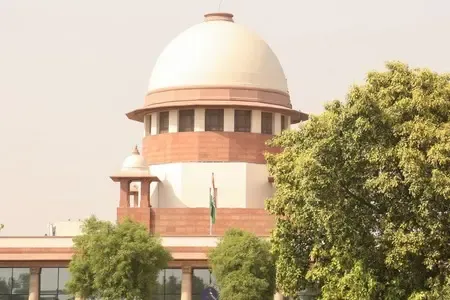
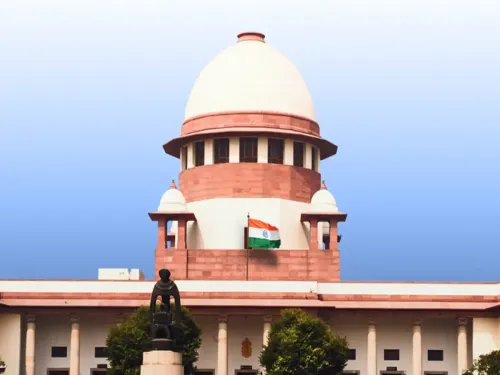
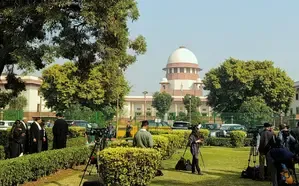
The Supreme Court on Friday, 9 October 2026, dismissed the Andhra Pradesh government's plea challenging the Andhra Pradesh High Court ruling that struck down 34 per cent reservation for Backward Classes (BCs) in local body elections. The apex court's decision deals a significant blow to Chief Minister N. Chandrababu Naidu's coalition government, which had made enhanced BC reservation a central poll promise in the 2024 Assembly elections.
What the Supreme Court Said
A bench comprising Justice Dipankar Datta and Justice Sheel Nagu questioned the legal basis of the data relied upon by the state government to justify the enhanced quota — specifically the findings of a Unified Family Survey. Senior advocate Mukul Rohatgi, appearing for the Andhra Pradesh government, argued there was no reason for the High Court to reject the survey data as unreliable.
The bench, however, pressed the state to demonstrate where the High Court had erred in its findings. 'You show us that this data can be considered. This is a Unified Family Survey — under what law is this being conducted?' the court remarked before dismissing the plea. The bench's pointed question about the legal standing of the survey effectively exposed a gap in the state's justification for the enhanced quota.
What the High Court Had Ruled
On 1 October 2026, the Andhra Pradesh High Court struck down two government orders that provided 34 per cent reservation for BCs in local body elections, holding that the quota breached the 50 per cent ceiling on total reservations mandated by the Supreme Court's own guidelines. The High Court observed that the aggregate reservation across all categories in local bodies must not exceed this ceiling.
The High Court also directed the state government and the State Election Commission to initiate the local body election process within six weeks, dismissing petitions that sought elections to be deferred until after the ongoing Special Intensive Revision (SIR) of electoral rolls was completed.
Political Context and the Naidu Government's Promise
Chief Minister N. Chandrababu Naidu had announced the enhanced quota on 18 August, stating that BCs would receive 34 per cent reservation in rural local bodies and 33.33 per cent in urban local bodies. The move was aimed at fulfilling a key campaign commitment made during the 2024 Assembly elections. Following the High Court's adverse ruling, Naidu had directed officials to immediately challenge the decision in the Supreme Court.
The Supreme Court's dismissal now leaves the government with limited legal options to restore the enhanced quota ahead of local body elections, which are expected to proceed on the existing reservation framework.
Legal Background: The 50% Reservation Ceiling
The 50 per cent ceiling on total reservations in local body elections is rooted in the Supreme Court's landmark 2010 ruling in K. Krishna Murthy vs. Union of India, which laid down a triple test for OBC reservation in local bodies — requiring a dedicated commission, empirical data on backwardness, and adherence to the aggregate cap. The Andhra Pradesh government's reliance on the Unified Family Survey, rather than a dedicated commission's report, reportedly ran afoul of this framework. This is not the first time a state government's attempt to push BC quotas beyond the ceiling has been struck down; similar rulings have affected Maharashtra and Madhya Pradesh in recent years.
What Happens Next
With the Supreme Court upholding the High Court's order, the state government must now initiate local body elections within the six-week window set by the High Court. The BC reservation in local bodies is expected to revert to the earlier 20 per cent level unless the state can establish a fresh, legally sound empirical basis for an enhanced quota through a constitutionally compliant process.
Point of View
The ruling is doubly damaging: it erases a flagship electoral promise and accelerates local body elections before the political ground can be prepared. More broadly, this is a reminder that reservation expansion in local bodies remains one of the most legally treacherous areas of Indian federalism, where good politics and constitutional compliance have repeatedly collided.
NationPress
9 Oct 2026
Frequently Asked Questions
Why did the Supreme Court dismiss Andhra Pradesh's plea on BC reservation?
The Supreme Court dismissed the plea because it found the state's justification for the enhanced 34% BC quota legally questionable. The bench specifically challenged the reliance on a Unified Family Survey, asking under what law the survey was conducted, and found that the state had not demonstrated where the High Court erred in rejecting the data as an insufficient basis for enhanced reservation.
What did the Andhra Pradesh High Court rule on BC reservation?
On 1 October 2026, the Andhra Pradesh High Court struck down two government orders providing 34% BC reservation in local body elections, holding that the aggregate quota for all categories breached the Supreme Court-mandated 50% ceiling on total reservations. It also directed the state to initiate local body elections within six weeks.
What was Chandrababu Naidu's BC reservation promise?
During the 2024 Andhra Pradesh Assembly elections, Chief Minister N. Chandrababu Naidu's coalition promised to increase BC reservation in local bodies from 20% to 34%. After coming to power, Naidu announced 34% reservation in rural local bodies and 33.33% in urban local bodies on 18 August.
What is the 50% ceiling on reservations in local body elections?
The Supreme Court has ruled that the total aggregate reservation across all categories — Scheduled Castes, Scheduled Tribes, OBCs, and others — in local body elections must not exceed 50%. This principle, drawn from the court's own precedents, was the primary ground on which the Andhra Pradesh High Court struck down the 34% BC quota.
What happens to local body elections in Andhra Pradesh now?
With the Supreme Court upholding the High Court's order, the state government and the State Election Commission must initiate the local body election process within the six-week window set by the High Court. BC reservation is expected to revert to the earlier 20% level unless the state establishes fresh, legally compliant empirical grounds for enhancement.