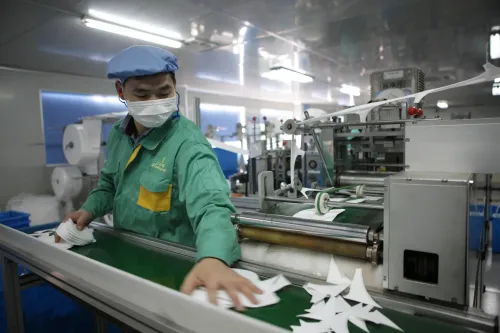
China's factories struggle as youth shun blue-collar jobs, skills gap widens
Synopsis
China's factories are running short of skilled workers — not because of a lack of candidates, but because of a cultural hierarchy that makes vocational training feel like failure. With a five-year plan staking national security on manufacturing supremacy, Beijing is now trying to rebrand factory work as a medal sport. The gap between that ambition and deep-rooted social attitudes is the real bottleneck.
Key Takeaways
China's Ministry of Education released a vocational reform paper in February 2026 , criticising the system's weak industry linkages and shortage of skilled industrial workers.
University enrolment in China grew from 1 million in 1999 to 9.6 million in 2020 , entrenching a social hierarchy that devalues vocational careers.
China's 2026–2030 five-year plan identifies manufacturing as central to technological self-sufficiency and national security.
Beijing hosted WorldSkills 2026 , framing it as an 'Olympics for skills' to raise the prestige of blue-collar professions.
Hundreds of vocational schools are reportedly being converted into diploma-granting colleges offering bachelor's degrees to blur the status gap with universities.
In a slowing economy, well-paying factory roles at firms like Huawei and Xiaomi may attract graduates who face unemployment after university.
China is grappling with a deepening skilled-labour shortage in its manufacturing sector, as the country's younger generation increasingly views vocational education as socially inferior to a university degree — leaving factories without the trained workforce needed to power the next wave of high-tech industrial growth, according to an analysis published in The Diplomat.
The Roots of the Skills Crisis
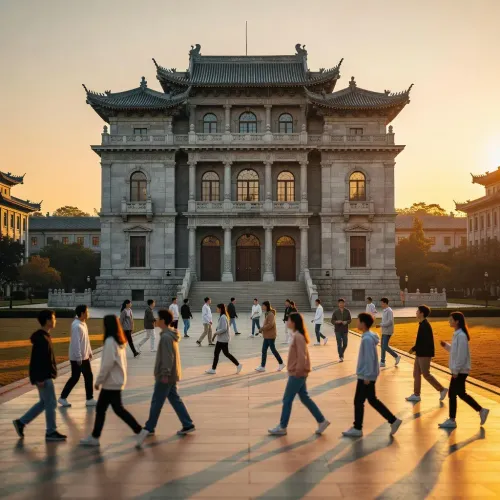
China's university enrolment surged dramatically over two decades — from 1 million students in 1999 to 9.6 million in 2020. This rapid expansion has entrenched a social hierarchy where a bachelor's degree followed by white-collar employment is widely seen as more aspirational than any vocational path, regardless of how technically demanding the latter may be.
The cultural weight of this divide means that vocational schools, according to the analysis, can currently attract mainly those willing to risk the social stigma of being perceived as less academically capable — a structural barrier that policy reforms alone may not overcome.
Government Acknowledges the Disconnect
China's Ministry of Education in February 2026 released a policy paper calling for sweeping reforms to the country's vocational education system. The document directly criticised the existing framework for its weak linkages between educational institutions and industry employers, noting that the system produces too few skilled industrial workers — the very personnel Beijing considers essential for sustaining high-tech manufacturing self-sufficiency.
The concern is underscored by China's 2026–2030 five-year plan, which reaffirms that manufacturing remains central to the country's long-term economic growth strategy and its goal of technological independence — a priority that has grown more urgent amid intensifying geopolitical pressure on Chinese supply chains.
WorldSkills as a Prestige Play
In a bid to shift cultural attitudes, the Chinese government hosted the 2026 edition of WorldSkills — an international competition for vocational trades that Beijing framed as an 'Olympics for skills', complete with gold, silver, and bronze medals for winners. The event was heavily promoted in state media, with the aim of lending prestige to skilled trades and making factory-floor careers appear aspirational rather than fallback options.
The Diplomat analysis notes that the visibility of China's medalists is deliberate — their recognition is intended to confer pride not just on the nation, but on the professions themselves.
Blurring the Line Between Vocational and University
Beyond symbolic gestures, Beijing is pursuing structural changes. Hundreds of vocational schools are reportedly being converted into diploma-granting colleges, with bachelor's degrees being formally attached to vocational training programmes. The underlying logic, according to the analysis, is that eliminating the visual and institutional distinction between universities and vocational schools may chip away at hierarchical thinking over time.
Notably, the analysis also points to an economic pressure valve: in a slowing economy, some graduates may find well-paying blue-collar roles at major manufacturers such as Huawei and Xiaomi more attractive than university degrees that currently offer no guarantee of employment. Whether economic pragmatism can erode decades of cultural conditioning, however, remains an open question.
What's at Stake
The stakes are considerable. China's ambitions in semiconductors, electric vehicles, robotics, and advanced manufacturing depend on a pipeline of technically skilled workers that the current education culture is not reliably producing. Critics argue that without a fundamental shift in how society values vocational work — not just in policy documents, but in households and schools — even the most well-funded reforms risk stalling at the gates of cultural inertia.
Whether China can rewire generational attitudes fast enough to meet its industrial timelines will be one of the defining workforce questions of the decade.
Point of View
And that makes it far harder to fix. Rebranding vocational schools as 'colleges' and attaching bachelor's degrees to trade training is a cosmetic intervention against a deep structural attitude. The more revealing data point is the trajectory: university enrolment grew ninefold in two decades, while manufacturing's need for technically skilled workers also grew. The two trends moved in opposite directions, and a five-year plan cannot easily reverse generational aspiration. Beijing's real challenge is that the same economic success that built its manufacturing base also created a middle class that does not want its children on the factory floor — a contradiction that no medal ceremony fully resolves.
NationPress
9 Oct 2026
Frequently Asked Questions
Why are China's factories facing a skilled-labour shortage?
China's factories are struggling to recruit skilled workers because the country's younger generation overwhelmingly prefers university education and white-collar careers over vocational training, according to an analysis in The Diplomat. The cultural status attached to a bachelor's degree far outweighs the social standing of even technically sophisticated factory work, leaving manufacturers under-staffed.
What reforms has China announced to fix its vocational education system?
China's Ministry of Education released a reform paper in February 2026 criticising the disconnect between vocational schools and employers. The government is also converting hundreds of vocational institutions into diploma-granting colleges that offer bachelor's degrees, aiming to erase the institutional distinction between universities and trade schools.
What is WorldSkills 2026 and why did China host it?
WorldSkills 2026 is an international competition for vocational trades that China hosted and promoted as an 'Olympics for skills', awarding gold, silver, and bronze medals to winners. Beijing used the event to raise the public profile of blue-collar professions and challenge cultural attitudes that view factory work as low-status.
How does China's five-year plan connect to this workforce issue?
China's 2026–2030 five-year plan identifies manufacturing as essential to the country's technological self-sufficiency and national security. Without a sufficient pipeline of skilled industrial workers, Beijing's ambitions in semiconductors, EVs, and advanced manufacturing face a serious human capital constraint.
Could economic conditions change young Chinese workers' attitudes toward factory jobs?
Possibly. The Diplomat analysis notes that in a slowing economy, well-paying blue-collar roles at companies like Huawei and Xiaomi may become more attractive than university degrees that offer no employment guarantee. However, analysts suggest that economic pragmatism alone is unlikely to overcome decades of deeply ingrained cultural preference for white-collar careers.