China's 'lying flat' trend traced to one-child policy, manufacturing-heavy growth

Synopsis
China's 'lying flat' generation isn't lazy — it's structurally squeezed. A new report links the trend to the one-child policy, which gutted household consumption to 12% of the global share even as China produces 28% of the world's manufacturing. With 49-hour work weeks and 12.22 million graduates chasing a stunted services sector, opting out has become the only rational response.
Key Takeaways
A new report links China's 'lying flat' movement to the one-child policy and a manufacturing-skewed growth model.
Household disposable income's share of GDP fell from about two-thirds in the 1980s to roughly 44 per cent .
China accounts for 17% of global GDP and 28% of manufacturing value-added, but only 12% of global household consumption.
Average Chinese work week is 49 hours , rising to 60 in some cases — versus 38 in the US and 33 in Germany.
Graduates surged from 1.01 million in 2000 to 12.22 million in 2025 , but services account for just 47% of jobs.
China's 'lying flat' movement — the rejection of careerist competition by disillusioned young Chinese — has been traced to the long shadow of the country's one-child policy and a lopsided, manufacturing-heavy growth model, according to a new report published by Japan Times. The analysis argues that decades of suppressed household consumption and intense job-market pressure have created a generation that feels work no longer pays off.
How the one-child policy reshaped consumption
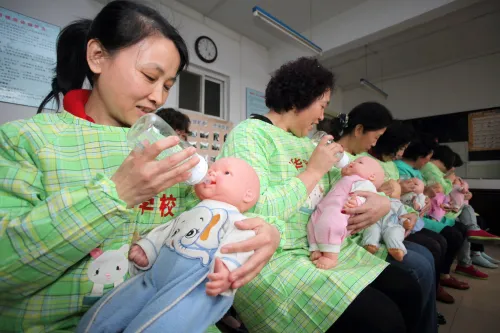
The one-child policy reduced the number of high-consumption households and weakened household bargaining power, the report said. Yi Fuxian, a senior scientist at the University of Wisconsin-Madison, was quoted as saying that the share of household disposable income in GDP fell from about two-thirds in the 1980s to roughly 44 per cent today.
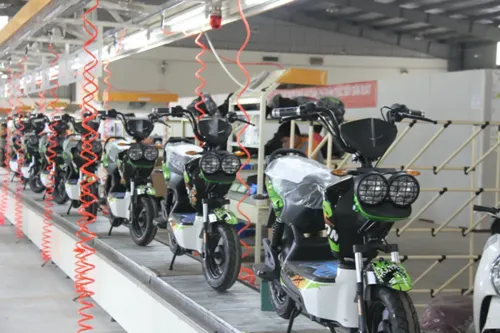
That drop, the report noted, dragged down domestic consumption and job creation, while pushing Beijing to lean heavily on industrial subsidies — fuelling what it described as a 'pathological manufacturing boom'.
The skewed global footprint
The imbalance is now striking on the global ledger. 'China now accounts for 17 per cent of global GDP and 28 per cent of global manufacturing value-added, but only 12 per cent of global household consumption,' the report noted.
A thinning social safety net, it added, has forced workers to clock longer hours simply to stay afloat. The average Chinese work week has climbed to around 49 hours — and as high as 60 hours in some cases — compared with 38 hours in the United States, 33 in Germany, 37 in Japan and 42 in Vietnam, according to the report.
A demographic feedback loop
Long working hours, the report warned, are eroding time for relationships, marriage and child-rearing, deepening China's demographic decline. The result is a feedback loop: a shrinking, ageing population that further weakens consumption and tightens the labour squeeze on those still working.
Graduates without a services economy to absorb them
The report flagged a sharp mismatch between rising educational attainment and an undersized services sector. Annual graduates have surged from 1.01 million in 2000 to 12.22 million in 2025, but services — the main employer for recent graduates — accounts for only about 47 per cent of jobs, far below levels in advanced economies.
Many young Chinese, the report stressed, do not even have the 'privilege of lying flat'. Unable to find stable employment or fall back on family support, they are pushed into the gig economy — as food delivery workers, ride-hailing drivers, couriers and live-streamers.
What lies ahead
With consumption stuck, manufacturing overbuilt and demographics tilting against recovery, the report suggests China's 'lying flat' phenomenon is less a cultural fad than a structural symptom. How Beijing rebalances household incomes against industrial subsidies will shape whether the next generation opts in — or further opts out.
Point of View
But the data tells a structural story. When household consumption is just 12% of the global share against 28% of manufacturing output, the economy is built to produce, not to reward workers. India should read this as a cautionary tale: a demographic dividend without commensurate services-sector job creation and household income growth risks the same disillusionment at the other end of the pipeline. Beijing's challenge isn't motivating its youth — it's rebalancing an economy that has structurally underpaid them for a generation.
NationPress
16 Oct 2026
Frequently Asked Questions
What is China's 'lying flat' movement?
'Lying flat' refers to a movement among young Chinese who reject the culture of relentless careerist competition, opting out of overwork, consumerism and traditional milestones like marriage and home-buying. A new report attributes its rise to structural pressures created by the one-child policy and an imbalanced growth model.
How is the one-child policy linked to 'lying flat'?
The one-child policy reduced the number of high-consumption households and weakened household bargaining power, pushing the share of household disposable income in GDP from about two-thirds in the 1980s to around 44 per cent. That suppressed consumption and job creation, while industrial subsidies fuelled a manufacturing-heavy economy with limited rewards for workers.
How long do Chinese workers actually work?
The average Chinese work week has risen to around 49 hours, and as high as 60 hours in some cases. That compares with 38 hours in the United States, 33 in Germany, 37 in Japan and 42 in Vietnam, according to the report.
Why can't China's services sector absorb its graduates?
Annual graduates have grown from 1.01 million in 2000 to 12.22 million in 2025, but the services sector accounts for only about 47 per cent of jobs — far below advanced-economy levels. The mismatch forces many graduates into the gig economy as delivery workers, ride-hailing drivers or live-streamers.
Who are the young Chinese without the 'privilege of lying flat'?
They are graduates and workers who can neither secure stable employment nor depend on family support. Unable to opt out, they are pushed into precarious gig work — food delivery, couriering, ride-hailing and live-streaming — to make ends meet.