China's 'lying flat' youth movement flagged as national security threat by Beijing
Synopsis
Beijing's Ministry of State Security has branded China's passive 'lying flat' youth movement a national security threat — not a labour issue. The Diplomat's analysis argues this reveals that the CCP's legitimacy depends less on economic output and more on emotional mobilisation, making disengaged youth an existential political threat, not just an economic one.
Key Takeaways
China's Ministry of State Security posted a video on 28 April labelling the "lying flat" (tangping) movement a national security threat linked to hostile foreign forces.
The movement originated around 2021 as a youth rejection of hyper-competitive work culture, including the '996' work schedule and unaffordable housing.
President Xi Jinping warned as early as 2019 about cadres lacking a "spirit of struggle" — a critique now extended to an entire generation.
The Diplomat report argues the CCP's legitimacy rests on "emotional mobilisation" , not just economic performance, making youth disengagement an existential challenge.
The involvement of the Ministry of State Security — rather than labour or youth ministries — is seen as a key signal that Beijing views this as a political, not economic, problem.
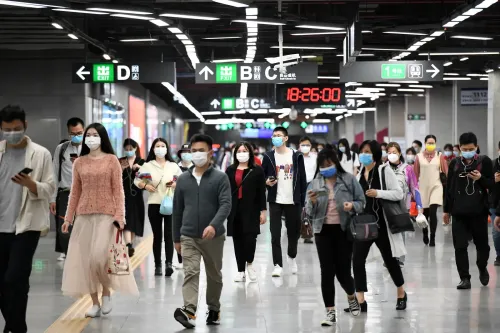
China's "lying flat" (tangping) movement — a youth-driven rejection of hyper-competitive work culture that emerged around 2021 — has been officially framed as a national security concern by Beijing, according to a report published in The Diplomat on Monday, 4 May. Rather than representing open defiance of the regime, analysts say the movement reflects a quiet disengagement that the Chinese Communist Party (CCP) finds increasingly threatening to its governing logic.
Ministry of State Security Enters the Picture
On 28 April, China's Ministry of State Security posted a video on its official social media platform describing "lying flat" as an attempt by hostile foreign forces to "poison and ideologically influence" Chinese youth. The report in The Diplomat questioned how a personal lifestyle choice could be reframed as a matter of state security — and, notably, why it was the Ministry of State Security that responded, rather than the Ministry of Human Resources or the Communist Youth League.
"The mainstream analysis takes 'lying flat' as an economic phenomenon rooted in the assumption that economic performance is the core of Chinese legitimacy," the report noted, acknowledging that youth unemployment, unaffordable housing, the gruelling '996' work culture, and the concept of 'flowing downward' are real pressures driving youth desperation. However, it argued that an economic lens alone cannot explain why the state security apparatus — not labour or youth ministries — was deployed to address what is ostensibly a labour market issue.
Beyond Economics: The CCP's Legitimacy Anxiety
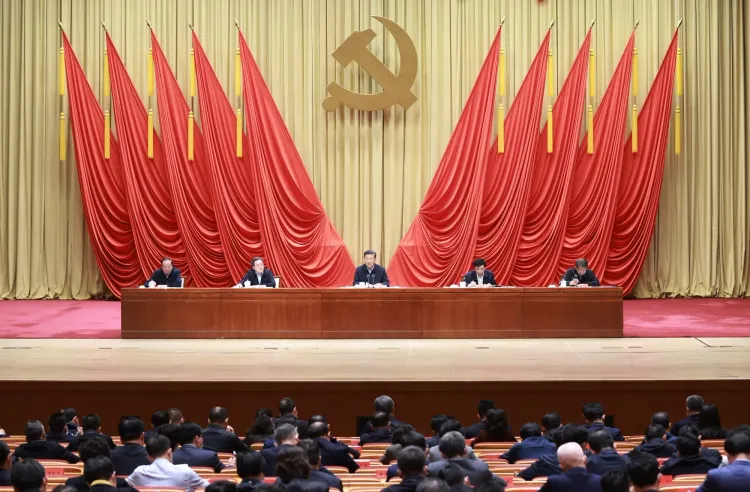
The Diplomat's analysis argues that for the CCP, "lying flat" is not merely an economic symptom but an existential challenge to the party's governing philosophy. The report contends that Chinese political legitimacy is built not just on economic output but on "emotional mobilisation" — the cultivation of a collective "spirit of struggle" among citizens.
This concern is not new. As far back as 2019, President Xi Jinping warned that cadres "always hope everything will be peaceful and calm" and have "more than enough desire for stability, but not enough spirit of struggle." Six years later, that same critique has reportedly been extended to an entire generation of young Chinese citizens.
As official rhetoric increasingly deploys the word "struggle", youth counterculture has responded by coining new phrases — from "lying flat" to "let it rot" — that implicitly reject the state's call to hustle and sacrifice. The widening gap between official language and youth vernacular is itself, the report argues, a telling indicator of political strain.
Why the Security Framing Matters
The report's most pointed observation is that the involvement of the Ministry of State Security signals a fundamental shift in how Beijing reads domestic dissent. "By claiming lying flat as a state security issue, we can see an obvious signal that the policymaking of the current Chinese government is driven more by political security concerns than by economic indicators," the report stated.
This framing, analysts note, also follows a familiar CCP playbook of externalising domestic problems — attributing internal discontent to foreign interference rather than structural failures. However, the report argues that this explanation, too, falls short: the use of the security ministry, rather than conventional social or economic agencies, suggests the regime views youth disengagement as a legitimacy threat, not merely a policy challenge.
What This Signals for China Watchers
For governments, investors, and analysts seeking to understand China's political trajectory, the report positions this development as far more than a sociological footnote. "For those trying to read where China is headed or how to deal with it, this is not a minor angle. It is the main story," The Diplomat noted.
This comes amid broader concerns about China's youth unemployment rate, which hit record highs in recent years before Beijing temporarily suspended publishing the data. The securitisation of a passive youth lifestyle movement suggests the CCP is increasingly sensitive to any signal — however quiet — that its social contract with the younger generation may be fraying.
Point of View
No manifesto to ban, no foreign hand to credibly expose. For a party whose legitimacy increasingly depends on projecting a unified national will to 'struggle', a generation that simply opts out is a harder problem than one that protests. The foreign-interference framing is familiar but hollow — and the fact that the security apparatus deployed it anyway suggests Beijing knows it, too.
NationPress
3 Oct 2026
Frequently Asked Questions
What is China's 'lying flat' (tangping) movement?
'Lying flat' (tangping) is a youth movement that emerged in China around 2021, in which young people reject hyper-competitive work culture, excessive overtime, and societal pressure to achieve. It involves deliberately lowering ambitions — refusing to overwork, marry, or consume — as a form of passive resistance to systemic pressures.
Why did China's Ministry of State Security label 'lying flat' a national security issue?
On 28 April, the Ministry of State Security posted a video framing 'lying flat' as an attempt by hostile foreign forces to ideologically influence Chinese youth. Analysts say this reflects the CCP's concern that youth disengagement threatens its governing logic, which depends on collective 'struggle' and emotional mobilisation, not just economic output.
Why is the Ministry of State Security involved rather than labour or youth ministries?
According to The Diplomat report, the involvement of the security ministry — rather than the Ministry of Human Resources or the Communist Youth League — signals that Beijing views youth disengagement as a political and legitimacy threat, not merely a labour market problem. It suggests policymaking is increasingly driven by political security concerns.
What did Xi Jinping say about the 'spirit of struggle'?
In 2019, President Xi Jinping warned that cadres had 'more than enough desire for stability, but not enough spirit of struggle.' The Diplomat report notes that this critique has since been extended to an entire generation of Chinese youth, as official rhetoric increasingly uses the language of struggle while youth culture coins phrases to reject it.
What does this mean for understanding China's political direction?
The Diplomat report argues this is 'the main story' for anyone tracking China's trajectory. The securitisation of a passive youth lifestyle movement suggests the CCP is increasingly sensitive to signals that its social contract with younger generations is under strain — a concern that goes beyond economics into questions of political legitimacy and regime resilience.